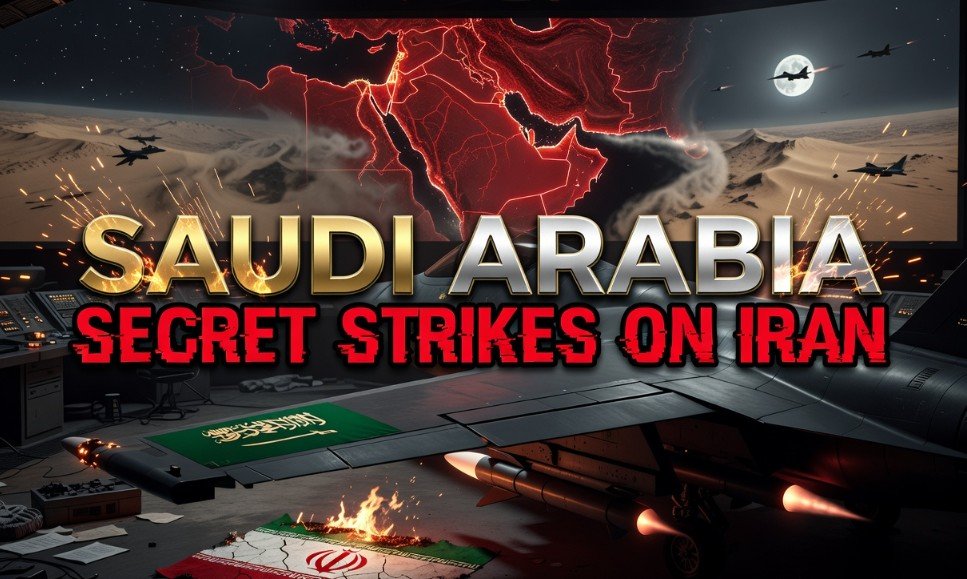
Saudi Arabia secretly bombed targets inside Iran during the late March peak of the regional war, marking the kingdom’s first ever direct military action on Iranian soil. Reuters broke the story on May 12, citing two Western and two Iranian officials. The covert raids reportedly forced Tehran to scale back attacks and pushed both sides toward a quiet de-escalation deal just before the wider ceasefire.
What Reuters Revealed About the Covert Saudi Air Strikes
The Saudi Air Force carried out the operation in late March, weeks after Iran began pounding the kingdom with missiles and drones. This is the first time Riyadh is known to have directly struck Iranian territory.
One Western source described the operation in blunt terms. The attacks were called “tit-for-tat strikes in retaliation for when Saudi Arabia was hit.”
Reuters said it could not independently verify the specific targets. A senior Saudi foreign ministry official refused to confirm or deny the strikes, instead repeating Riyadh’s standard line on de-escalation and regional stability. Iran’s foreign ministry stayed silent on the report.
Prince Turki al-Faisal, former Saudi intelligence chief, writing in Arab News
How the Strikes Cut Iranian Attacks on the Kingdom
The numbers tell the story of a quick and dramatic shift. Saudi defense ministry data compiled by Reuters showed a sharp drop in Iranian fire within a single week.
| Time Period | Drone and Missile Attacks on Saudi Arabia |
|---|---|
| March 25 to March 31 | More than 105 |
| April 1 to April 6 | Just over 25 |
| April 7 to April 8 (spike) | 31 drones and 16 missiles |
Saudi officials reportedly told Tehran about the strikes through back channels. They also warned that more would follow if Iranian attacks did not stop.
That mix of force and diplomacy worked. The informal de-escalation kicked in just before Washington and Tehran agreed to a wider ceasefire on April 7.
How the Regional War Spiraled Into Gulf Territory
The conflict began on February 28, 2026, when the United States and Israel launched coordinated strikes on Iranian military and government sites. Iran fired back at all six Gulf Cooperation Council states, hitting US bases, civilian airports, oil terminals and even closing the Strait of Hormuz.
Saudi Arabia took heavy blows. The Ras Tanura refinery was hit on March 2, and Prince Sultan Airbase suffered a major strike on March 29 that destroyed a US AWACS surveillance plane.
On March 19, Saudi Foreign Minister Prince Faisal bin Farhan said publicly that the kingdom “reserved the right to take military actions if deemed necessary.” Three days later, Riyadh expelled Iran’s military attaché and four embassy officials, declaring them persona non grata.
Key facts shaping the moment:
- Iran’s UAE bombardment: Tehran fired roughly 550 ballistic and cruise missiles and over 2,200 drones at the Emirates, making it the most targeted country in the region.
- UAE also struck back: The Wall Street Journal reported the Emirates hit an oil refinery on Iran’s Lavan Island and reportedly coordinated at least one strike with Israel.
- Pakistan stepped in: Islamabad deployed fighter jets to reassure Riyadh during the April 7-8 spike.
- Iraq factor: Many projectiles fired at Saudi Arabia just before the ceasefire came from Iraq, not Iran, suggesting Tehran reined in direct hits while militias kept firing.
Why Riyadh Played a Double Game With Tehran
Unlike the UAE, which took a tougher line and largely froze public diplomacy with Iran, Saudi Arabia kept the phone lines open even as its jets were striking Iranian soil. Communication continued through Iran’s ambassador in Riyadh throughout the war.
Analysts say this dual track approach reflects a country that has too much to lose from a full-blown regional war. The kingdom’s economic transformation plans, oil exports and tourism push all depend on stability.
Ali Vaez, Iran Project Director at the International Crisis Group, told Reuters the sequence showed “pragmatic recognition on both sides that uncontrolled escalation carries unacceptable costs.” He added that it reflected “not trust, but a shared interest in imposing limits on confrontation.”
The Red Sea remained open during the war, which allowed Saudi oil exports to keep flowing while many neighbors saw their trade choke. That advantage gave Riyadh more leverage than its Gulf peers when the time came to push for calm.
What This Means for Gulf Security and Global Oil
The covert strikes mark a turning point in how Gulf monarchies think about defending themselves. For decades, they leaned on the US security umbrella. The 10-week war exposed cracks in that shield as Iranian missiles and drones repeatedly punched through American defenses.
Riyadh’s bolder posture also reportedly shaped one of the war’s biggest behind the scenes decisions. According to a New York Times report, President Donald Trump’s “Project Freedom” plan to escort Western flagged ships through the blockaded Strait of Hormuz was quietly scrapped two days after launch because Saudi Arabia refused to provide logistical support.
Dania Thafer of the Gulf International Forum captured the mood among Gulf states bluntly. She told the Wall Street Journal that from the region’s view, Washington “is not prioritizing their security and basically threw the Gulf states under the bus.”
The bigger picture is clear. The Saudi-Iran rivalry, partly cooled by the 2023 China-brokered deal, has entered a new phase where direct military action is now part of the playbook on both sides. The 2023 reset between Riyadh and Tehran helped end the Yemen war and reopened embassies. That groundwork may be the only reason the late March strikes did not blow up into something much worse.
For now, oil markets, shipping lanes and regional capitals are watching every move. The ceasefire is holding, but barely, and the UAE has reported fresh Iranian attacks in recent days. The story of how Saudi jets quietly entered Iranian airspace and changed the war’s direction will likely shape Gulf strategy for years to come. Share your thoughts in the comments and tell us how you think the Saudi-Iran balance will hold from here.