EgyptAir has issued an urgent travel alert as a rare polar depression unleashes heavy rain, thunderstorms and flash floods across the country. The national carrier is telling international passengers to reach airports four hours early and domestic travelers three hours ahead to beat road chaos and poor visibility. This powerful system has already forced school closures and disrupted daily life for millions.
What Makes This Polar Depression So Unusual
Egypt rarely sees such intense weather in March. The polar depression moved in strongly late Tuesday and hit its peak on Wednesday. It continues to bring trouble on Thursday with no quick end in sight.
Mohamed Fahim, head of the Climate Information Center at the Ministry of Agriculture, called it a rare and powerful event. He said the real strike of this polar system turned normal rain into localized flooding with heavy thunder and hail in many spots. Northern coastal areas like Alexandria, Matrouh and Dakahlia felt the worst of the heavy thunderstorms and hail. Greater Cairo and the Delta saw moderate to heavy showers while strong winds reached speeds up to 50 kilometers per hour.
In the Western Desert and parts of Upper Egypt, sandstorms cut visibility to less than 1,000 meters. Drivers faced tough conditions and a sudden sharp drop in temperature that felt extra cold. Flash flood risks remain high in Sinai, the Red Sea mountains and areas around the Gulfs of Suez and Aqaba.
This kind of deep low pressure system in March stands out because Egypt usually enjoys drier conditions at this time of year. The unusual strength has caught many by surprise and created challenges for a country more used to dust storms than flooding rains.
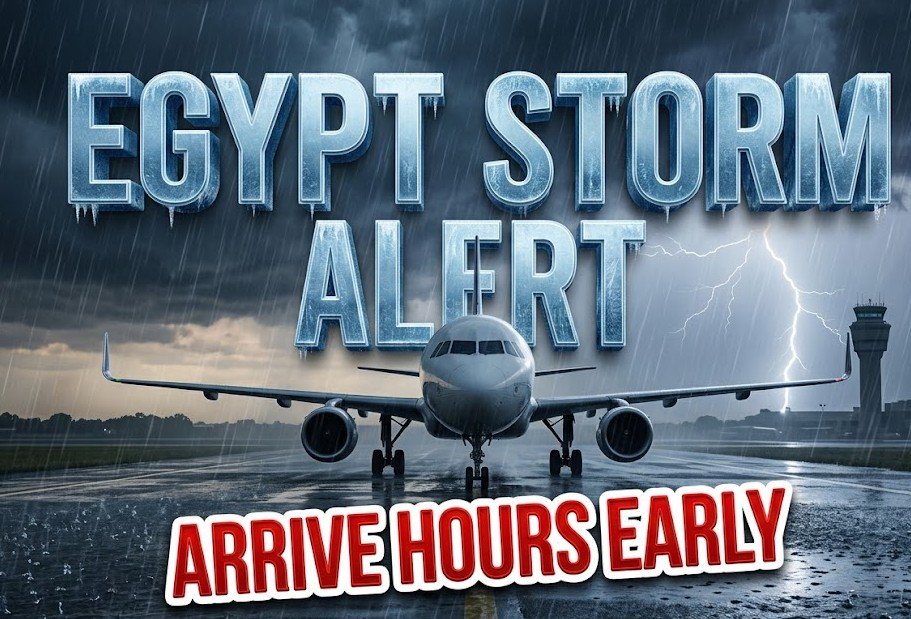
EgyptAir Sets New Rules for Airport Arrivals
EgyptAir made its advisory clear on Thursday to help passengers avoid missing flights amid the storm.
The airline told international travelers to arrive at departure halls four hours before takeoff. Domestic passengers should show up three hours early. These extra times account for heavy traffic, waterlogged roads and reduced visibility that can slow everyone down.
Officials said the steps will keep operations running as smoothly as possible during the unstable conditions. Many flights continue but delays remain possible if roads get worse. Travelers shared stories online of long drives to Cairo airport through flooded streets and slow moving traffic.
Railways also issued warnings. The Egyptian National Railways Authority said some trains may run late and speeds have been reduced for safety. They apologized for any inconvenience caused by weather beyond their control.
For anyone flying in the next day or two, checking flight status and leaving home with plenty of extra time makes good sense. Packing patience along with your bags will help too.
Flooding and Chaos Disrupt Life Across the Country
Heavy rain turned streets in Cairo and Giza into rivers in some districts. Areas like Heliopolis, the Ring Road, New Cairo and Madinaty saw major puddles and traffic backups. Social media filled with videos of stalled cars and people navigating around flooded spots.
The downpours hit hardest in northern and coastal regions but reached many governorates. Residents in the Delta and Canal cities dealt with strong winds that shook trees and stirred dust. In Upper Egypt, lighter rain still caused some issues combined with cooler air.
Schools and universities across the entire country closed for Wednesday and Thursday. The Ministry of Education made the call early to keep students safe and avoid travel risks during the worst of the weather. Parents suddenly faced home learning arrangements while many workers tried to reach offices through difficult conditions.
The storm also brought an emotional side. Many Egyptians shared a mix of surprise and humor online about seeing such heavy rain in March. Others expressed worry for farmers whose fields could face damage from sudden floods and strong winds. The Ministry of Agriculture urged growers to protect crops as much as possible.
Officials Activate Full Emergency Response Plans
Egypt raised its emergency readiness to the highest level before the storm arrived. The Ministry of Health put all hospitals and medical teams on maximum alert. More than 2,400 ambulances stand ready, including special vehicles for desert and remote areas. Emergency departments, intensive care units and blood supplies received extra checks.
Civil defense teams work closely with other services to respond quickly to any flooding or accidents. Authorities advise people to avoid low lying roads, unnecessary travel and areas near valleys where flash floods can strike fast. Staying updated through official channels helps everyone make safer choices.
The Egyptian Meteorological Authority continues to monitor the system closely. While rain may ease in some places by Thursday evening, unstable conditions could linger into Friday in certain regions. Winds and possible isolated showers remain a concern.
This event highlights how quickly weather can shift and affect an entire nation. Egypt’s dry climate makes these heavy rain episodes stand out even more. Better infrastructure for drainage and early warning systems prove valuable when nature delivers surprises like this one.
The storm also reminds travelers and residents alike of the need for flexibility. Whether adjusting flight plans or changing daily routines, preparation makes a real difference when severe weather arrives.
As the skies slowly clear over the coming days, Egyptians will return to normal routines with stories to share about navigating one of the stronger March storms in recent memory. The experience shows both the power of nature and the strength of people who face it together.
What do you think about how Egypt handled this rare storm? Share your experiences or thoughts in the comments below. Your stories help everyone understand the real impact of these weather events.