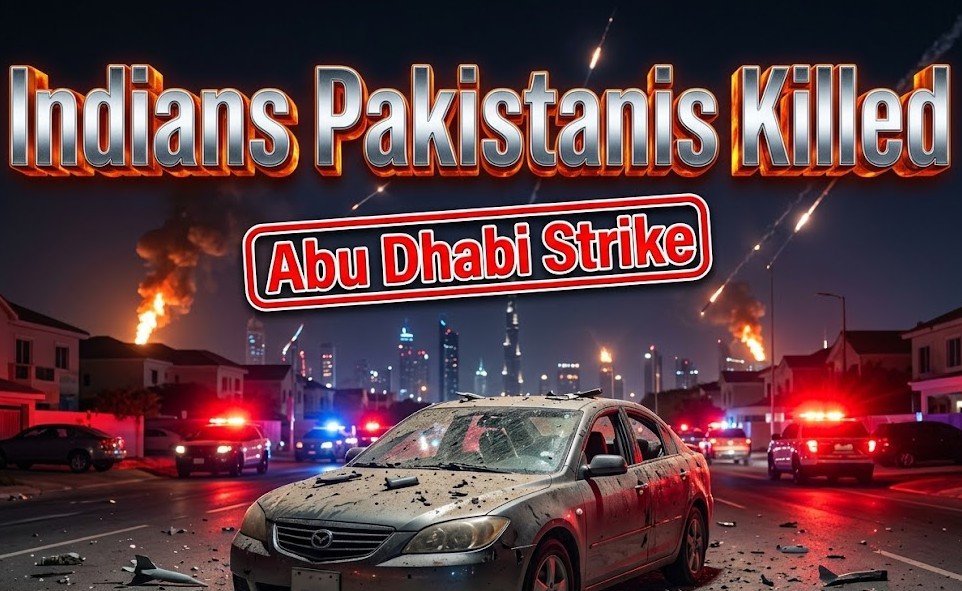
Two people died and three others were hurt in Abu Dhabi on Thursday when debris from intercepted missiles rained down on a residential area. The victims include an Indian and a Pakistani national, officials confirmed, as the UAE defended itself against a fresh wave of Iranian attacks amid the widening Middle East conflict.
UAE Air Defenses Intercept Major Iranian Attack
UAE forces successfully engaged 15 missiles and 11 drones launched toward its territory early Thursday. Most threats were destroyed in the air. Yet falling fragments caused real damage on the ground near Sweihan street.
The Abu Dhabi Media Office said emergency teams rushed to the scene. Multiple cars were damaged by the debris. Authorities urged people to avoid sharing unverified videos and stay indoors during alerts.
This latest barrage comes as Iran responds to ongoing US and Israeli strikes that began weeks ago. The UAE has intercepted hundreds of projectiles since the conflict intensified in late February.
Civilian Toll Rises Among Gulf Expats
The deaths of an Indian and a Pakistani national bring the human cost home for millions of South Asian workers in the UAE. Many families in India and Pakistan are now anxiously checking on relatives living in the Gulf.
Abu Dhabi officials confirmed the fatalities quickly. They expressed condolences to the families. Indian and Pakistani embassies are coordinating with local authorities for support and repatriation if needed.
This is not the first such tragedy. Earlier incidents in Bani Yas and Al Shawamekh areas also claimed Pakistani lives and injured Indian nationals from falling shrapnel. South Asians form a large part of the UAE workforce. These events have raised fears about safety for expatriates who power key sectors like construction, healthcare, and services.
NTA issued updates for Indian students in nearby countries including Dubai, Kuwait, and Bahrain. Governments are advising caution and monitoring the situation closely.
Oil Prices Surge as Tensions Threaten Global Supply
Oil prices jumped more than 4 percent Thursday morning. Traders worry that continued fighting could disrupt the Strait of Hormuz, a critical chokepoint for world energy flows.
The UAE’s ADNOC CEO warned that no country should destabilize the global economy. A senior UAE minister called any closure of Hormuz “economic terrorism.”
Several Middle East airlines have scaled back operations. Oman Air suspended flights in the region until mid April. Other carriers are rerouting or canceling services to avoid risk.
Here are key economic impacts seen so far:
- Oil jumps over 4 percent in early trading
- Shipping routes face delays and higher insurance costs
- Gulf nations push for a voice in any US Iran peace talks
Analysts say prolonged conflict could push prices even higher and slow global growth.
Houthis Signal Readiness to Join Fight
Yemen’s Houthis said they are militarily ready to support Iran if needed. A leader told Reuters the group is monitoring developments closely.
Such a move could bring fresh attacks on shipping in the Bab al Mandab Strait. The Houthis have hit vessels there before, causing major disruptions to trade between Asia and Europe.
Jordan reported intercepting three missiles in the past day. Saudi Arabia noted another drone incident in its eastern region. Kuwait also downed two drones.
These scattered attacks show how the conflict is pulling in more players across the region. Hezbollah claimed fresh strikes on Israeli tanks in Lebanon as well.
Broader War Context and Diplomatic Efforts
The conflict erupted after US and Israeli strikes targeted sites inside Iran. Reports say thousands of targets have been hit, damaging military production facilities.
Iran has hit back with missiles and drones aimed at Israel and Gulf states. Casualties have mounted on multiple sides. Israel media reported the death of an IRGC Navy chief, though Iran has stayed silent on that claim.
Gulf countries are calling for a seat at any negotiation table between the US and Iran. The US has denied striking certain Iraqi targets even as casualty figures rise from other incidents.
Pakistan’s Prime Minister spoke with Qatar’s Emir as diplomatic channels stay active. Turkey reported an attack on one of its oil tankers in the Black Sea, adding another layer of concern.
Authorities across the region continue to warn against spreading unverified information that could cause panic.
The human stories behind the headlines remind us of the real price being paid. Families in India and Pakistan wait for news from loved ones working far from home in the Gulf. Ordinary people doing ordinary jobs now find themselves in the path of a larger conflict they did not choose.
As the fighting continues, the world watches to see whether diplomacy can step in before more lives are lost and the economic damage grows deeper. The coming days may prove critical for the region and beyond.
What are your thoughts on how this conflict is affecting expatriate communities and global energy markets? Share your views in the comments below. If you have family or friends in the Gulf, stay safe and keep following updates from official sources.