
King Faisal Specialist Hospital and Research Centre in Jeddah has continued its Joint Accreditation for Interprofessional Continuing Education from the Accreditation Council for Continuing Medical Education, the Accreditation Council for Pharmacy Education and the American Nurses Credentialing Center. The status lets the Jeddah campus award accredited continuing education credits to mixed healthcare teams.
The August 2026 announcement restates standards the hospital already met and renewed. It arrives as KFSHRC sits first in the Middle East and Africa and 12th worldwide among top 250 academic medical centers in Brand Finance’s 2026 list.
What Joint Accreditation Covers
Joint Accreditation is the first and only program that lets one provider design education for multiple health professions under a single set of standards, one application and one fee structure. Founded by ACCME, ACPE and ANCC in 2009, it opened to the first providers in 2010.
Providers can award interprofessional continuing education credit or single-profession credit to physicians, nurses, pharmacists, physician assistants, dentists, dietitians, psychologists and others. The core idea is education planned by the team for the team so members learn with, from and about each other.
- IPCE definition: members of two or more professions learn together to enable collaboration and improve health outcomes.
- Operational gain: one cycle replaces separate medical, pharmacy and nursing accreditations.
- Reported effect: organizations practicing IPCE show 25 percent higher retention.
- Activity growth: jointly accredited providers increased total activities 31 percent from 2021 to 2022.
The program supplies a single unified path to multi-profession CE credit that most hospitals still handle in silos.
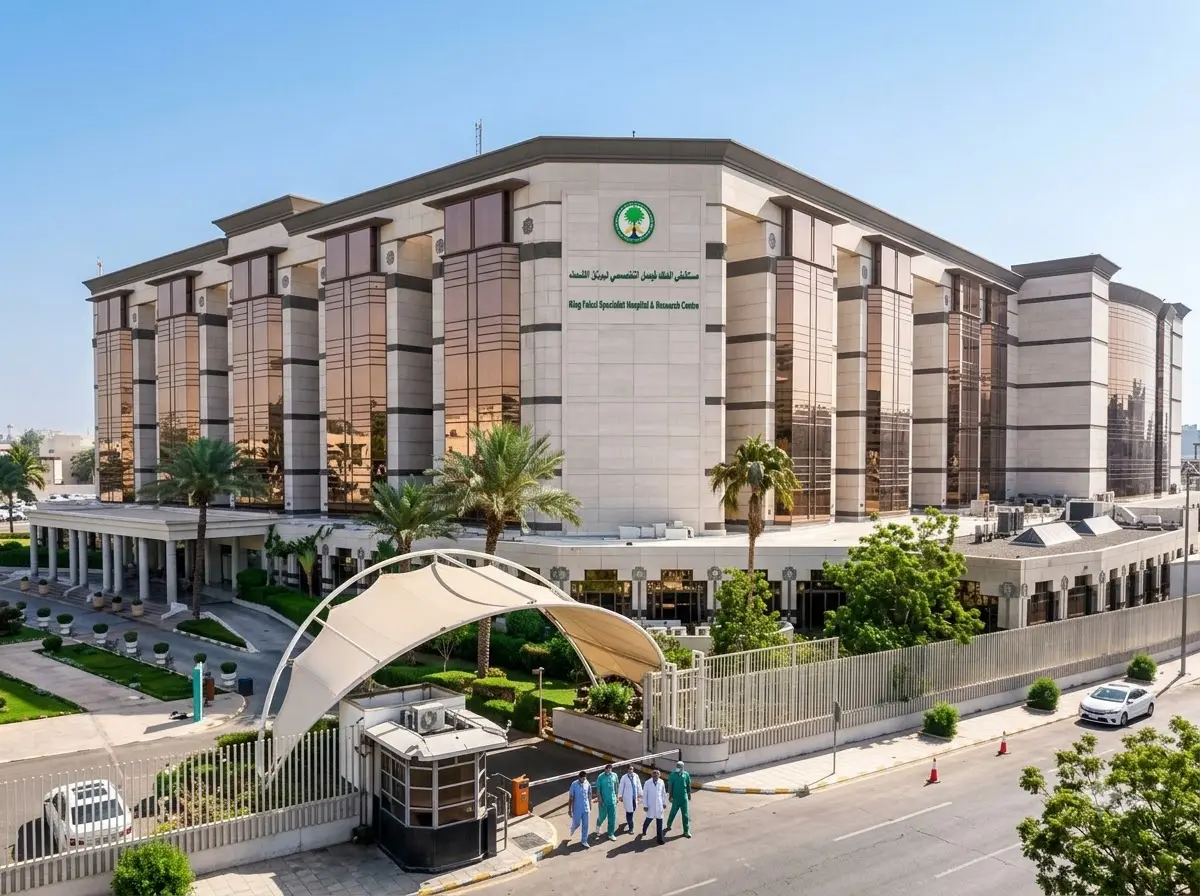
KFSH Jeddah’s Accreditation Record
ACPE lists the Jeddah campus under Joint Accreditation number JA4008348 with Azad Godus as head manager of continuing education. The history table shows initial accreditation in fall 2023, progress reports, an extension, and continued accreditation status through 2030 cycle after the spring 2026 review.
| Review Cycle | Type | Board Action | Status |
|---|---|---|---|
| S2030 | JA Review | – | Upcoming |
| S2026 | JA Review | Continued Accreditation | Accredited |
| S2025 | JA Progress Report | Continued Accreditation | Accredited |
| F2024 | JA Progress Report | Extension granted | Approved |
| F2023 | JA Review | Initial Accreditation | Accredited |
The press materials frame the latest step as “earns,” yet the public register treats it as renewal of an existing designation.
Standards the Hospital Had to Clear
KFSH Jeddah showed it could identify practice gaps and learning needs, build multidisciplinary activities, use active-learning methods and align content with team competencies. It also measured educational outcomes and kept commercial independence and integrity rules.
Supporting work included case-based sessions that pulled physicians, nurses, pharmacists and others into the same room. A structured framework tracked whether the education changed practice. Medication-safety projects and needle-stick injury prevention programs supplied concrete examples of the outcome measurement the standards demand.
Key requirements met:
- Gap analysis tied to real clinical shortfalls
- Active rather than lecture-only formats
- Outcome and impact measurement after the session
- Independence from commercial influence
These are the same criteria every jointly accredited provider must sustain at each review.
How the Credential Fits KFSH’s Ranking Climb
Brand Finance placed KFSHRC first in the Middle East and North Africa and 12th globally among 250 academic medical centers for 2026, up from 15th the year before. The ranking draws on a survey of more than 2,500 healthcare professionals in 30 countries that weighs reputation, willingness to work or train there, and institutional impact in care, education and research.
The same organization values the KFSH brand above SAR 6.3 billion (about USD 1.7 billion), keeping it the most valuable healthcare brand in Saudi Arabia and the Middle East for a fourth straight year and inside the Kingdom’s overall top 10 brands. Newsweek lists the system among the World’s Best Hospitals, World’s Best Smart Hospitals and World’s Best Specialized Hospitals for 2026.
Education capacity sits inside that brand calculation. Academic medical centers that can train teams to a common international standard raise the intangible assets-knowledge, trial readiness, staff pride-that now drive most of a hospital’s measured value.
Saudi Arabia’s Broader Interprofessional Push
A February 2026 report from the World Health Organization and the Saudi Commission for Health Specialties found strong leadership support and rising research on interprofessional education and collaborative practice across Saudi universities. Educational activities inside programs remain limited.
The report lists missing pieces: no unified competency framework, confusion between interprofessional and multidisciplinary labels, thin faculty-development programs, and weak assessment tools. It places the Kingdom’s IPECP still classified at development stage and calls for a national governance body, phased rollout and performance indicators that include team education.
KFSH Jeddah’s continued Joint Accreditation supplies one working model inside that national gap. A large academic center already measuring outcomes and running multi-discipline case sessions can feed local evidence into the frameworks SCFHS and WHO say are still needed.
Safety Programs That Traveled With the Accreditation
The hospital pointed to two practical streams that helped satisfy the standards. Medication-safety initiatives reduce dosing and administration errors when pharmacists, nurses and physicians review cases together. Needle-stick injury prevention work trains the same groups on safe handling, disposal and post-exposure steps.
Both sit inside the outcome framework: education is not finished when the certificate is printed. Teams must show whether error rates or injury counts moved afterward. That measurement habit is what Joint Accreditation requires and what the Saudi IPE report says the wider system still lacks.
On X the hospital’s own Arabic post framed the news as high-quality education that improves team performance and patient results. Engagement stayed modest; most replies wandered into unrelated service complaints. The absence of push-back on the accreditation itself left the institutional claim largely uncontested in public conversation.
Teams, Patients and the Next Review Cycle
Staff gain one credential that travels across professions instead of three separate ones. Patients gain the practical product: fewer hand-off failures, tighter medication checks, lower injury risk for the people who draw blood or start IVs. The hospital gains another data point for the brand and ranking surveys that already score education heavily.
The next full Joint Accreditation review is listed for the spring 2030 cycle. Between now and then the Jeddah campus will keep filing progress reports and running the same case-based, multi-discipline sessions that cleared the 2026 bar. Those sessions now sit inside a national conversation that still needs competency frameworks and faculty training at scale.
KFSH Jeddah’s renewal is one finished brick. The larger wall of Saudi interprofessional capacity remains under construction.
Frequently Asked Questions
What is Joint Accreditation for Interprofessional Continuing Education?
It is a single accreditation process run jointly by ACCME, ACPE, ANCC and partner bodies that lets one organization award continuing-education credit to multiple health professions under one set of standards instead of separate medical, pharmacy and nursing reviews.
When did KFSH Jeddah first receive Joint Accreditation?
The ACPE public register shows initial Joint Accreditation granted after the fall 2023 review, with continued status confirmed after the spring 2026 review and the next full cycle scheduled for 2030.
Which professions can receive credit from a jointly accredited provider?
Physicians, nurses, pharmacists, physician assistants, dentists, dietitians, optometrists, psychologists, social workers and athletic trainers can all receive credit from the same jointly accredited activities when the content meets the shared criteria.
How does the accreditation relate to KFSHRC’s global ranking?
Brand Finance’s academic-medical-center ranking weighs education and research reputation; sustained international CE accreditation is one concrete signal that feeds the survey responses from more than 2,500 professionals that placed KFSHRC 12th worldwide in 2026.
What practical safety work supported the Jeddah campus application?
Case-based multi-discipline learning, a formal outcomes-measurement framework, medication-safety initiatives and programs aimed at preventing needle-stick injuries were cited as evidence that education produced measurable practice change.
