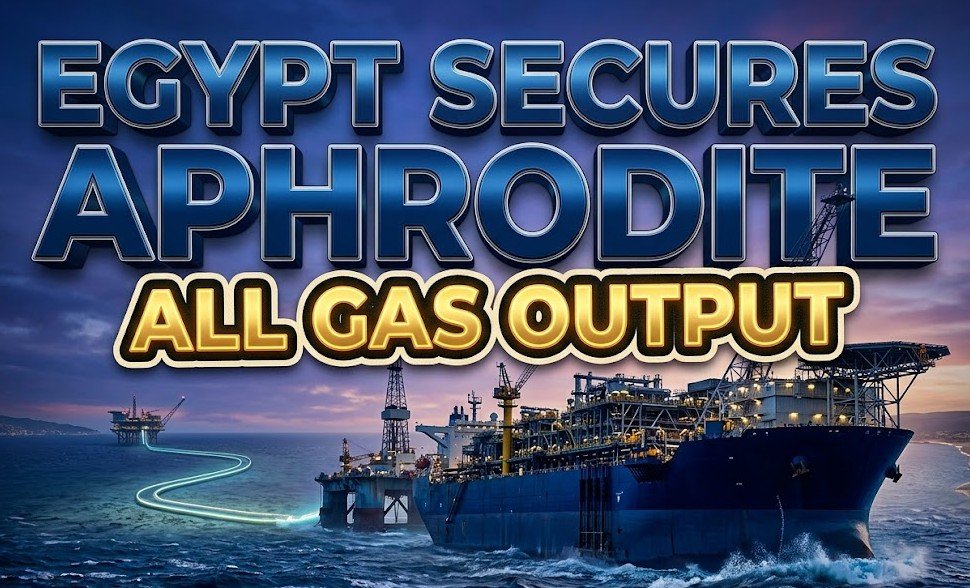
Egypt has locked in the entire future output of Cyprus Aphrodite gas field in a major supply agreement. The deal aims to meet Cairo’s fast growing energy needs as local production struggles and imports become more expensive.
The preliminary pact signed this week gives Egypt a steady stream of natural gas starting around 2031 or 2032. It marks another step in closer energy ties between the two Mediterranean neighbors.
Big Energy Pact Signed This Week
Egyptian Natural Gas Holding Company struck the agreement with the Aphrodite project operators and Cyprus state energy firm. Newmed Energy which holds a stake in the field also joined the deal.
The arrangement covers a 15 year period with an option to extend for five more years. It includes a framework to build a gas transmission system off Egypt’s coast.
This move ensures Egypt gets every cubic meter the field produces once output begins. Partners include Chevron as operator with 35 percent, Shell with 35 percent and Newmed Energy with 30 percent.
The field sits in Block 12 within Cyprus exclusive economic zone. Development has taken years but recent progress on engineering and government agreements has sped things up.
Why Egypt Is Eager for Cypriot Gas
Egypt faces rising demand for natural gas from power plants factories and homes. Domestic output has dropped from earlier highs while consumption keeps climbing.
The country turned into a net importer after local fields declined. It now spends heavily on liquefied natural gas cargoes especially from the United States.
Recent disruptions to pipeline supplies from Israel added pressure. Fields there shut temporarily because of conflicts in the Middle East forcing Egypt to buy more expensive spot LNG on world markets.
This long term deal with Cyprus offers stability. It reduces reliance on volatile global prices and short term shipments. Egypt can plan better for its energy needs in the years ahead.
Experts note the agreement fits Egypt’s goal to become a regional gas hub. Gas from Aphrodite can flow to Egyptian facilities for local use or re export as LNG to Europe.
What Makes Aphrodite Special
Aphrodite was Cyprus first major offshore gas discovery back in 2011. The field holds around 129 billion cubic meters of resources making it a key asset for the island nation.
Partners plan peak production near 800 million cubic feet per day. Gas will move through a floating production unit then via pipeline to shore.
Cyprus has waited over a decade for first gas. Delays came from commercial talks technical challenges and finding the right export route.
The deal with Egypt provides a clear path forward. It gives Cyprus a buyer and helps unlock investment. Revenues from the field could boost the economy create jobs and support energy independence.
Newmed Energy called it a binding term sheet for all recoverable gas quantities. This brings much needed certainty after years of planning.
Plans for Pipeline and Delivery
The partners and Egypt agreed on a framework for a subsea pipeline. Reports point to roughly 280 kilometers from the field to Egypt’s coast.
Once onshore the gas can enter Egypt’s existing network or LNG plants. This setup allows quick integration without massive new infrastructure on Cyprus side.
Earlier this year Egypt and Cyprus signed a broader cooperation framework at an energy conference in Cairo. That paved the way for faster progress on Aphrodite and other fields.
Chevron recently completed key engineering steps. The host government agreement with Egypt cleared hurdles for sales and transport.
This pipeline route makes economic sense. It leverages Egypt’s established LNG export terminals and positions both countries in the growing Eastern Mediterranean energy scene.
How This Shapes the East Mediterranean
The agreement strengthens bonds between Egypt and Cyprus. It also brings in Israeli linked Newmed Energy showing how energy can bridge regional interests.
For Europe the deal hints at more stable supplies. Egypt can process Cypriot gas and ship LNG helping diversify away from other sources.
Cyprus sees this as its entry into gas production. Success here could open doors for nearby fields like Cronos with potential output even sooner.
Challenges remain. Development costs are high and global energy markets shift quickly. Yet the commitment from Egypt provides a solid foundation.
Analysts say such deals promote stability in a tense region. Reliable energy flows can support economies reduce tensions and aid the shift to cleaner power.
This pact shows practical cooperation at work. Neighbors are turning shared resources into mutual benefits.
As production nears in the early 2030s both sides stand to gain. Egypt gets security of supply while Cyprus gains revenue and experience in offshore energy.
The deal reflects smart long term thinking in a world hungry for reliable natural gas. It connects two nations through pipes and shared goals for energy stability.
What are your thoughts on this Egypt Cyprus gas agreement? Drop your comments below and share how you see it affecting energy prices or regional ties in the coming years.