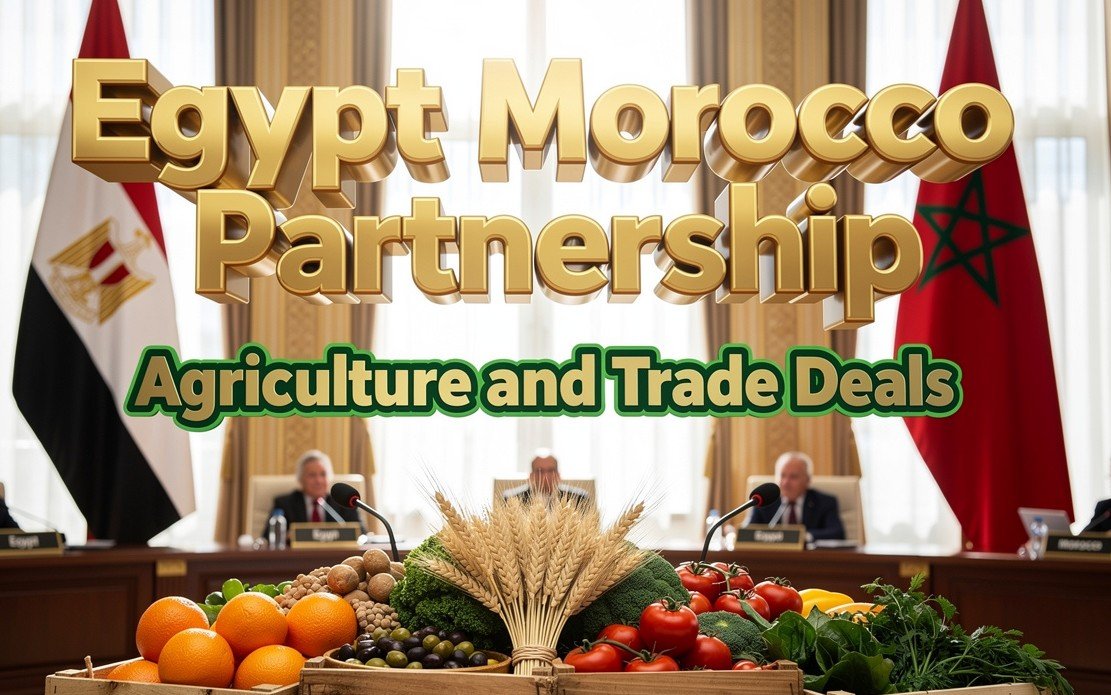
In a major diplomatic push, Egypt and Morocco have taken bold steps to deepen agricultural cooperation, expand trade and unlock new investment opportunities after high‑level talks in Cairo. Leaders from both nations signed a series of agreements this week creating new pathways for food security, farmer support, and economic growth across North Africa. The moves signal a fresh era of integration between two of the region’s largest economies.
New Government Committee to Guide Ties
On April 6, 2026, Egypt’s Prime Minister Mostafa Madbouly and Morocco’s Head of Government Aziz Akhannouch officially launched the first session of the Egyptian‑Moroccan Joint Coordination and Follow‑Up Committee in Egypt’s New Administrative Capital. This committee was established as a formal mechanism to steer cooperation in trade, investment, infrastructure, agriculture, and more between the two countries. The event brought together senior ministers and policymakers from both sides and marked a clear step toward structured long‑term collaboration. Leaders emphasized that this initiative reflects strong political support from Egyptian President Abdel Fattah al‑Sisi and King Mohammed VI of Morocco and aligns with shared goals for economic integration in the broader Arab and African region. This institutional platform is expected to generate measurable results across sectors and support joint decision‑making going forward.
Agriculture Takes Center Stage for Shared Growth
A key focus of the committee’s discussions was agriculture. Egypt’s Minister of Agriculture and Land Reclamation, Alaa Farouk, met with Morocco’s Minister of Agriculture, Maritime Fisheries, Rural Development, Water and Forests Ahmed El Bouari to explore deeper cooperation in farming, trade and technical exchange. The ministers highlighted growing concerns about climate change, food security challenges and the need for technological innovation across the agricultural sector. They agreed to launch a field‑level work programme emphasizing technology transfer, knowledge sharing and joint investment in areas such as drought‑resilient seeds, water‑efficient farming systems and pest management approaches. A shared goal is to build an integrated agricultural innovation platform that blends Egypt’s experience with Morocco’s strengths in fisheries and value chain development.
Both sides also expressed interest in leveraging expertise in specific areas such as date palm cultivation and fish processing, packaging and vessel tracking systems. To turn ideas into action, they directed agricultural relations teams to convene virtual meetings with business leaders and experts to develop a clear implementation roadmap.
Wide Range of Cooperation Beyond Agriculture
While agriculture was a central pillar, the agreements did not stop there. During the joint committee meeting, Egypt and Morocco signed a series of cooperation agreements spanning investment facilitation, industrial cooperation, customs assistance, youth programs, cultural exchange and more. Key highlights include an industrial cooperation protocol and a memorandum aimed at boosting bilateral investment relations, particularly between Egypt’s General Authority for Investment and Free Zones and the Moroccan Agency for Investment and Export Development.
Financial cooperation agreements were also concluded, covering mutual assistance in customs matters and a treaty aimed at avoiding double taxation and preventing income tax evasion. These steps are designed to remove barriers, simplify trade flows and make it easier for businesses in both countries to operate and expand.
Additional memoranda were signed covering sectors such as housing, electricity and renewable energy, healthcare, pharmaceuticals and tourism. Youth and cultural cooperation agreements were also formalized to support people‑to‑people ties and strengthen social connections between the two populations.
Strategic Investment Dialogue and Future Opportunities
Beyond new deals on paper, ministers from both nations expressed firm commitment to turning cooperation into strategic partnerships with long‑term impact. Egypt’s Minister of Investment and Foreign Trade, Mohamed Farid Saleh, and Morocco’s investment officials discussed expanding joint investments, promoting private sector engagement and even exploring links between the Egyptian and Moroccan stock exchanges to enhance market access and investment efficiency.
Plans are underway to organize joint workshops to market investment incentives, attract foreign interest and identify sectors where Egyptian and Moroccan businesses can collaborate more closely. Industrial integration, experience exchange and shared access to regional markets in East and West Africa were also noted as key priorities. The goal is not only to strengthen bilateral economic ties but also to support regional development and create jobs.
Why This Matters Now
This wave of cooperation comes at a critical time. Both Egypt and Morocco are navigating challenges such as global climate instability, rising food demand and the need to diversify their economies. Egypt, for example, is targeting a significant boost in its food exports this year, aiming for $14 billion with a 25 percent growth outlook according to recent government goals. Expanding cooperation with Morocco could support these ambitions while also helping boost trade balances and food production resilience. By combining strengths in agricultural technology, trade infrastructure and investment frameworks, both nations are positioning themselves to better face regional and global challenges.
Looking Ahead Together
The agreements signed during this first session of the Egyptian‑Moroccan coordination committee represent not just diplomatic goodwill but a tangible blueprint for shared progress. As both countries move from planning to execution, there is optimism that farmers, businesses and consumers on both sides will benefit from stronger links, better technology transfer and expanded markets.
To readers who follow developments in regional cooperation and food systems, this Egypt‑Morocco partnership marks a hopeful step toward greater economic integration and food security in the Arab world. Comment below with your view on how this cooperation could impact farmers and consumers in your country.