
Egypt experienced a notable surge in food imports last week, receiving more than half a million tonnes of essential supplies as global markets and domestic needs intersect. The inflow highlights how this North African nation continues to balance food security with changing trade dynamics in a challenging world. The figures released reveal not just volumes but shifting patterns in supply chains that impact everyday life in Egyptian households and the economy at large.
Officials reported that from March 28 to April 3, the country brought in approximately 510,000 tonnes of food products across key staple categories. This wave of imports comes amid global supply pressures and regional efforts to secure stable food stocks for a population of more than 107 million people. Despite a strong agricultural base, Egypt still relies on international markets for nearly half of its food supply needs.
Large Import Inflows Highlight Ongoing Demand for Staples
Egypt’s National Food Safety Authority detailed that 2,440 consignments arrived last week, handled by nearly 1,000 importing companies. The volume included strategic goods such as wheat, edible oils, soybeans, and other core food staples, underlining the country’s continued need for imported commodities to meet domestic consumption.
Russia emerged as the leading supplier, followed by France, Ukraine, Bulgaria, and Argentina, with a total of 90 countries contributing to Egypt’s food market. The volume and geographic spread of suppliers show Egypt’s broad engagement with global food trade even as it simultaneously seeks to boost local crop output and reduce dependence on imports over time.
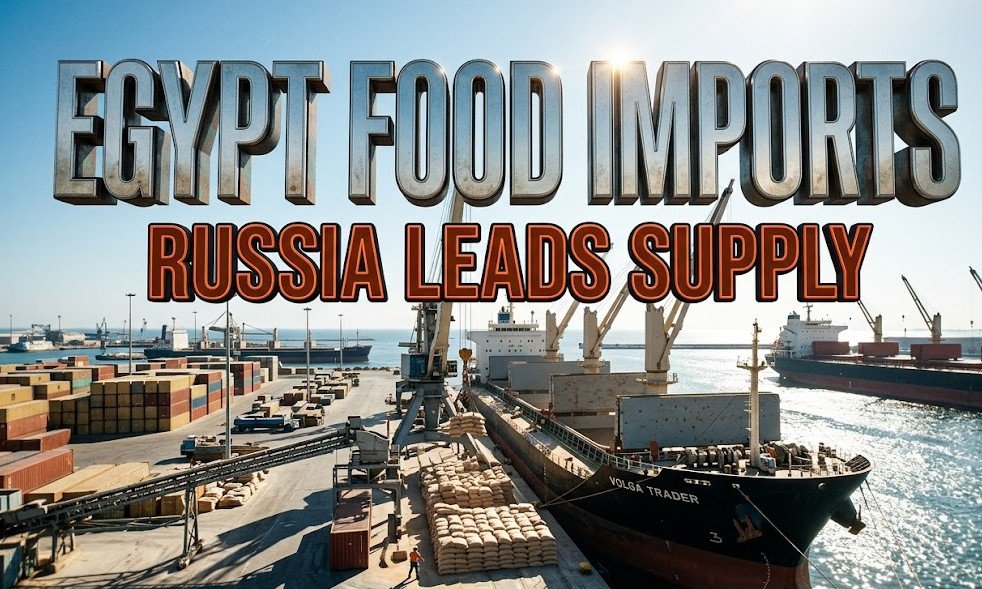
Logistics hubs such as Alexandria Port, Cairo International Airport, and Suez Port played major roles in handling the shipments. Alexandria Port alone received more than 860 consignments, making it the busiest entry point during the period under review.
Stricter Inspections and Controls to Protect Consumers
While the large import flows are critical for supply, Egypt is intensifying food safety inspections to protect consumer health. During the same week, authorities released more than 1,200 consignments after customs checks and conducted expedited processing for nearly 700 to speed up distribution. Officials also detained and examined more than 250 consignments to ensure compliance with food quality standards. Twenty-seven shipments failed lab tests and were rejected, with five of those subsequently re-exported to avoid clogging vital port infrastructure.
To maintain robust oversight, the NFSA issued new import licenses to 119 companies and activated its complaints committee to address disputes and compliance issues. This rigorous system of checks and balances aims to ensure that imported foods are safe and meet Egyptian requirements, while also protecting domestic consumers.
Export Growth Shows Balanced Trade Engagement
Surprisingly for a heavy importer, Egyptian food exports also saw strong performance in the period. The authority reported that roughly 230,000 tonnes of agricultural products were shipped abroad, including fresh produce, processed foods, flour, and other grain-based products. Five thousand consignments covered nearly 730 different product categories. Citrus alone accounted for 45,000 tonnes, while strawberries and other fruits made up 20,000 and 5,000 tonnes respectively. Vegetable exports reached 55,000 tonnes with potatoes the most significant contributor.
China, Saudi Arabia, Russia, Syria, Netherlands, and Jordan were among the top destinations, reflecting Egypt’s expanding global footprint as both an exporter and importer of food products. Ports like Damietta, Safaga, and Alexandria supported export activity with numerous dedicated shipments.
In support of this export drive, the NFSA issued more than 1,300 health certificates and over 3,200 export permits. These documents ensure that Egyptian products meet international standards and can compete effectively in markets abroad, benefitting more than 1,500 exporting companies.
Strategic Shifts in Food Trade and Domestic Supply
The backdrop to these import and export figures includes broader efforts by Egypt to reduce its reliance on imported staples over the long term. The government recently set higher domestic procurement targets for wheat in the upcoming season, aiming to buy 5 million tonnes from local farmers as part of food security reforms. This push is designed to strengthen domestic supply and reduce vulnerability to global market fluctuations.
At the same time, diplomatic developments are influencing the shape of food trade. Egypt signalled it will no longer accept grain exported by Russia from occupied Ukrainian territories, while at the same time welcoming deeper cooperation with Russia on broader food and energy logistics. These moves show how geopolitics and food security policy are increasingly intertwined.
What This Means for Daily Life in Egypt
For ordinary consumers, the steady import of food staples is reassuring, especially amid inflationary pressures and supply chain uncertainties. However, continued reliance on external suppliers underscores long-term vulnerabilities when global prices rise or geopolitical events disrupt trade. Egypt’s efforts to balance safety, supply, and self-reliance are central to ensuring affordable food access for all citizens.
The government’s multi-pronged strategy—mixing import diversification, strengthened inspections, export growth, and domestic production incentives—reflects a complex but necessary response to the realities of today’s global food systems.
In the end, this surge in food imports and exports highlights both challenges and opportunities for Egypt as it navigates an uncertain global market while working to keep food on tables and prices stable for its people. Tell us your thoughts on Egypt’s food supply situation and what it means for the future of food security.
