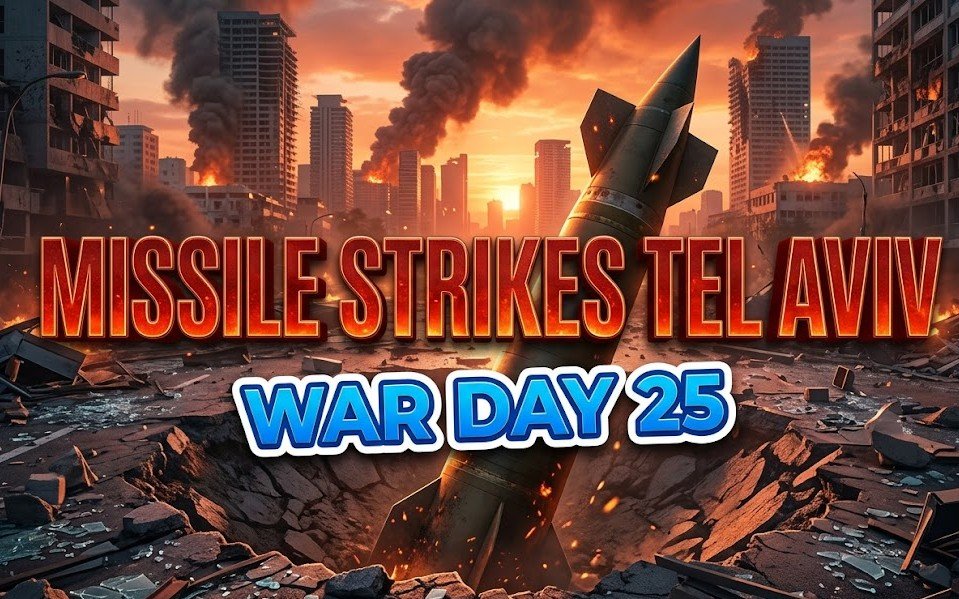
A powerful Iranian missile slammed into a residential area of Tel Aviv on Tuesday, damaging buildings and vehicles while lightly injuring several people. The strike marked another escalation in the conflict now entering its 25th day, with explosions echoing across the city and plumes of smoke rising in the sky. Residents rushed to shelters as sirens blared, highlighting the growing tension that shows no signs of easing.
Attack Rocks Heart of Tel Aviv
Israeli authorities confirmed the missile struck northern Tel Aviv between buildings early Tuesday. The blast wave heavily damaged three structures and left a large crater at the site. One older building took severe hits and may need demolition. Nearby cars and vehicles were mangled beyond repair.
Magen David Adom emergency services reported four to six people sustained minor injuries. All were treated at the scene and did not need hospital care. Shelters inside the affected buildings held up well, protecting those inside from harm. Eyewitnesses described a sudden loud boom that shook the ground. One local resident said he grabbed his partner in fear as the explosion hit without much warning.
Air raid sirens sounded at least six or seven times overnight and into Tuesday morning. Alerts reached as far as southern Israel near the Dimona nuclear facility. Social media filled quickly with images of smoke and debris. Israeli defense systems tried to intercept the incoming threat, but this one got through.
The missile carried a heavy conventional warhead. Reports described it releasing significant explosive force on impact. This fits a pattern where Iran has increasingly turned to cluster-style munitions in recent strikes to spread damage over wider areas and challenge Israel’s air defenses.
Iran’s Retaliation Strategy Takes Shape
Iran launched the strike as part of ongoing retaliation against joint US and Israeli operations that began on February 28. That day marked the start of intense airstrikes aimed at degrading Iran’s missile capabilities, nuclear sites, and military infrastructure. Tehran has fired hundreds of ballistic missiles at Israel since then, though many have been intercepted.
Israeli officials say their forces have carried out more than 3,000 strikes on Iranian targets. These include command centers, missile production facilities, and naval assets. Iran has lost over 140 naval vessels in the exchanges, according to US Central Command reports.
Cluster munitions have become a key part of Iran’s approach. These weapons release multiple smaller bomblets that are harder for defenses to stop completely. They create multiple impact points and increase the chance of hitting populated zones. While controversial and banned by many nations, Iran continues to use them to maximize psychological and physical impact on Israeli civilians.
The strike on Tel Aviv came after a brief lull in attacks. This timing suggests Iran is trying to keep pressure on Israel even as its own capabilities face heavy degradation from weeks of bombardment.
US Boosts Forces in the Region
The Pentagon is preparing to send more American troops to the Middle East amid the fighting. Reports indicate the elite 82nd Airborne Division’s Immediate Response Force, around 3,000 soldiers, could deploy quickly. They would support existing operations and potentially more direct actions if needed.
The 31st Marine Expeditionary Unit, with about 2,500 troops, is already heading toward the area. These moves add to the roughly 50,000 US personnel already stationed in the region. Officials have discussed options like securing key locations such as Kharg Island, Iran’s main oil export terminal.
President Donald Trump has spoken about productive talks with Iran and the possibility of winding down operations. He claims negotiations are moving forward despite the continued violence. Iranian officials have pushed back, calling such statements fake news and denying serious engagement.
This mixed message creates uncertainty. While diplomacy gets mentioned, military actions on both sides keep intensifying. The US has conducted thousands of strikes in Iran since late February, targeting everything from missile sites to energy infrastructure.
Global Economy Feels the Strain
The conflict has sent ripples far beyond the Middle East. Oil prices have spiked as concerns grow over supply disruptions from the Gulf. Shipping routes in the region face higher risks, forcing companies to reroute vessels and raising costs for goods worldwide.
Families in Israel live with constant alerts and shelter stays. Many describe growing fatigue from repeated sirens but remain resolute. In Iran, civilian areas have also suffered from the back-and-forth strikes, adding to the human cost on all sides.
The war stems from long-building tensions over Iran’s nuclear program, regional influence, and support for proxy groups. What started as targeted operations has grown into a broader confrontation involving direct missile exchanges and major power involvement.
Lives Disrupted as Uncertainty Lingers
People on the ground bear the heaviest burden. In Tel Aviv neighborhoods hit by the latest strike, residents picked through debris and checked on neighbors. The quick activation of shelters prevented worse outcomes, but the fear remains real. Parents worry about children, workers wonder about daily commutes, and everyone watches the news for the next development.
Israeli leaders vow to continue defending the country while striking back at threats. Iran insists its actions are justified responses to aggression. The United States sits in a complicated spot, balancing military support for Israel with efforts to find an off-ramp through talks.
This missile strike on Tel Aviv serves as a stark reminder that the conflict is far from over. Each new explosion raises the stakes and deepens the impact on ordinary lives caught in the middle. The coming days will test whether diplomacy can gain ground or if further escalation lies ahead.
The situation leaves many wondering how much more destruction will occur before calm returns. Share your thoughts in the comments below on what steps could help de-escalate this dangerous conflict.