Tel Aviv is reeling after a serious missile strike claimed the lives of at least two people and left others injured in what appears to be one of the deadliest direct attacks on the city since the war broke out between Iran and Israel. The incident on March 9 has heightened fears of a widening regional conflict with civilian areas now directly in the line of fire.
The attack happened as Iran launched another barrage of ballistic missiles toward central Israel, with warning sirens sounding across Tel Aviv and nearby cities. Explosions shattered the morning calm and emergency crews rushed to blast sites amid chaotic scenes of smoke and debris.
Below we look at the latest confirmed developments on the attack, how it unfolded, the broader war context, and what it means for civilians caught in the crossfire.
Missile Hits Heart of Tel Aviv Causing Civilian Casualties
Israeli emergency services confirmed that two people were killed after a missile struck a populated area in Tel Aviv early on Monday. Initial reports described the weapon as carrying submunitions that scattered across a wide swath of the city after detonating. This type of warhead increases the danger to civilians by dispersing multiple smaller explosive devices over a large area, making it harder to protect against casualties.
Additional details from local news outlets indicate that the victims included at least one foreign worker at a construction site and another civilian. Several people were also wounded by flying debris and the effects of the explosions, with emergency responders treating and evacuating the injured to hospitals in the city.
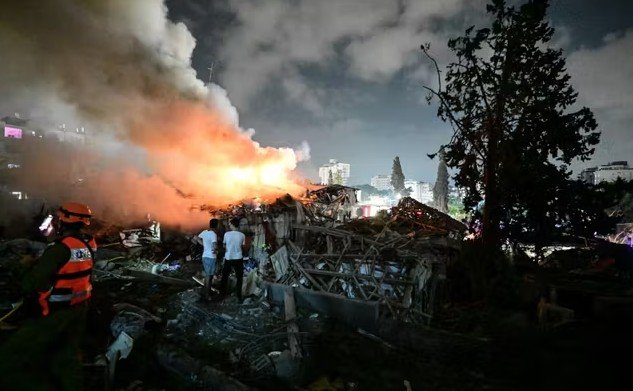
Witnesses in central Israel reported multiple detonations and thick plumes of black smoke rising across city streets as residents sought shelter underground when sirens wailed warning of the incoming missiles.
How the Attack Unfolded and What Weapons Were Used
According to military analysts, Iran has been deploying a mix of ballistic missiles capable of striking targets hundreds of kilometers away. These include systems with cluster-type warheads designed to inflict maximum damage across broad urban zones.
Israel’s multi-layered air defense network, including Iron Dome and other interceptor systems, has been active during these surges. Despite those defenses, at least some missiles have penetrated and caused damage inside Israeli cities, indicating both the intensity and sophistication of the Iranian attacks.
Before this latest strike, Israel recorded several waves of incoming missiles and unmanned aerial vehicles directed at central regions, southern sectors, and the north of the country. Official reports show that the Tel Aviv metropolitan area has been a primary target of these assaults, likely aiming to impact major population and economic centers.
Escalating War Between Iran and Israel
This strike comes amid an intensifying conflict that began in late February and has rapidly expanded. Since the onset of hostilities, Iran has launched dozens of attack waves involving ballistic missiles and drones targeting Israeli territory. Almost half of these attacks have focused on the densely populated central region around Tel Aviv.
In retaliation, the Israel Defense Forces have conducted extensive aerial strikes across Iranian territory, targeting missile launch sites, military infrastructure, and command centers. These operations, described by Israeli officials as part of “Operation Roaring Lion,” have aimed to degrade Iran’s missile capabilities and reduce the threat of future attacks.
The ongoing military exchanges have also drawn in other actors. Iran-backed Hezbollah forces have launched rockets and drones toward northern Israel, while Iranian units claim to have struck U.S. military bases in the Gulf region as part of wider hostilities.
Civilian Impact and Regional Fear
The human toll of this conflict has been mounting. Israeli authorities have reported numerous civilian injuries and fatalities since the escalation began, with hospitals in central Israel treating a growing number of wounded.
Beyond Israel, Iran and coalition strikes have affected infrastructure and populations in neighboring countries. In Gulf states including Saudi Arabia and the United Arab Emirates, officials have reported intercepting drones and missiles attributed to the conflict, raising concerns about a broader regional war.
For residents of Tel Aviv and other major cities, the psychological strain is also significant. Repeated air raid alerts and the reality of missiles hitting urban zones have shaken daily life, prompting calls for increased protective measures and international diplomatic efforts to curb the violence.
Quick Facts
-
Attack Time: March 9, early morning
-
Location: Tel Aviv metropolitan area and central Israel
-
Confirmed Fatalities: At least two people
-
Injuries: Multiple, with several hospitalized
-
Nature of Attack: Ballistic missile with submunitions
-
War Context: Ongoing Iran–Israel conflict, high missile activity targeting civilian and strategic areas
What This Means for the Future
The strike on Tel Aviv marks one of the most consequential assaults on an Israeli urban center since the broader conflict erupted. It underscores the dangerous escalation and evolving tactics used by Iran’s military forces. With attacks now reaching cities and civilian infrastructure, the risk profile for ordinary residents has sharply increased.
International diplomatic pressure is likely to grow as global leaders watch the conflict’s trajectory and the potential for spillover into neighboring states.
For now, Israelis are bracing for unpredictable developments, while emergency services and defense systems remain on high alert.
Israeli public discourse reflects deep concern and strong resolve. Recent polling suggests that many Israelis support continued military action despite rising casualties, indicating that national sentiment may harden as the conflict persists.