President Donald Trump has delivered one of his strongest statements yet in the escalating Middle East crisis, vowing that the United States will respond with a military force “that has never been seen before” if Iran carries out retaliation after recent U.S. and Israeli strikes. The warning, posted on his social media platform Truth Social, comes as the situation spirals into a broader confrontation that has shaken global politics, markets and diplomatic ties.
The conflict took a dramatic turn with coordinated strikes on Iran’s leadership and military infrastructure. As Tehran signals it may intensify its response, Trump’s dramatic warning from his Florida estate paints a picture of a world teetering on the edge of far more violent confrontation, raising concerns among leaders and civilians around the globe.
Trump’s Stark Message to Tehran
Trump’s Truth Social post was blunt and unequivocal. He wrote that reports indicated Iran was planning to strike “very hard today, harder than they have ever hit before,” a comment he framed as a threat of revenge following U.S.-Israeli attacks. “THEY BETTER NOT DO THAT, HOWEVER, BECAUSE IF THEY DO, WE WILL HIT THEM WITH A FORCE THAT HAS NEVER BEEN SEEN BEFORE,” he declared.
This message marked one of the most direct public threats by the president in the conflict, and underscores the tension between Washington and Tehran. The United States and Israel have launched combat operations under what Trump supporters describe as a strategic effort to degrade Iran’s military capabilities. Iranian officials have publicly vowed to retaliate, asserting their own military plans to respond to the attacks.
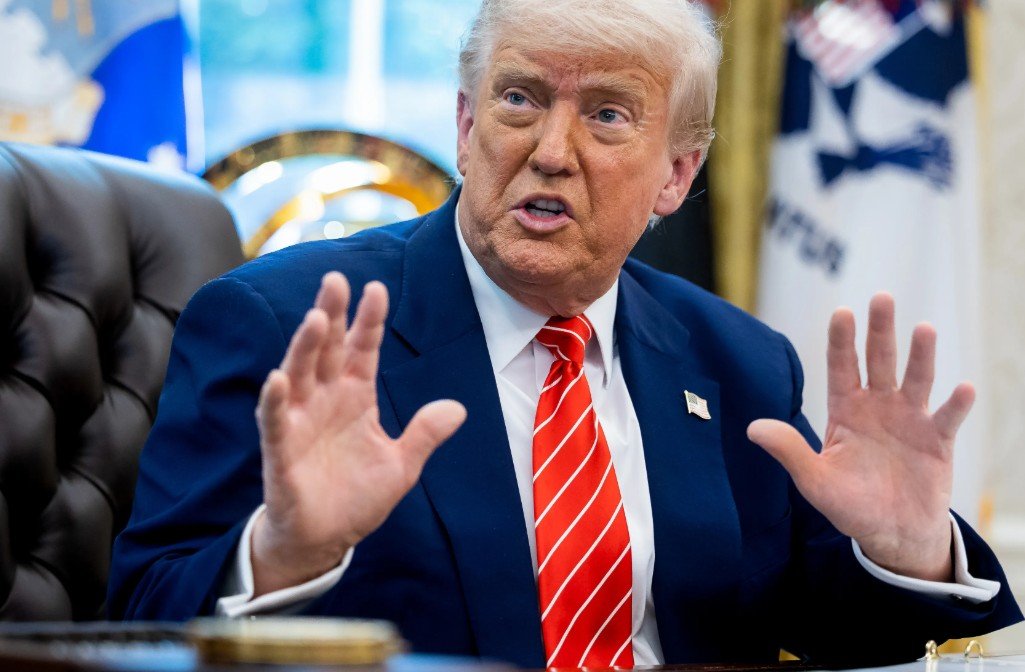
In addition to written posts, official White House communications shared images of Trump monitoring the ongoing operations—known as “Operation Epic Fury”—from his Mar-a-Lago estate in Palm Beach, Florida. These visuals and posts reinforce that the president is overseeing the military actions even while physically distant from Washington.
The Military Campaign and Its Fallout
The U.S. and Israeli air campaign has devastated significant portions of Iran’s leadership and military infrastructure, according to multiple reports. Tehran’s Supreme Leader, Ayatollah Ali Khamenei, was reported killed in the joint strikes, a development that has inflamed Iranian calls for a robust response and intensified the crisis.
The conflict has extended beyond strategic bombings. In retaliation, Iran has launched drone and missile attacks targeting U.S. military bases and allied positions around the Gulf region. These exchanges have sparked emergency responses from neighboring countries and raised alarms about wider regional escalation.
The U.S. Central Command has confirmed casualties among American servicemembers during the clashes, with both deaths and serious injuries reported as a result of Iranian missile and drone operations. Trump has acknowledged these losses, framing them as sacrifices in the broader strategic campaign.
Global Reaction and Public Anxiety
International reactions to Trump’s warnings and the unfolding conflict have been urgent and varied. Global leaders have called for restraint and diplomatic solutions even as military exchanges continue. Many nations, particularly in Europe and the Middle East, are deeply concerned about how prolonged hostilities could destabilize the region further.
Across the world, markets have reacted sharply. Energy prices have been volatile, with fears that disruptions in and around the Strait of Hormuz—a critical passage for global oil shipments—could push crude prices significantly higher. Transportation and logistics firms have already begun adjusting routes and operations in response to the risk environment.
Public sentiment, particularly in the United States, is sharply divided. Some citizens support a forceful military posture against Tehran, while others worry that the conflict could drag on with high costs and casualties. Social media has reflected this split, with intense debates over national security and foreign policy.
Strategic Calculations and Diplomatic Signals
Trump and his advisors have given mixed signals about the direction of the campaign. In statements to reporters, the president has suggested that the conflict could be relatively short, noting that the U.S. has “off ramps” that could allow for a quick reduction in military action, depending on how Iran responds.
Yet following these comments, Trump reiterated his commitment to continuing operations until U.S. objectives are achieved. Officials have described the coordinated U.S.-Israeli strikes as aimed at crippling Iran’s missile programs and preventing future conventional or nuclear threats.
Behind the scenes, U.S. diplomats and military officials continue to monitor the situation closely. While Trump’s public warnings are jarring, they are part of a complex strategy that also involves pressure on Iran through alliances, sanctions and potential diplomatic talks should Tehran show a willingness to engage.
Broader Risks and Regional Stability
Experts warn that the current crisis, if not carefully managed, could trigger wider conflict across the Middle East. Allies of Iran, such as militant groups or sympathetic governments, might become more active in confrontations, and trade routes could see further disruption. The economic and humanitarian toll has already begun to surface in places far from the conflict zone.
For civilians in the Middle East, the threat of escalation is a daily fear, adding to instability that has plagued the region for decades. In the United States, families watch anxiously as news flashes about casualties and emerging diplomatic crises. The global community, meanwhile, watches and waits to see whether the warnings and military actions lead to negotiation or further escalation.
The next days and weeks will be crucial. Trump’s threats, Iran’s responses and global diplomatic efforts will shape whether this chapter in the Middle East evolves toward a new peace process or deeper conflict with far-reaching consequences.