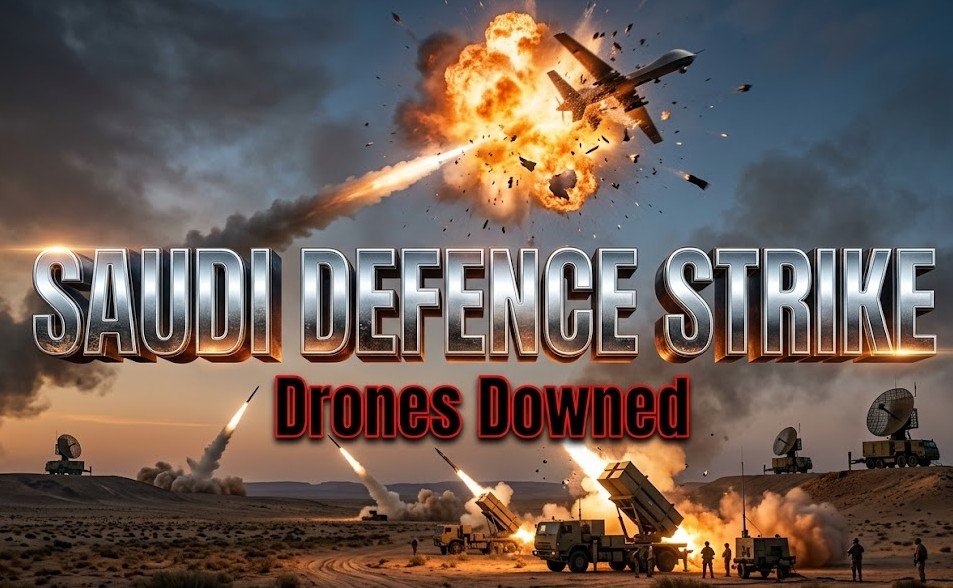
Saudi Arabia’s air defenses have once again successfully intercepted and destroyed hostile drones in the past few hours, highlighting rising security tensions in the Gulf region as conflicts tied to the Iran war expand. The Saudi Ministry of Defense confirmed that the Kingdom’s defense systems remain vigilant and operational amid repeated threats from ballistic missiles and unmanned aerial vehicles targeting its territory.
In a statement released on March 28, Major General Turki Al-Malki, spokesperson for the Saudi Ministry of Defense, confirmed that two drones were detected and downed by Saudi air defense systems within recent hours, underscoring the ongoing effort to protect civilian and military areas throughout the Kingdom.
The latest interception is part of a broader pattern of hostile aerial attacks and defensive responses that have become more frequent in recent weeks. Saudi air defenses have been actively countering threats, including both drones and ballistic missiles believed to be linked to broader tensions involving Iran and its regional allies.
Air Defenses Stay Alert After Multiple Drone and Missile Interceptions
Saudi Arabia’s air defense forces are operating at high readiness to detect and neutralize airborne threats, with several interceptions reported across key regions. In separate engagements earlier in the week, Saudi defenses intercepted six ballistic missiles and 26 drones aimed at strategic areas around Riyadh and the Eastern Province, Al-Malki reported.
Of the six ballistic missiles detected, Saudi forces successfully intercepted two, while the remaining four fell into the waters of the Arabian Gulf or unpopulated areas, reducing the risk of civilian harm.
In addition to the missiles, Saudi defenses destroyed 13 drones over Riyadh and the Eastern Province, with some debris reportedly falling near military sites without causing injuries.
This wave of defensive measures follows the destruction of 38 drones over the Eastern Province just days earlier, indicating persistent pressure from hostile forces and consistent engagement by Saudi military assets.
Regional Security Pressure Mounts Amid Iran‑Linked Strikes
The surge in drone and missile activity across the Gulf is occurring against the backdrop of an intensifying regional conflict tied to the ongoing war between Iranian forces and other state actors including the United States and Israel.
Other Gulf states have also reported interceptions of missiles and drones. For example, neighboring United Arab Emirates defense systems intercepted multiple drones and ballistic missiles, while Kuwait reported downing several hostile drones within its airspace after similar strikes.
Analysts say Iran’s strategy has increasingly involved asymmetric warfare using low‑cost drones and missiles to apply pressure on Gulf security infrastructure and strategic assets. Although Iran often denies direct involvement, Gulf governments attribute many of the aerial threats to Iranian‑linked forces or proxy groups aligned with Tehran.
How Saudi Defense Systems Are Responding
Saudi Arabia relies on a layered air defense network combining long‑ and short‑range systems, including Patriot surface‑to‑air missiles, to track and neutralize inbound threats. These advanced systems work in coordination with radar arrays to detect drones and missiles from long distances and engage them before they reach populated or critical zones.
The Kingdom’s defensive posture has been tested repeatedly, with interceptions reported across several regions including the capital Riyadh and areas in the Eastern Province. Despite the volume of threats, Saudi authorities have emphasized that no civilian casualties have been reported from recent interceptions, though wreckage from downed drones occasionally falls near military installations.
Security officials have also stressed that these defenses remain robust and have been successful in mitigating risk to urban centers, infrastructure, and critical facilities. Continued readiness and rapid response are at the core of Saudi defense strategy amid evolving threats.
Wider Conflict Implications for the Gulf
The repeated drone and missile strikes have broader implications for regional stability and global energy markets. The Middle East, already strained by ongoing geopolitical conflicts, now sees an uptick in aerial threats that risk escalating into wider confrontations. International powers including the United States and several Gulf states have increased military cooperation, emphasizing the need for collective air defense capabilities and intelligence sharing.
Recent diplomatic efforts — including defense cooperation agreements between Saudi Arabia, the United Arab Emirates, Qatar, and external partners — aim to enhance air defense readiness and joint response mechanisms to deter future attacks.
The security situation remains fluid, with more attacks and defensive actions likely as regional tensions persist.
Despite the pressure, Saudi defenses continue to protect its borders and major population centers, demonstrating resilience in the face of repeated aerial threats.
As the situation develops, authorities have pledged to maintain vigilance and strengthen their defense posture to ensure safety and stability for the Kingdom and its citizens.
Saudi Arabia’s recent defensive success in intercepting two drones again shows a determined effort to shield its airspace and civilian lives amid a wider regional conflict involving drones, missiles, and complex geopolitical tensions.
We welcome your thoughts. Comment below with your view on regional security and share this article using hashtag #SaudiDefenseUpdate if you are following the events on social media.