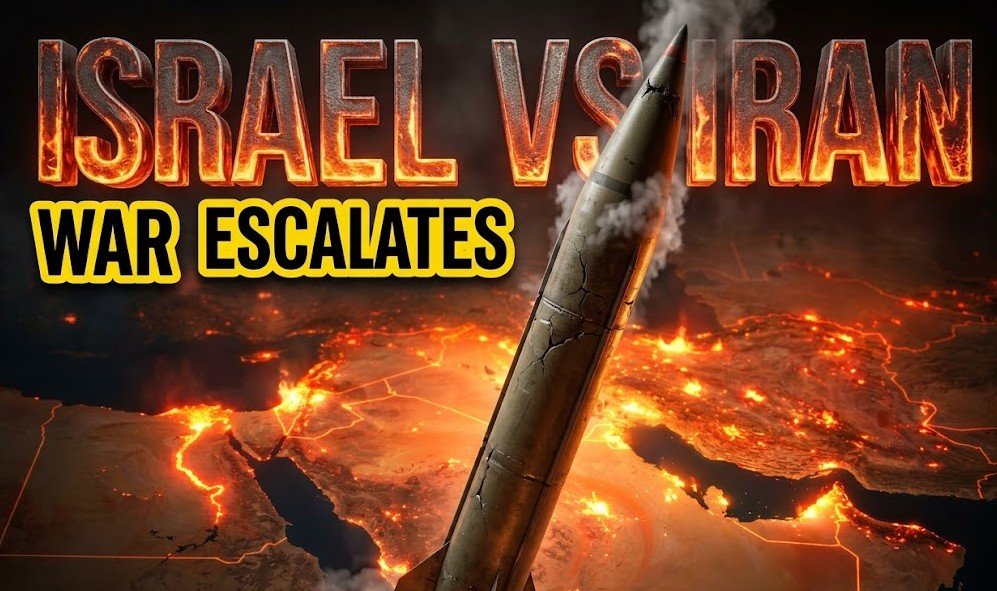
The Middle East war is entering a dangerous new phase. Israeli Prime Minister Benjamin Netanyahu has openly declared that Israel and the United States will continue striking Iran, signaling no pause in military action as tensions escalate across the region.
His remarks come as fresh airstrikes, rising casualties, and widening regional threats push the conflict closer to a prolonged war.
Netanyahu signals continued joint strikes with US
Speaking at a military facility in Tel Aviv on April 3, Netanyahu made one of his strongest statements yet.
He said Israel and the United States will “continue to crush” Iran through coordinated military operations.
He described ongoing actions that include:
- Eliminating key commanders
- Bombing transport routes such as bridges
- Targeting critical infrastructure
The Israeli leader stressed that operations are being carried out in full coordination with US President Donald Trump and both countries’ armed forces.
He also claimed that Iran’s leadership is now weaker than before, while asserting that Israel’s military strength is at its peak.
This message signals a clear intent. The war is not slowing down.
How the war began and escalated fast
The current phase of the conflict began on February 28, 2026, when the United States and Israel launched major strikes inside Iran.
These attacks targeted:
- Military bases
- Nuclear-related facilities
- Senior leadership
One of the most shocking developments was the reported killing of Iran’s Supreme Leader during the initial strikes.
Iran quickly responded.
It launched waves of missiles and drones toward Israel, US military bases, and several Gulf countries. Explosions were reported across multiple regions, turning the conflict into a multi-front crisis.
Key facts about the war so far
| Event | Details |
|---|---|
| War start | February 28, 2026 |
| Main players | Israel, United States, Iran |
| Initial trigger | Strikes on Iran’s nuclear and military sites |
| Response | Iranian missile and drone attacks |
| Casualties | Thousands reported across regions |
The scale and speed of escalation have shocked global observers.
Fighting spreads beyond Iran and Israel
The conflict is no longer limited to two countries.
Recent developments show a wider regional impact:
- Israeli airstrikes have hit targets in Lebanon, especially areas linked to Hezbollah
- The United States has warned of possible Iranian retaliation in Lebanon
- Civilian evacuations have increased across conflict zones
In Lebanon alone, more than a thousand people have reportedly died, and large parts of the population have been displaced.
Military operations have also expanded to include:
- Ground assaults
- Naval strikes
- Air raids on weapons depots
At the same time, warnings of attacks on universities and public spaces have raised fears among civilians.
The war is now affecting daily life far beyond the battlefield.
Rising humanitarian crisis and global impact
Behind the military headlines lies a growing humanitarian crisis.
Recent reports highlight severe consequences:
- Hundreds of children killed across the region
- Thousands injured
- Over a million people displaced in Lebanon alone
Schools, hospitals, and basic infrastructure have been damaged or destroyed.
Children are among the hardest hit, facing trauma, displacement, and loss of education.
The economic impact is also building.
- Oil prices have surged due to threats to key energy routes
- Global markets are reacting to uncertainty
- Governments are adjusting defense and economic plans
Even Israel’s own economic projections now depend on how long the war continues.
What comes next as tensions keep rising
There is no clear end in sight.
Military analysts believe the conflict could continue for weeks or even months. Both sides appear determined to push forward.
Israel and the United States are focused on weakening Iran’s military capabilities and influence in the region.
Iran, on the other hand, continues to show it can retaliate across multiple fronts, including targeting US assets and allied countries.
The biggest concern now is escalation.
If more countries get involved, the conflict could turn into a much larger regional war.
For now, Netanyahu’s message is clear. The strikes will continue.
The world is watching closely as each new development brings fresh uncertainty.
As this crisis unfolds, what do you think about the growing tensions in the Middle East? Share your thoughts and join the conversation online.