
Egypt beat Australia 4-2 on penalties at the 2026 World Cup in Dallas on July 3, sealing the country’s first ever knockout-stage victory and a last-16 tie with Argentina after coaching staff turned a single La Liga video into the decisive edge in the shootout. Mohamed Salah, the Egypt captain, delivered a Panenka down the middle of the goal that Mathew Ryan guessed the wrong way on. The reason Egypt trusted the chip came from a Real Madrid-Levante match played in January, when Kylian Mbappé converted a penalty against the same goalkeeper and the Egyptian staff filed the footage away for later.
The film work rewrote a shootout history that had gone the wrong way four times in a row. Egypt had lost their last four major-tournament penalty deciders. This time, with the Pharaohs going four from four and Australia missing twice, Egypt reached the last 16 of a World Cup for the first time.
How Egypt Identified Ryan’s Weakness on a Real Madrid Tape
The clue was hiding in plain sight. Before the round-of-32 tie at Dallas Stadium, Egypt’s analysts pulled up footage from Real Madrid’s La Liga match against Levante, a January fixture in which Mbappé scored from the spot. The goalkeeper for Levante that day was Mathew Ryan, the same Ryan Australia planned to call on if the game went to penalties.
The Egyptian staff noticed a pattern in the tape. Ryan tended to commit early off his line, leaning toward one side before the kicker had even struck the ball. The DAZN España broadcast of Egypt’s pre-shootout video session, posted to X in the early hours of July 4, showed the squad watching Mbappé’s conversion on the team screens. The framing from DAZN called the tape “lo más random que podías ver hoy,” roughly, the most random thing you could see today. The Egyptian analysts were doing something more deliberate: cataloguing a tendency they believed would survive the move from La Liga to a World Cup knockout.
The DAZN clip of Egypt’s pre-shootout video session made its way around social media within hours of the final whistle. Salah, the captain, took the homework to the spot. He had created more chances than anyone at the tournament with 16, and after the match he told BBC Sport he had decided to chip the ball down the middle only as he stood over it.
The 119th-Minute Goalkeeper Switch That Did Not Pay
Australia’s plan hinged on a different kind of preparation. Coach Tony Popovic had been working up the 119th-minute substitution for most of the second half of extra time. He had Ryan, Australia’s captain and former first choice, warm up alongside Paul Izzo, with the instruction that Ryan would replace Patrick Beach only if the Socceroos had no further substitutions to make.
Beach found out he was coming off at the same moment the stadium did. The 22-year-old Melbourne City goalkeeper had started all of Australia’s matches in the tournament, including a stunning 94th-minute fingertip save to deny Ramy Rabia what would have been an Egypt winner in the final minute of normal time. “I didn’t know [about the substitution]. I found out at the same time you guys did,” Beach told SBS News. “I just saw, obviously, my name came up, and just jogged off.” Ryan said he learned of the plan only five minutes before half-time of extra time.
Popovic defended the call after the match. “We just felt that Matty’s experience will be the difference,” he said. “In the end, it didn’t work out that way, but not because of Matty’s poor judgment or lack of ability. They took really good penalties.” He also pointed to Ryan’s penalty-saving record, calling Beach “new as a goalkeeper not just with the national team, but even in club football.” The gamble did not pay. Ryan guessed the wrong direction on the last three Egypt penalties, per the Straits Times, and Australia missed two of their own. Harry Souttar fired the first kick over the bar. Popovic chose 18-year-old defender Lucas Herrington for the fourth Australian penalty, and the teenager struck the crossbar.
The match itself had been tight. Egypt took the lead through Emam Ashour’s 13th-minute header from a Karim Hafez cross, his second goal of the tournament. Australia equalised when Mohamed Hany diverted Aiden O’Neill’s free-kick into his own net, a deflection that made it the 13th own goal of the finals and surpassed the previous World Cup mark of 12 set in 2018. Australia had the better of the first half, with Cristian Volpato’s 25-yard effort clipping the top of the crossbar inside the opening five minutes.
The Penalty That Sealed Egypt’s First World Cup Knockout Win
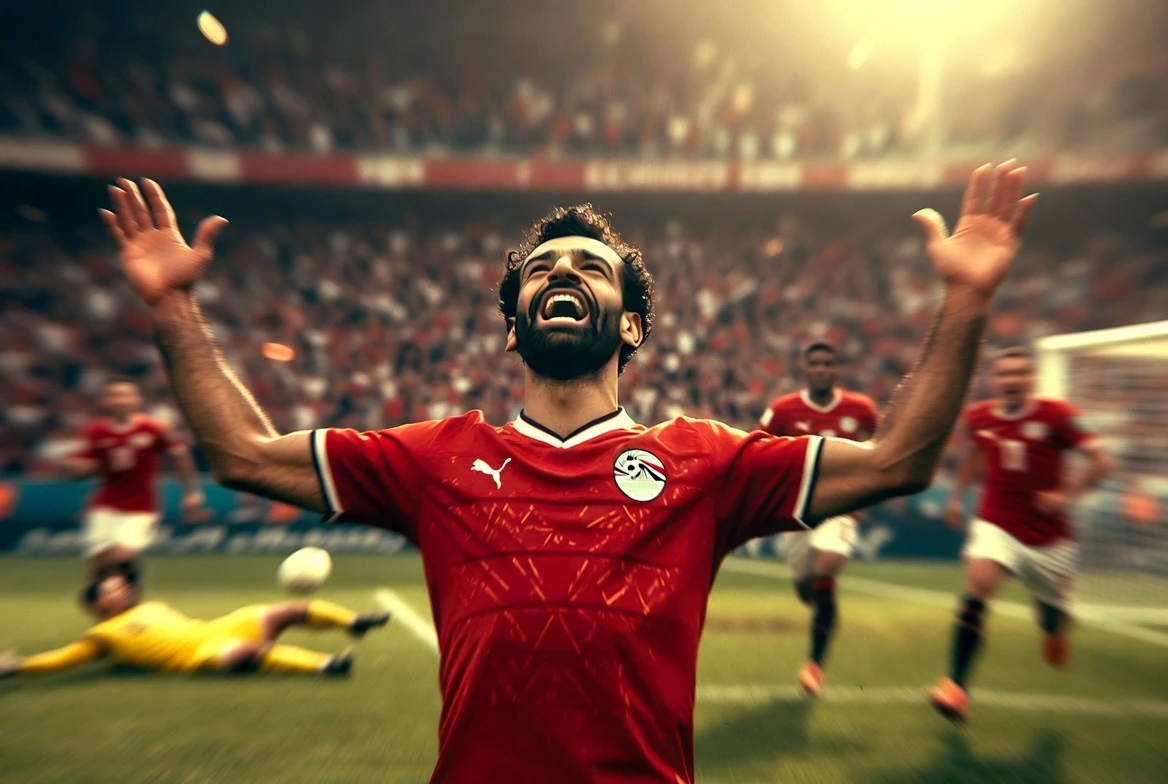
The defining moment arrived with Egypt 2-1 up in the sequence and Salah, 34, walking to the spot for what became a Panenka down the middle. Souttar’s miss had given the Pharaohs breathing room. A goal would have made the shootout 3-1 and forced Australia to score their remaining kicks to stay alive.
If somebody was going to do it, it would be me. I am more experienced than others, and I wanted to give them confidence. I decided last minute, I had to do it.
Salah told BBC Sport after the match that the decision to chip the ball down the middle was made only as he stood over it. He adjusted his shin pads and puffed his cheeks while Ryan committed to one side. The ball drifted gently into the middle of the goal. ESPN’s match report described the finish as a “cool Panenka chip down the middle of the goal that evaded the diving Mathew Ryan.” Hossam Abdelmaguid scored Egypt’s fourth and final penalty to settle the tie.
Salah was soon in tears on the pitch at full time, the emotion of the moment breaking through after his side had lost four previous shootouts in major tournaments. He was later spotted wearing a Tutankhamun-style headdress as he celebrated with teammates, then took a lap of honour on his own, applauding the Egypt supporters inside Dallas Stadium.
Egypt Write Their Own World Cup History
The result put Egypt into territory the country had not occupied in 92 years of World Cup football. The penalty win means the Pharaohs have now scored six goals in this tournament, more than they managed across their previous three appearances in 1934, 1990 and 2018 combined.
- First ever World Cup knockout-stage victory
- Fifth African nation to reach the knockout round of a World Cup, after Cameroon in 1990, Senegal in 2002, Ghana in 2010 and Morocco in 2022 and 2026
- Second African nation to win a World Cup penalty shootout, after Morocco
- Part of the first time two African nations have won a knockout match at a single World Cup, alongside Morocco
Egypt’s earlier 3-1 win over New Zealand in the group stage was the country’s first World Cup victory in 92 years of tournament history. For Salah personally, the night ended in tears, an emotion the captain connected to the size of the occasion. He has been without a club since leaving Liverpool in May and played the full 120 minutes through a hamstring issue that had threatened his place in the starting XI.
Argentina and Messi Await in Atlanta
The reward for Egypt’s preparation is the holders. Argentina, who survived a scare against Cape Verde in their own round-of-32 match, will meet Egypt at the Mercedes-Benz Stadium in Atlanta on Tuesday, July 7. Lionel Messi scored against Cape Verde to take the Golden Boot lead.
Salah vs Messi has been the framing on the Egyptian side since the round-of-32 draw was set. Pre-match talking points had centred on Salah’s hamstring and Popovic’s 24-man squad. Salah, who has created 16 chances at the 2026 World Cup, tied with Belgium’s Leandro Trossard, told BBC Sport the squad is treating the occasion as the biggest stage they will play on. Argentina will be the favourites to advance to the quarterfinals.
The Pharaohs have made history with their preparation as much as their finishing. Hossam Hassan, the Egypt coach, had gambled on Salah’s fitness after the captain’s hamstring issue against Iran, and the forward delivered the full 120 minutes in Dallas.
