
BUSINESS
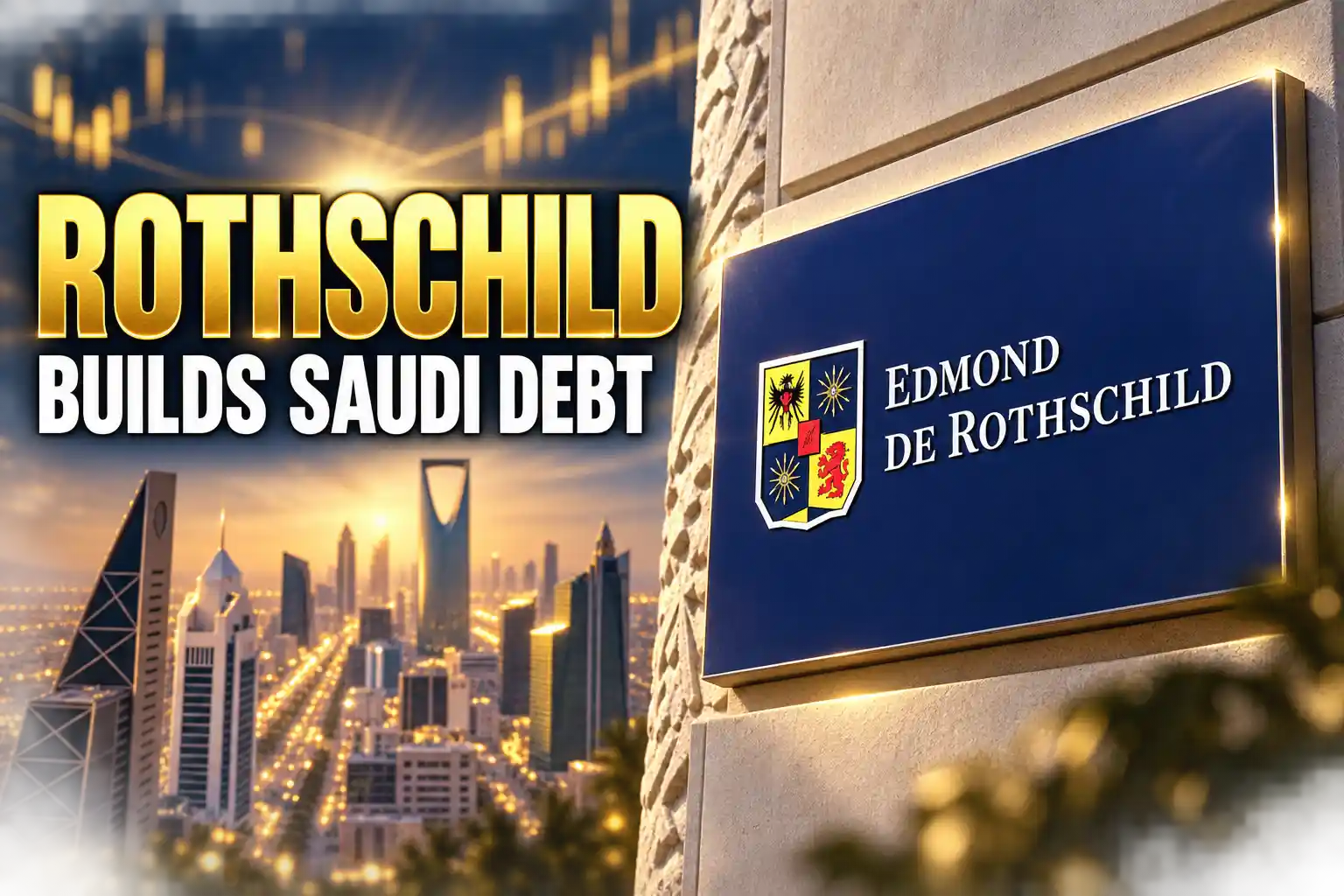
Edmond de Rothschild Builds a Saudi Infrastructure Debt Platform
Edmond de Rothschild’s Riyadh plan was a debt-gap shop with SNB Capital and Watar, aimed at mid-size Saudi projects as Vision 2030 leaned on borrowing.

Edmond de Rothschild said on June 13, 2024 it would open a Riyadh office and build an infrastructure debt platform with SNB Capital. The Swiss house, then running more than €5 billion ($5.4 billion) in infrastructure debt, framed the step as a way to add private loans beside equity and bank senior debt for Vision 2030. A joint venture with Riyadh firm Watar Partners was due to go live in the second half of 2024, once licences landed, and local staff were to be hired.
The office was the easy headline. The product was credit for projects that state equity and Gulf bank books would not cover on their own.
Edmond de Rothschild Lined Up a Riyadh Debt Shop
The Geneva group and SNB Capital said in a joint statement that they would structure a fund platform to finance infrastructure across Saudi Arabia. Watar Partners, an independent financial-services firm, would sit in a separate joint venture offering debt products and advice to Saudi family offices and institutions. Both tracks, the statement said, needed regulatory approvals.
Ariane de Rothschild, then chief executive, tied the move to relationships the house already had in the kingdom. “This is a logical next step for our group, building on the long-standing business relationships we have with the country,” she said. In the fuller statement she added that Edmond de Rothschild’s European infrastructure-debt record would help Vision 2030, and that the group wanted a long-term presence in the market.
Rashed Sharif, chief executive of SNB Capital, pointed at transport and renewable energy as the first hunting ground. Abdulwahab A. Al Betairi, managing partner at Watar Partners, called Edmond de Rothschild one of Europe’s best-known financial franchises and said the house would bring the expertise the kingdom’s infrastructure plans required. The platform, the firms said, would sit beside existing equity and senior debt rather than replace them.
THE GULF STEPS EDMOND DE ROTHSCHILD PUT ON PAPER
- February 28, 2023: Opens Edmond de Rothschild (Middle East) Ltd in the Dubai International Financial Centre with a Category 4 DFSA advisory licence, led by Ali Raza Syed, and plans to hire about five people.
- June 13, 2024: Announces a Riyadh office, an infrastructure debt fund platform with SNB Capital, and a joint venture with Watar Partners, all subject to licences.
- Second half of 2024: Target window for the joint venture to go live and for a local office to open, with Saudi nationals to be hired.
- April 2, 2025: Jean-Francis Dusch, then global head of infrastructure and structured finance, says the local joint venture has been established and that the book is aimed at small and medium-sized projects.
Public CMA notices that are easy to find still belong to Rothschild & Co, a separate advisory firm that opened in King Abdullah Financial District in February 2024. Edmond de Rothschild’s own Saudi filing trail is thinner. PitchBook later listed the Watar joint venture as a private Saudi company, which matches Dusch’s 2025 wording, but neither the group nor SNB Capital has published a named list of Saudi loans from the new platform.
Why Edmond de Rothschild Chose Debt Over Equity
Jean-Francis Dusch told an industry interview on April 2, 2025 that Saudi Arabia was already the largest infrastructure market in the region. The house was not trying to compete with the Public Investment Fund on equity, or with local banks on classic senior loans. It was trying to sit in the space between them.
The platform I represent is dedicated to debt. There has been a lot of equity investment from the kingdom and the strong regional banks, as well as large global banks. However, as infrastructure investment accelerates, we anticipate a liquidity gap that we can help bridge.
Jean-Francis Dusch, then CEO of Edmond de Rothschild Asset Management UK and global head of infrastructure and structured finance, April 2, 2025
That gap is the whole thesis. Vision 2030’s early pitch leaned on foreign direct investment and on the kingdom’s own balance sheet. Direct investment has been uneven, and mega-projects have been re-ranked. Banks, meanwhile, have had to raise more wholesale money to keep lending. Moody’s said in October 2025 that progress on the biggest schemes was uneven, with a shortfall in private investment sitting beside engineering limits and weaker oil prices.
THE FUNDING SQUEEZE AROUND VISION 2030
- Private infrastructure: The World Bank’s 2024 Private Participation in Infrastructure Annual Report put Middle East and North Africa private infrastructure commitments at $0.5 billion, down from $3 billion in 2023, an 83 percent drop.
- Regional gap: State Street Global Advisors has put the GCC private financing shortfall at $250 billion.
- Bank wholesale: Moody’s said Saudi banks issued SAR 56 billion in bonds and hybrid instruments in 2024, more than double the SAR 21 billion raised in 2023, with foreign funding up from 6 percent of liabilities in 2020 to 11 percent by June 2025.
- PIF leverage: Moody’s put Public Investment Fund debt at SAR 154 billion at the end of 2024, up about SAR 113 billion since 2020.
Dusch’s 2024-25 pitch was that private infrastructure debt would become more useful as those pressures built, not less. He wanted contracted cash flows, not a share of a still-empty giga-city.
SNB Capital and Watar Hold the Local Book
The Swiss house did not try to walk into Riyadh alone. SNB Capital, a Capital Market Authority licensee and the investment arm of Saudi National Bank, brought origination, local credit knowledge, and a claim to be the Saudi Arabia’s largest asset manager. In a December 2024 statement on a Moody’s upgrade to A2, SNB Capital put its assets under management at SAR 248 billion as of September 2024. Sharif had run the firm since February 2021.
Watar Partners, founded in 2014 in Riyadh, brought family-office coverage. The joint statement said its team already advised a mixed Saudi client base. That is the hidden book: not the ministry of finance, and not a London infrastructure fund, but Saudi families that sit on cash and are being asked to fund roads, power, digital networks, and social assets at home.
WHO DOES WHAT IN THE 2024 PACKAGE
| Party | Role in the plan | What it put on the table |
|---|---|---|
| Edmond de Rothschild | Infrastructure debt manager | European credit process, more than €5 billion in infrastructure debt assets in June 2024, Riyadh office plan |
| SNB Capital | Local platform partner | Kingdom origination, SAR 248 billion in assets as of September 2024, transport and renewables coverage |
| Watar Partners | Joint-venture partner | Family-office and institutional advisory, local hiring, Riyadh presence |
The structure splits two jobs that banks often mash together. SNB Capital helps build the fund vehicle that writes loans. Watar helps sell the product and the advice to private Saudi capital. Edmond de Rothschild supplies the credit template it has used in Europe since 2014.
Mid-Size Projects Are the Opening Wedge
Dusch was blunt about scale. “The debt instruments we offer are currently more suited to small and medium-sized projects rather than megaprojects,” he said. “However, as the market evolves, we anticipate broader participation.” He also said about 30 percent of the firm’s portfolio was greenfield and 70 percent brownfield, a mix that favours upgrades and contracted assets over brand-new cities.
That choice matters in a year when the Public Investment Fund has talked about must-haves versus good-to-haves, and when large schemes have been slowed. A lender that wants a water pipeline, a grid link, a fibre route, or a storage battery can keep working while a mirrored linear city waits. Dusch said the first step was Saudi Arabia with strong local partners, then other GCC markets, with a “multibillion-dollar infrastructure programme in the region” as the longer aim.
On January 5, 2026, writing as chief investment officer for infrastructure debt, he said Edmond de Rothschild had deployed €1.6 billion in infrastructure assets in 2025, across 30 deals. Since 2014 the team had made more than 135 investments in 21 countries. About 30 percent of 2025 investments sat in renewables and battery storage. The 2026 note does not name a Saudi borrower. The European engine was still the one producing the published numbers.
Dubai Came First Under a Category 4 Licence
The Riyadh plan followed a quieter UAE step. On February 28, 2023 the group opened Edmond de Rothschild (Middle East) Ltd in DIFC, upgrading a representative office to a Category 4 advisory licence from the Dubai Financial Services Authority. Ali Raza Syed became senior executive officer, reporting to Saman Habibian, market leader for the Middle East and Africa. A spokesperson said the shop would hire about five people.
Ariane de Rothschild, speaking then as chair, said most regional clients ran family businesses and that Dubai was a natural base. Essa Kazim, DIFC governor, put more than $3 trillion of private wealth within an hour’s flight of the city. That office was built to advise existing clients and to open the group’s full product set, including private markets. The Saudi vehicle was built to originate infrastructure loans. One is a wealth door. The other is a credit door.
Riyadh’s own pull on foreign firms has only grown since, through the regional-headquarters rules that now sit on government contracts. That wave includes BNP Paribas shifting its regional hub from Bahrain to Riyadh. Edmond de Rothschild’s 2024 statement was not an RHQ filing. It was a specialist credit joint venture, which is why the missing public loan tape still matters more than a brass plate.
What the Riyadh Platform Is Built to Fund
The June 2024 statement listed the sectors Vision 2030 wanted built: transport, energy, energy transition, digital, social, utilities, and the circular economy. That list matches the European book. The group’s BRIDGE infrastructure debt platform launched in 2014 after an advisory stint in public-private partnerships. Dusch said the first idea raised $400 million in less than 10 months, from a team of fewer than 10 people, and that by April 2025 the platform had raised more than $6.5 billion. In June 2024 the group’s wider house was put at CHF 163 billion (€168.5 billion) in assets.
SECTORS NAMED IN THE SAUDI DEBT PLAN
- Transport and utilities: Roads, rail, water, and grid assets with contracted offtake, the classic core of European infrastructure debt.
- Energy transition: Renewables and storage, which made up about 30 percent of Edmond de Rothschild’s 2025 infrastructure investments in the global book.
- Digital: Fibre, towers, and data-centre credit, where Dusch has said the firm now prefers edge and co-location over crowded hyperscale deals.
- Social and circular: Schools, health kit, municipal services, and waste, the slower assets that still pay on public contracts.
Dusch’s warning was selectivity. Large programmes get announced, he said, and not every project is ready for a lender. The Saudi book, if it follows the European one, will look like a stack of mid-size loans with covenants, not a single ticket on a giga-project. That is also why a quiet tape is not proof of failure. It can mean the firm is still waiting for bankable documents.
Vision 2030 Now Leans Harder on Borrowing
The 2024 statement already noted that Vision 2030 had drawn limited money from outside the kingdom. The years after made that line look kind. Moody’s described mega-project progress as uneven. The IMF’s December 2025 GCC outlook, as relayed in later fiscal work, treated public money as insufficient for the region’s infrastructure pace. State Street’s $250 billion GCC private-finance gap sits on the same point.
Saudi public debt is still low by rich-country standards. An Atlantic Council stress test notes that the IMF projects Saudi government debt at 32.1 percent of GDP in 2026, with room to borrow. Room is not the same as cheap, endless credit for every Vision 2030 line item. Banks have already gone to the bond market. The Public Investment Fund has added debt. Private infrastructure tickets in the wider MENA set collapsed in 2024 on the World Bank’s measure.
That is the setting in which a Swiss infrastructure-debt team, a Saudi asset manager, and a Riyadh family-office adviser said they would build a local platform. Two Aprils later, Dusch said the joint venture existed and that the instruments fit smaller projects. The published 2025 deployment figures still read as a European story. The Saudi loan names have not been put out.
If the platform does what the 2024 statement promised, the proof will be ordinary: a water concession, a storage battery, a fibre ring, with SNB Capital on the ticket and a family office in the fund. Until those credits are named, the Riyadh office remains a credit thesis with a licence still attached as a condition, sitting in a market that needs private debt more than it did when Ariane de Rothschild called the step logical.
Disclaimer: This article is news reporting and analysis of Edmond de Rothschild’s disclosed Saudi plans, partner statements, and related public figures. It is informational only and is not investment advice, a solicitation, or a recommendation to buy or sell any fund, loan, bond, or other instrument, and it is not legal advice on licences or joint ventures. Readers considering any investment or business step tied to these firms or to Saudi infrastructure credit should consult a licensed financial adviser and, where needed, a qualified legal counsel in the relevant jurisdiction. Assets, ratings, project status, and licence conditions are taken from the cited statements and may change.

Christa Pike Survived the Execution Tennessee Would Not Pause

Musk’s Oligarch Charge Hits a Queue of Three

Circle Puts USDC and EURC Into SAP Pay Workflows

Ring’s First Smart Lock Skips Home Wi-Fi for Sidewalk

GTA 6 Puts Cash Back on the Story Path

Salah Captained Egypt to Their First World Cup Win

Aramco Crash Kills 14 Two Days After Oil Restart

Apple Labor Day Deals Hide June’s Memory Price Hike

Zelda’s 40th Switch 2 Ships Without a Zelda Game

Palworld 1.0.4 Adds Palpedia Search After the 1.0 Launch
-
 NEWS5 months ago
Salah Captained Egypt to Their First World Cup Win
-
 BUSINESS4 months ago
Aramco Crash Kills 14 Two Days After Oil Restart
-
 NEWS2 months ago
Apple Labor Day Deals Hide June’s Memory Price Hike
-
 GAMING1 month ago
Zelda’s 40th Switch 2 Ships Without a Zelda Game
-
 GAMING1 month ago
Palworld 1.0.4 Adds Palpedia Search After the 1.0 Launch
-

 NEWS3 months ago
El Niño Puts Israel’s Needed Winter Rain on a Flood Clock
-

 ENTERTAINMENT1 month ago
King Charles Letter Keeps Harry and Meghan as Private Citizens
-

 ENTERTAINMENT4 months ago
A Thousand and One Drops Off Riyadh’s October Calendar