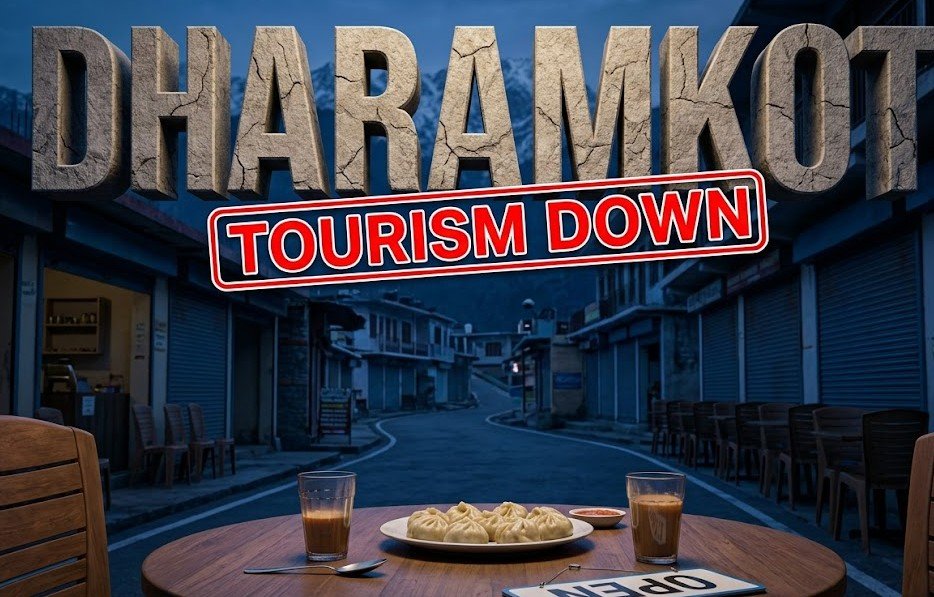
The silence in Dharamkot is hard to miss this season. Known as the “Tel Aviv of the Hills,” the village is facing an unusual slump as Israeli tourists stay away due to rising tensions in West Asia. Local businesses that once thrived on foreign visitors are now struggling to survive, raising serious concerns about the region’s tourism future.
Tourism slowdown hits Dharamkot hard
Perched above McLeodganj in Himachal Pradesh, Dharamkot has long been a favourite among Israeli backpackers. Every year, tourists arrive from March and stay through the summer months, filling cafes, guesthouses, and narrow hill lanes with life.
This year tells a different story.
Hotel occupancy in many properties has dropped close to zero, according to local tourism stakeholders. Shops that once displayed Hebrew signs and served Israeli dishes now sit quiet, waiting for customers who are not arriving.
A quick snapshot of the situation:
- Peak tourist season has begun, but footfall remains low
- Guesthouses and homestays are largely empty
- Restaurants report sharp decline in daily business
- Taxi drivers say trips have reduced significantly
The absence of Israeli tourists, who form a major chunk of Dharamkot’s visitors, has created a visible gap in the local economy.
West Asia conflict disrupts travel plans
The ongoing conflict involving Israel and regional tensions has had a ripple effect on global travel. Flight disruptions, airspace restrictions, and safety concerns have discouraged tourists from planning long trips abroad.
In Dharamkot, this impact is direct and immediate.
Many Israeli tourists who usually plan extended stays are either delaying travel or cancelling plans altogether. Some who were already in India have chosen to return early due to safety concerns back home.
Travel uncertainty has become the biggest barrier, not just distance or cost.
Local officials say such geopolitical issues always affect tourism, especially in destinations dependent on international visitors. This year’s situation is more severe due to prolonged uncertainty and limited flight connectivity.
Local businesses struggle to stay afloat
The economic impact is being felt across every layer of Dharamkot’s tourism ecosystem.
Hotel owners say bookings have dried up. Restaurant operators report fewer walk-ins. Taxi drivers wait longer for passengers, often returning home with no earnings for the day.
One restaurant owner described the situation simply: business has almost stopped.
For many locals, tourism is not just a source of income, it is their only livelihood. The sudden drop in visitors has forced some to cut costs, while others are considering temporary closures.
Who is most affected?
| Sector | Impact Level | Key Challenge |
|---|---|---|
| Hotels & Homestays | Severe | Empty rooms, no bookings |
| Restaurants | High | Low footfall, reduced sales |
| Taxi Services | High | Fewer trips, idle vehicles |
| Small Shops | Moderate | Drop in tourist spending |
Small businesses are the worst hit, as they depend entirely on seasonal tourist income.
Why Israeli tourists matter so much here
Dharamkot is not just another hill village. Over the years, it has built a unique cultural connection with Israeli travellers.
You can see it everywhere:
- Hebrew menus in cafes
- Israeli dishes like falafel and hummus
- Community spaces such as Chabad houses
- Long-stay backpackers forming a core visitor base
This deep connection has earned Dharamkot its nickname, “Mini Israel.”
In recent years, thousands of Israeli tourists have visited Kangra district annually. Between early 2025 and early 2026 alone, around 5,000 Israeli nationals travelled to the region.
That steady flow is now missing.
When one major tourist group disappears, the entire local economy feels the shock.
Fear of a prolonged tourism slump
The biggest concern among locals is not just the current slowdown, but how long it will last.
Tourism in Himachal Pradesh works on seasonal cycles and long-term planning. A missed season can take months or even years to recover from.
There are additional challenges too:
- Flight cancellations affecting accessibility
- Infrastructure issues after past weather damage
- Global travel uncertainty discouraging bookings
Some experts warn that if the conflict continues into the summer peak, the losses could deepen significantly across Dharamshala and nearby tourist hubs like Kasol and Manali.
Yet, there is still hope.
Historically, Dharamkot has bounced back after crises, including the pandemic. Locals believe that once stability returns, tourists will come back.
A quiet village waiting for life again
For now, Dharamkot waits.
The cafes remain open, the mountains stand unchanged, and the village holds on to its charm. But without its usual visitors, something feels missing.
The silence is not just about fewer tourists. It reflects uncertainty, worry, and a community holding its breath.
As global tensions continue to shape travel patterns, the fate of small tourist hubs like Dharamkot hangs in the balance.
What do you think about this situation? Should India promote more domestic tourism to support such regions? Share your thoughts and spread awareness about this issue with others.