
Iraq won a third consecutive term as vice president of the Arab Union for Land Transport on Sunday in Amman, after Karim Kazem Hussein, the Iraqi director general of the country’s state passenger-transport company, won re-election to the union’s board. The vote came during the union’s 39th General Assembly, which also installed a Jordanian as the new president of its board of directors and coincided with the body’s 50th anniversary.
The dual result handed Iraq continuity and the host country the union’s top elected seat. Jordan’s new board president, Dr. Khaled Deeb Al-Laham, the CEO of the JETT bus group, secured his post with 15 of 18 votes, according to a separate account of the same assembly (the vote that put JETT’s CEO in the presidency). Iraq’s Transport Ministry framed its third vice-presidential term as a vote of confidence in Iraqi institutional know-how and the country’s wider push into Arab regional transport cooperation.
What Iraq Won in Amman
Karim Kazem Hussein runs the General Company for Passenger and Delegation Transport, an entity affiliated with Iraq’s Ministry of Transport. On Sunday in Amman, the union’s board of directors and general assembly re-elected him to the vice presidency, a seat Iraq has now held for three straight terms (Iraq’s third straight term as Arab transport vice president).
The Iraqi Ministry of Transport said in a statement that the re-election reflects confidence in Iraqi institutional expertise and the accumulated know-how of the General Company for Passenger and Delegation Transport (the Iraqi Ministry of Transport’s statement). It added that the vote consolidates the company’s position as a regional partner in the land transport sector and strengthens Iraq’s standing in specialized Arab organizations and unions. Hussein has been a frequent face of Iraqi transport diplomacy, sitting in meetings with Omani and Chinese counterparts on bus fleet upgrades and cross-border passenger services.
Baghdad’s continued seat on the union’s board gives it a standing platform for those bilateral conversations. The vote installed the same Iraqi director general in the operational vice presidency and a fresh Jordanian CEO at the head of the board. The Iraqi Transport Ministry framed the result as both a recognition of the company’s accumulated expertise and a wider validation of Iraq’s regional role. The ministry also pointed to Hussein’s accumulated expertise in its formal statement on the vote.
Iraq has now held the seat for three straight terms in a row, a continuity the ministry pointed to in its readout. The re-election was reported across Iraqi outlets, with the Iraqi Transport Ministry providing the formal English-language statement.
This reflects the level of confidence in Iraqi competencies and the accumulated expertise possessed by the General Company for Passenger and Delegation Transport, consolidating its position as an effective partner in supporting and developing the land transport sector at the regional level, while also strengthening Iraq’s presence within specialized Arab organizations and unions.
The Iraqi Ministry of Transport, in a statement received by the Iraqi News Agency, June 28, 2026.
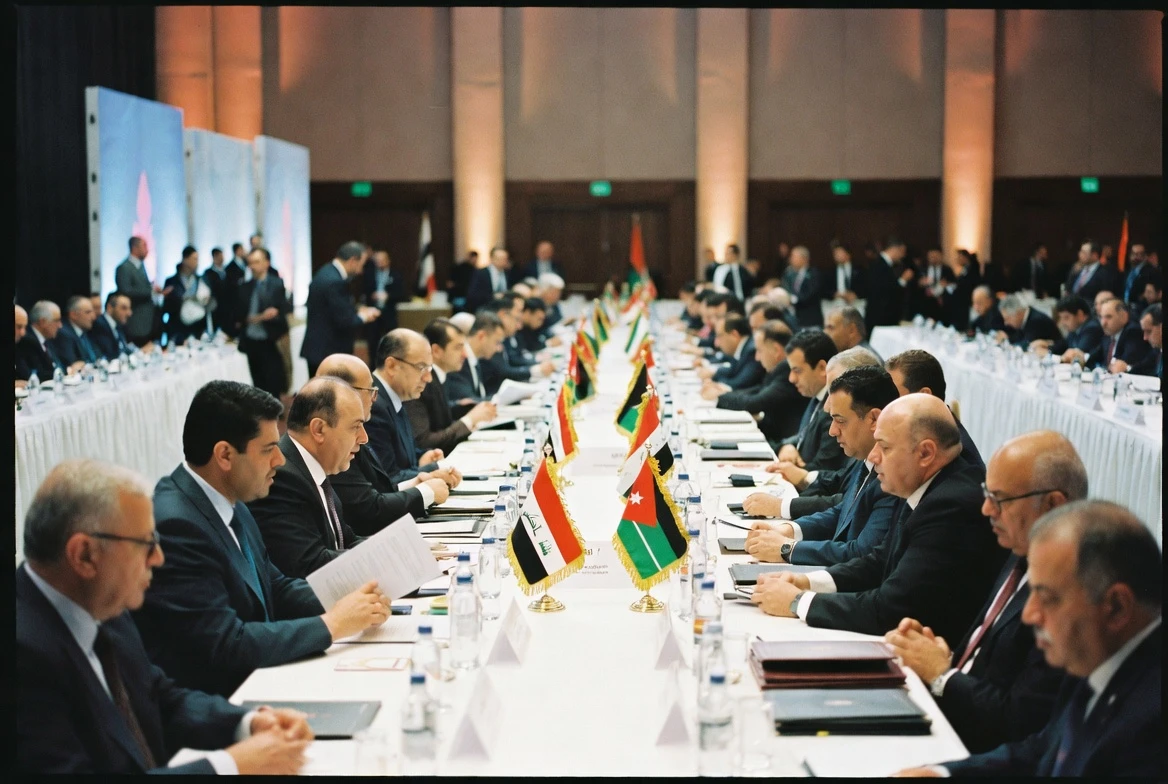
How Jordan Took the Top Seat
Jordan did not leave the top job to anyone else. The same Sunday vote installed Dr. Khaled Deeb Al-Laham as president of the board of directors, succeeding Eng. Khalid Al-Hogail, the CEO of the Saudi Public Transport Company (SAPTCO). The presidency went to the host country at an assembly it organized and underwrote, a turn that handed Amman the public-facing seat while leaving Iraq in the operational vice presidency (the vote that put JETT’s CEO in the presidency).
Al-Laham won with 15 of 18 votes against 3 for his competing candidate. He runs the JETT tourist and public-transport group, one of Jordan’s best-known public-transport brands, and has led a push to expand its operational network and adopt modern technical solutions. In remarks after the vote, he said the next phase would focus on an Arab strategy to develop land transport, stronger cross-border connectivity, and digital transformation through smart fleet and data systems. He also called for raising safety, quality, and environmental sustainability standards, and for expanding training and capacity-building for sector workers.
The Jordan Pulse account described the vote as a significant milestone that strengthens Jordan’s presence in Arab forums and underscores the position the kingdom has achieved in the transport sector. Al-Laham’s stated priorities include establishing partnerships with Arab, international, and private-sector institutions to support transport and logistics projects.
The Union Marks 50 Years With a New Mandate
The 39th General Assembly coincided with the union’s founding anniversary, a milestone organizers used to relaunch the body’s mandate. Delegates marked the occasion by launching the Arab Transport Experts Unit, a new platform to consolidate Arab expertise and give policymakers technical support. The union was established under the Arab Economic Unity Council’s Resolution No. 745 on June 7, 1976, and commenced its duties on June 1, 1979.
Secretary-General Malek Haddad said the union has reached an advanced stage of institutional development after five decades of work. The launch of the Arab Transport Experts Unit, he added, is a step toward more effective transport policies and improved sector performance.
The agenda, as reported by Jordan’s state news agency Petra, covered cross-border transit, modernization of transport legislation, digital logistics, training and road safety, and wider public-private partnerships (the Jordanian transport minister’s opening remarks). Bahgat Abu El-Nasr, the Arab League’s chair of the Transport and Tourism Committee, told the assembly the union has become a leading reference for transport research and policy in the Arab world. Haddad said the next phase would expand Arab cooperation in transport and logistics, accelerate digital transformation, and advance sustainability to boost regional and international competitiveness. Khaled Haqil, the union’s chairperson and the president of the International Association of Land Transport (UIT), framed the assembly as an important milestone that reflects the progress of joint Arab institutional work in land transport.
The union also holds observer status in the Council of Arab Transport Ministers, the Arab Ministerial Council for Tourism, the Technical Committee for the Transit Agreement among Arab League states, and the International Road Transport Union (IRU), and holds full membership in the International Association of Public Transport (UITP). It operates under the framework of the Council of Arab Economic Unity, the body that established it 50 years ago.
Haqil framed the union as entering a new phase focused on strengthening its institutional tools and reinforcing its role as the umbrella organization for Arab land transport. He also stressed the need to deepen public-private partnerships to improve the efficiency of logistics systems and their ability to respond to global developments. The assembly drew representatives from transport ministries, federations, and land transport companies from several Arab countries.
| Role | Name | Affiliation |
|---|---|---|
| Board president (newly elected) | Dr. Khaled Deeb Al-Laham | CEO, JETT (Jordan) |
| Former board president | Eng. Khalid Al-Hogail | CEO, SAPTCO (Saudi Arabia) |
| Board vice president (re-elected) | Karim Kazem Hussein | Director General, General Company for Passenger and Delegation Transport (Iraq) |
| Board chairperson and UIT president | Khaled Haqil | International Association of Land Transport |
| Secretary-General | Malek Haddad | Arab Union for Land Transport |
| Arab League counterpart | Bahgat Abu El-Nasr | Chair, Transport and Tourism Committee |
Who Else Took the Floor
Jordan’s Transport Minister Nidal Qatamin opened the assembly with a broader pitch. He called for deeper investment in logistics corridors, harmonization of transport procedures, and the modernization of border and customs systems.
Qatamin framed Jordan’s transport and logistics sector as a key pillar of the national economy and positioned Amman as a regional hub for trade connectivity. The transport sector, he told delegates, is a major driver of growth that supports trade, investment, and the sustainability of supply chains among Arab countries. Continued investment in the sector, he added, is essential to keeping pace with regional and international developments and improving its contribution to economic development. Qatamin also described the Arab Union for Land Transport as a key platform for advancing institutional cooperation in the sector.
- Drafting an Arab strategy to develop land transport
- Strengthening connectivity between Arab countries and facilitating transit movement
- Modernizing transport legislation and regulatory frameworks
- Accelerating digital transformation through smart systems, fleet management, and data exchange
- Raising safety, quality, and environmental sustainability standards
- Expanding training and capacity-building programs for sector workers
- Establishing partnerships with Arab, international, and private-sector institutions
What Hussein Brings Back to Baghdad
For Iraq, the vote locks in a board seat for another cycle at a moment Baghdad is positioning itself as a regional transport connector. Hussein, the re-elected vice president, has been the public face of Iraqi transport diplomacy, including recent talks on bus fleet upgrades with Chinese officials and on cross-border passenger services with Omani counterparts.
The General Company for Passenger and Delegation Transport is one of the Iraqi Transport Ministry’s main operational arms, and the re-election keeps its director general inside the union’s elected leadership for another term. The vote also gives Hussein a louder seat on the union’s policy direction, including the new Arab Transport Experts Unit and the push to harmonize cross-border procedures. The Iraqi side has been a frequent interlocutor in trilateral road-transport talks with Egyptian and Jordanian counterparts aimed at cutting red tape for cross-border buses and trucks (how road transport between Iraq and Egypt is being eased).
Iraqi transport diplomacy under Hussein has ranged from China-bilateral bus fleet discussions to Omani cross-border passenger services and Egyptian-Jordanian trilateral road-transport talks. That range of work has put the General Company for Passenger and Delegation Transport at the center of Iraq’s regional transport outreach. The re-election consolidates that positioning at a moment when Arab regional transport cooperation is becoming more visible, including a recently announced Turkey-Saudi railway deal to revive overland rail corridors (a parallel regional push to revive Arab rail corridors). The Iraqi Transport Ministry framed the vote as a recognition of the company’s accumulated expertise and a wider validation of Iraq’s regional role.
The union’s agenda for the next phase, as laid out at the assembly, leans on digital transformation, sustainability, and harmonized border procedures. Those are the same files Hussein will now sit on from the operational vice presidency.
By the numbers: Iraq’s three consecutive terms and Jordan’s 15-3 vote dominate the election math. The union’s 50-year run, established June 7, 1976, frames the broader mandate.
- 3 consecutive terms for Iraq’s vice president on the union’s board
- 15 of 18 votes for Jordan’s new board president
- 39th General Assembly of the Arab Union for Land Transport, held in Amman
- 50 years since the union’s founding, established June 7, 1976
- 1 new Arab Transport Experts Unit launched at the assembly
