
How the Middle East press frames the Iran war depends almost entirely on which government funds or shapes its editorial climate. Since US and Israeli forces struck Iran on February 28, Gulf outlets have agonized over oil prices and shipping lanes, Israeli outlets have catalogued nuclear dangers, and Iranian state media have declared uranium enrichment a sovereign right no foreign power can constrain. The map looks nearly identical to the one drawn during the 2006 Lebanon war, and to the one before it in 2003.
What makes the 2026 version worth reading closely is where it cracks. A survey of more than a dozen regional outlets, compiled by journalist Steven Ganot for The Media Line, a Jerusalem-based journalism project, and published June 6, finds several places where major outlets are saying things their prior scripts would not have predicted.
The Fault Lines That Never Move
Media scholars call it political parallelism: the tendency of news organizations to track the political positions of the governments, parties, or patrons that sustain them. In the Arab world, the pattern is unusually consistent. Decades of regional war coverage follow the same fault-line logic through the Gulf crisis of 1991, the US invasion of Iraq in 2003, and the Lebanon war of 2006. Al Jazeera challenged Western framings of the 2003 conflict by broadcasting civilian casualty footage that Saudi-linked channels avoided. A Brookings Institution study of the 2006 Israel-Hezbollah conflict’s media framing found Arab networks predominantly supporting Hezbollah’s narrative while Israeli and US media placed responsibility on Hezbollah for initiating hostilities. The same study noted “diverse national journalistic cultures” inside the Arab bloc, confirming that no single Arab narrative was ever uniform.
In 2026, the fractures run in the same places. The table below maps the five main camps by four framing axes.
| Outlet group | Who started it | Primary concern | Hormuz frame | Deal stance |
|---|---|---|---|---|
| Gulf (Al Arabiya, Arab News, The National, Asharq Al-Awsat) | Sidesteps direct attribution | Energy security and shipping disruption | Economic catastrophe requiring urgent defusing | Pressure for a quick deal to reopen the strait |
| Israeli (Israel Hayom, Ynet, Jerusalem Post, Haaretz) | Iran’s nuclear program and armed proxies | Nuclear and missile capability survival | Iranian leverage that must not be normalized | Skeptical; fears weak terms |
| Iranian (Tehran Times, Fars, Tasnim) | US-Israeli aggression | National sovereignty and sanctions relief | Tehran’s sovereign right to manage the waterway | Enrichment non-negotiable until hostilities end |
| Al Jazeera | US-Israeli military operation | Palestinian and Lebanese civilian costs | Diplomatic leverage for Tehran | Phased sequencing: Hormuz first, nuclear later |
| Turkish (Daily Sabah) | US-Israeli military action | Regional economic and political stability | Hard economic fact for all parties | Critical of US and Israel, pragmatic on deal terms |
What changes from conflict to conflict is the intensity of each camp’s concerns and how openly each is willing to state its interests. Both have shifted in 2026.
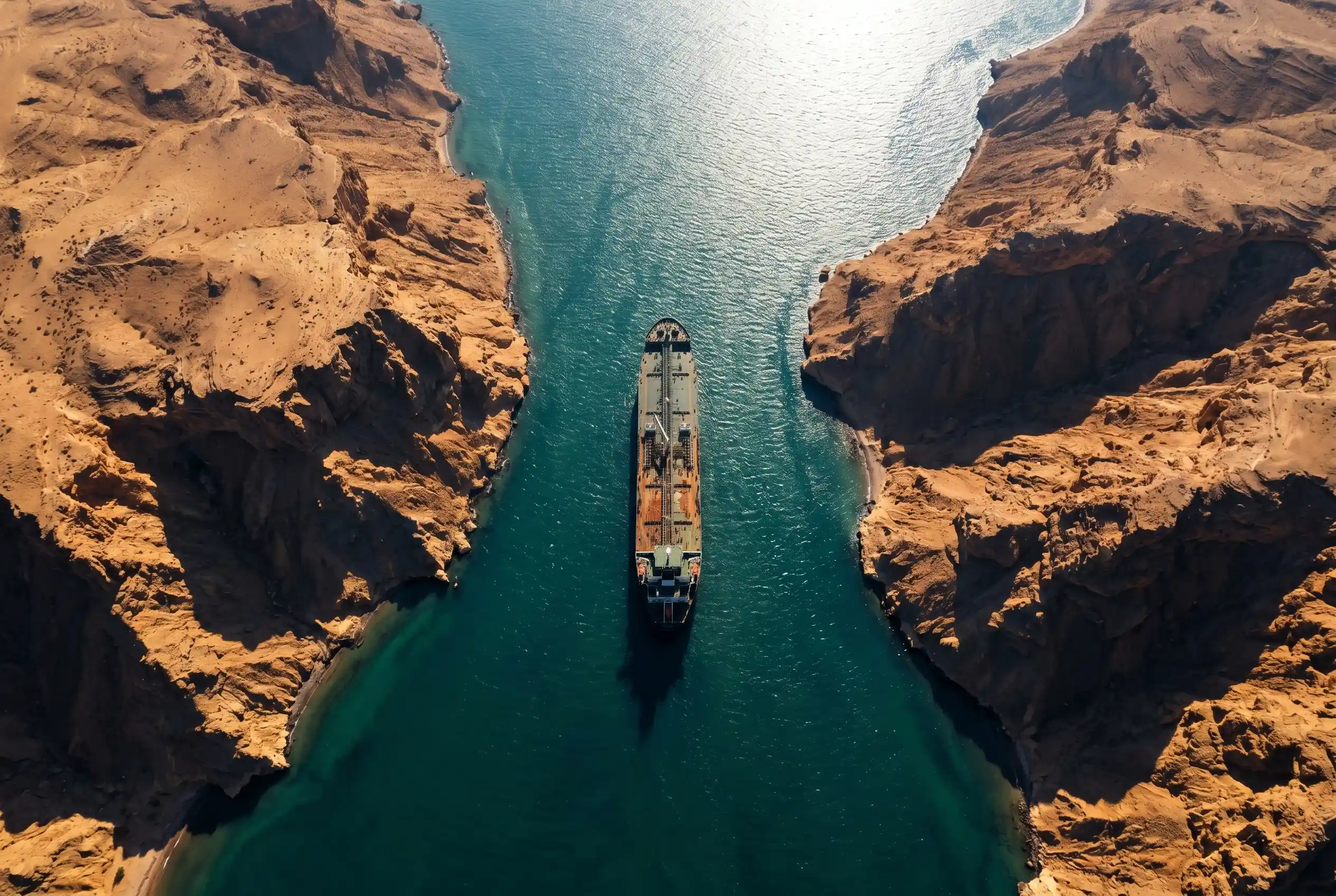
The Gulf Press Reads the War as an Energy Emergency
Al Arabiya, Arab News, The National, and Asharq Al-Awsat have all treated the conflict primarily as a supply-chain emergency, and the scale of that emergency explains the intensity of the coverage. The International Energy Agency (IEA) described the Hormuz closure as “the largest supply disruption in the history of the global oil market,” with Brent crude surging past $120 per barrel after Iran shut the passage in early March. Gulf Cooperation Council (GCC) states, which depend on the strait for more than 80 percent of their food imports alongside their oil exports, faced a concurrent grocery supply emergency as well as an oil shock.
Gulf states including Saudi Arabia, Qatar, and the UAE urged President Donald Trump to suspend the military campaign. The Arab Center DC described the Hormuz crisis as delivering a major blow to the decades-old US-Saudi arrangement in which American security guarantees have sustained Gulf energy exports since 1945. The framing, echoed in Gulf-aligned coverage, was less about ideology than exposure: these governments have the most to lose from a prolonged conflict.
US Treasury Secretary Scott Bessent surfaced in Gulf coverage with a statement that captured the region’s priorities. During the Hormuz standoff, Bessent said publicly: “China, let’s see them step up with some diplomacy and get the Iranians to open the strait.” Gulf outlets carried the comment in coverage focused on shipping timelines and commodity prices, without the strategic-competition framing that dominates Israeli and Iranian reporting.
Asharq Al-Awsat’s business desk tracked the market signal closely: oil prices dipped when Iranian state media reported roughly 30 vessels had crossed Hormuz and that Iran had begun allowing some Chinese ships through. Iran was, as Chatham House noted, exporting its own oil to China through the very passage it had closed to Gulf shipping. Gulf editors watched Iranian statements about vessel permissions with the intensity of a commodities desk tracking supply announcements, because the economics were that direct.
The UAE’s The National framed “Project Freedom,” the US-led effort to restart commercial traffic through Hormuz, around competing operational claims. A May 4 report said analysts believed the plan aimed to restart limited commercial movement “without the mission becoming a full wartime convoy campaign.” Ideology was absent from the framing. The subject was maritime logistics.
Israeli Media’s Nuclear Anxiety
Israel Hayom, Ynet, The Jerusalem Post, and Haaretz all share one core fear: that President Trump will accept a deal that reopens Hormuz while leaving Iran’s uranium stockpile, enrichment infrastructure, ballistic missiles, and armed regional partners largely in place.
The four outlets diverge in tone. Israel Hayom has scrutinized Trump’s Truth Social posts for signs that Washington is trading long-term security for a short-term diplomatic score. Ynet gave prominent space to former US Secretary of State Mike Pompeo, who called the emerging framework “not remotely America First” and demanded the US “open the damned strait,” deny Iran access to funds, and degrade enough Iranian capability that Tehran could no longer threaten the region’s allies. Haaretz diverged from that security-alarm register, running analysis that treated an unsatisfying deal as a partial consequence of Prime Minister Benjamin Netanyahu’s years of opposition to earlier nuclear diplomacy.
What the four outlets share is dread about what Hormuz has demonstrated. A senior Israeli official relayed the concern to reporters, as quoted by NPR, in unusually direct terms:
The emerging agreement is bad because it signals to the Iranians that they possess a weapon no less effective than a nuclear one, and that is the Strait of Hormuz.
The official spoke on condition of anonymity. The concern runs across Israeli coverage from Israel Hayom to Haaretz, and extends to the Lebanon dimension. The Jerusalem Post gave sustained attention to whether any US-Iran deal would address Hezbollah’s positioning in southern Lebanon, noting the unresolved question of whether Washington would separate reopening Hormuz from the broader Iranian threat across the region. Netanyahu raised those concerns with Trump directly, expressing reservations about conditions that could limit Israel’s freedom of action in Lebanon.
Tehran and the Sovereignty Claim
Tehran Times, the Islamic Revolutionary Guard Corps (IRGC)-affiliated Fars News, and Tasnim News Agency make no attempt at neutrality. The consistent editorial line: uranium enrichment is a right recognized under the Nuclear Non-Proliferation Treaty (NPT), the US-Israeli campaign is aggression, and the Strait of Hormuz is a coastal matter in which the United States has no standing.
Iranian Foreign Ministry spokesman Esmaeil Baghaei was quoted across state-aligned outlets on the core jurisdictional claim: the strait “has nothing to do with America,” and any mechanism governing the waterway should involve Iran, Oman, and the other bordering states. After Trump announced in late May that a deal had been “largely negotiated,” Fars dismissed the characterization as “incomplete and inconsistent with reality.” The same reporting cycle identified what Fars called the “most important part of the agreement” from Tehran’s perspective: the immediate release of $12 billion in frozen Iranian assets, without which Iran would refuse further talks.
Iranian state media in 2026 are more openly transactional than past conflicts produced. Earlier crises saw official outlets wrap military pressure in religious or legal frameworks. The 2026 coverage states the bargaining logic plainly: access to Hormuz in exchange for sanctions relief, nuclear questions deferred to a later phase. Fars and Tasnim are not obscuring the leverage. They are publishing it.
The Voices Outside the Main Camps
Al Jazeera has labeled the conflict “the US-Israel war on Iran” in its liveblogs from the start of strikes, and that framing has attracted a global audience. The numbers from the conflict’s early weeks, compiled by the Gulf International Forum’s analysis of the conflict’s media impact, are striking:
- 510 million visits to Al Jazeera’s flagship website in the first 30 days of the conflict
- 400 percent year-over-year traffic increase in March, the highest growth rate of any news site globally that month
- 800 percent surge in US downloads of the Al Jazeera app in a single week during early escalation
The Doha-based, Qatari state-funded network has overtaken CNN and the BBC to become the largest international news network by audience size. Its coverage places Israeli strikes in Lebanon alongside the Hormuz standoff, treating both as components of a single US-Israeli military operation frame.
Palestinian outlets work from similar premises, treating the conflict as an extension of a broader US-Israeli regional campaign in which Hezbollah, the Houthis, and Hamas appear as regional participants rather than initiators. Kurdish outlets, particularly Rudaw and Kurdistan24, have focused on what US-Israeli strikes in the Kurdish region of western Iran mean for Kurdish communities inside the country. Turkey’s Daily Sabah carried the Revolutionary Guards’ warning that Trump faced “an impossible operation or a bad deal with the Islamic Republic of Iran” without editorial endorsement of either reading.
One camp is absent from the regional survey entirely: Chinese media. Bessent publicly called on Beijing to intervene diplomatically, and Iran was selectively allowing Chinese vessels through Hormuz even at the blockade’s peak. How the Chinese press is framing its own leverage in that arrangement remains the significant blank in the landscape.
Where the Script Breaks
Gulf outlets have been more restrained about military outcomes than their editorial patterns would suggest. Coverage across Al Arabiya, Arab News, and The National has treated the economic cost of continued military pressure as a hard ceiling on what any campaign can achieve. Gulf coverage labels the Hormuz situation an energy crisis and a shipping crisis, consistently avoiding the language of strategic competition that appears in Israeli reporting. Governments that host US military facilities and urged Trump to suspend his campaign are not outlets that would ordinarily editorialize against pressure on Tehran. That gap narrowed visibly in 2026.
Strategic alarm defines Israeli coverage where past conflicts produced periods of satisfaction. The 2006 Lebanon war and the 2008-09 Gaza conflict both generated stretches where Israeli media reflected confidence in the military posture. Alarm about deal terms has replaced that confidence in 2026, particularly around the specific fear that Iran has found a functional non-nuclear deterrent in its control of the strait. Israel Hayom and Ynet returned to that strategic concern in multiple analysis pieces even as tactical developments in Lebanon shifted week to week.
Fars and Tasnim, meanwhile, are stating their leverage with a directness that earlier Iranian coverage avoided. In prior confrontations, Iranian state media tended to wrap Hormuz pressure in sovereignty doctrine or religious frameworks. The 2026 coverage presents the commercial logic plainly: frozen asset payments are the precondition, nuclear talks follow, and the strait is the instrument that makes that sequencing possible. That bargaining position is now public in a way it has not been before.
All three shifts were visible in the same weeks when US and Iranian negotiators worked on a 60-day memorandum of understanding through Pakistani mediation. The draft, its specific terms reported by Axios, would have Iran clear mines from the strait within 30 days, provide verbal commitments on nuclear concessions, and receive sanctions waivers as commercial shipping resumed. A senior White House official described the governing principle as “relief for performance.” Neither government confirmed the agreement as of June 7. About 240 ships were waiting for Iran’s permission to pass the Strait of Hormuz as of late May, and the memorandum that would move them remained unsigned.
