
Washington has signaled it will not press Israel to hold its fire in Beirut, even while floating a de-escalation framework that puts the first move on Hezbollah. A US official told The Jerusalem Post on Monday that the United States “does not expect Israel to absorb ongoing attacks on its civilians by a terrorist organization,” language that landed the same day Prime Minister Benjamin Netanyahu ordered the military to strike targets in the southern suburbs of the Lebanese capital.
The framework and the firing point in opposite directions, and that gap is the story. Secretary of State Marco Rubio pitched a phased calm to both Netanyahu and Lebanese President Joseph Aoun. The structure asks Hezbollah to halt all attacks first; only then does Israel agree to avoid escalating in Beirut. With Hezbollah’s response routed through a Lebanese politician who told the Americans the burden sits with Israel, the proposal arrived close to dead, and the second-order effect of declaring it dead is permission.
Washington’s Framework Puts the First Move on Hezbollah
The sequence Rubio proposed is narrow. Hezbollah stops its rocket and drone fire across the border. In exchange, the Israel Defense Forces (IDF, Israel’s military) refrains from widening its operation in Beirut, and the two sides edge toward a fuller cessation. Aoun backed the idea and asked Parliament Speaker Nabih Berri to lean on Hezbollah to comply, according to the US official who briefed reporters.
That request stalled immediately. Berri’s reply was described by the official as evasive and disappointing. He said he could guarantee Hezbollah’s commitment to a ceasefire, but only if Israel stopped firing first and halted its ground and air operations, an inversion of the order Washington had set out.
The public US position left little doubt about whose ledger the blame belongs on. In the State Department readout of Rubio’s call with President Aoun, the secretary commended Aoun’s pursuit of direct negotiations with Israel while emphasizing that Hezbollah “is entirely responsible for the ongoing fighting” and needs to cease its attacks at once to enable de-escalation. **The framework asks Hezbollah to move first**, and the diplomacy around it was built to make refusal Hezbollah’s fault.
Why “Does Not Expect Israel to Absorb” Reads as Permission
Diplomatic readouts rarely hand a green light in plain words. This one came close.
The fastest way to de-escalate and protect civilians on all sides is for Hezbollah to stop firing immediately.
That was the US official’s framing on Monday, paired with the line that Washington “does not expect Israel to absorb” attacks on its civilians. Read together, the two statements set a conditional: as long as Hezbollah keeps firing, the United States is not asking Israel to wait. Two sources told The Jerusalem Post on Sunday that senior Israeli officials had appealed to their American counterparts to expand operations in Beirut, and that they were hopeful the response would be favorable.
It was. By the time the framework reached Berri, the IDF was already moving, and the American statements supplied the political cover rather than the brake. For a war that resumed on March 2, the calendar of the diplomacy and the calendar of the strikes have run together so tightly that the de-escalation language now functions as the preamble to escalation.
The Front Line Has Already Reached Beirut
The proposal landed on a battlefield that had already shifted toward the capital. This is not a war waiting on a decision in Washington; it is a war whose front line crossed the rivers that used to mark Israel’s limits.
From the Litani to the Capital
The escalation toward Beirut runs through a clear sequence of moves over three months:
- March 2: Hezbollah fires projectiles toward Israel after the killing of Iran’s supreme leader, and Israel answers with strikes.
- March 16: Israeli ground forces enter southern Lebanon, eventually deploying five divisions.
- May 29: Netanyahu announces that Israeli forces have crossed the Litani River and are operating in Beirut and the Bekaa Valley, the deepest incursion in decades.
- May 31: The IDF seizes Beaufort Castle, a strategic height in the south.
- June 1: Netanyahu and Defense Minister Israel Katz order strikes on Hezbollah targets in Beirut’s southern suburbs.
The UN documented the imbalance in fire as the lines moved north. UNIFIL (the UN Interim Force in Lebanon, the peacekeeping mission along the border) logged roughly 350 firing incidents attributed to the IDF and 25 to Hezbollah by late May, a record that the UN spokesperson’s daily briefing on the Lebanon operations tracked alongside warnings about civilian harm.
Dahiyeh Empties Again
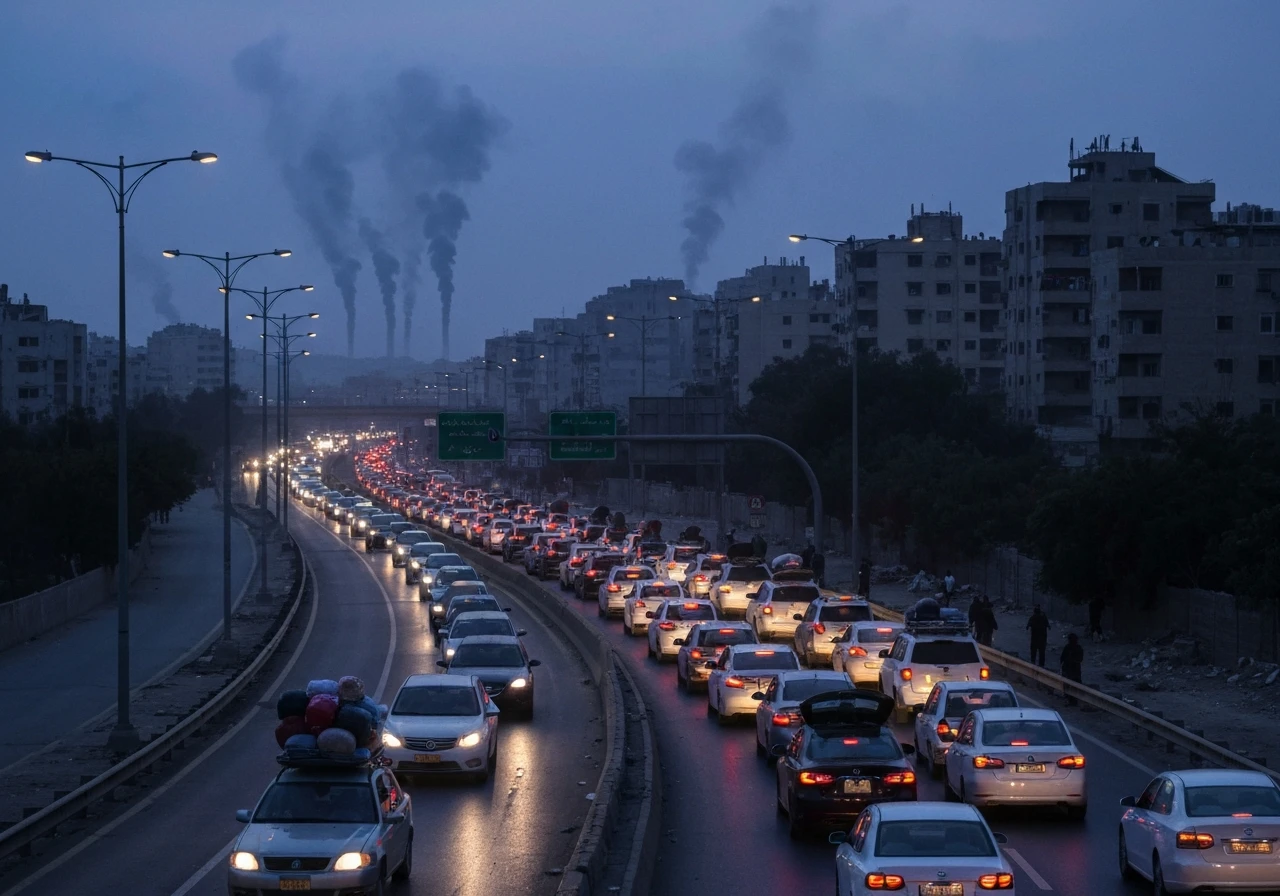
The southern suburbs, known as Dahiyeh, have lived this before. After Israel’s government ordered strikes on the area, large numbers of residents jammed the roads out, repeating the mass flight that followed the first displacement orders in early March. Hezbollah draws wide support there, which is precisely why the neighborhood keeps becoming a target and a refugee column at once.
Nabih Berri, the Hinge the Plan Turns On
Every version of the framework runs through one man. Berri, who has served as parliament speaker since 1992 and leads the Shia Amal Movement, is Washington’s chosen channel to Hezbollah, and also its chosen obstacle once the channel jams.
His position has been consistent and unhelpful to the American sequence. He told a Beirut newspaper that he would take personal responsibility for Hezbollah’s full compliance with a ceasefire, but only if Israel ended all land, sea, and air operations and stopped demolishing homes. He has also said Israel violated the existing truce despite Hezbollah’s commitment to it, and doubted Israel would honor any new understanding.
That stance hands the United States a tidy narrative. If Berri keeps the burden on Israel, the framework fails on Lebanon’s side, and the American statement that Hezbollah “is entirely responsible” writes itself into the next round of strikes. The official US note that his answer was evasive was less a complaint than a verdict.
Three Truces in Six Weeks, None That Held
The framework is the fourth attempt at calm since mid-April, and the record of the first three explains the skepticism on both sides. Each truce was brokered by the United States, each was announced as a step toward a fuller settlement, and each was violated almost daily while it nominally held.
| Truce phase | Announced | Length | Outcome on the ground |
|---|---|---|---|
| Initial cessation | April 16 | 10-day truce | Daily exchanges continued; fighting never fully stopped |
| First extension | April 23 | Three weeks | Strikes and rocket fire persisted on both sides |
| Second extension | May 15 | 45 days | Israeli forces crossed the Litani and reached Beirut |
The pattern is what makes the current proposal so fragile. A ceasefire that has been extended twice while the front line advanced is not a ceasefire that either party trusts, and the new framework asks both to stake the next move on a sequence neither side has honored.
The Humanitarian Bill Running Underneath
The diplomacy and the military maneuvering sit on top of a civilian toll that has climbed through every truce. The numbers are the part of this story that does not pause for a phone call between capitals.
- More than 3,400 people killed in Lebanon since March 2, including hundreds of children, by figures tracked through the UN.
- More than 822,000 people registered as displaced, nearly 300,000 of them children, with over one million having heeded evacuation orders at the war’s peak.
- 27 Israeli soldiers killed inside Lebanon by June 1, alongside casualties from cross-border fire into northern Israel.
- $308 million sought by the Lebanon Flash Appeal, only 54 percent funded at roughly $166 million.
Health infrastructure has buckled along with the population. Dozens of primary health centers and several hospitals in the south and in Beirut’s southern suburbs have closed or evacuated, a collapse detailed in the UN humanitarian office’s Lebanon situation reporting. OCHA (the UN Office for the Coordination of Humanitarian Affairs) and OHCHR (the UN human rights office) have both warned that displacement and death figures keep rising faster than relief can reach the shelters, a trend laid out in the UN findings on deaths and displacement in Lebanon.
What a Collapsed Framework Sets Loose
The proposal is now a test with two outcomes, and Washington has arranged the board so that either one points the same direction in the near term. If Hezbollah keeps firing and Berri keeps the first move on Israel, the framework fails on Lebanon’s side and the American statements convert into clearance for the Beirut campaign that Israeli officials already requested. If the rockets stop first, the most likely reward is a fourth paper truce stretched over a front line that has not pulled back from the capital.
Neither branch refills the streets of Dahiyeh or reopens the shuttered hospitals in the south. For the residents jamming the roads out of Beirut on Monday, the distance between a de-escalation framework and an escalation order had narrowed to a single news cycle, and the next confirmation of which way it broke will come from the sky over the southern suburbs, not from a podium.
