
Construction crews working near Kibbutz Ramat Rachel got the shock of a lifetime when their tools broke through into a hidden world below Jerusalem’s busy streets. What they found has left even seasoned archaeologists scratching their heads. A massive ancient tunnel, cut deep into the bedrock, has emerged from the silence of centuries with no clear purpose, no clear date, and no clear builder.
What Workers Uncovered Beneath the Streets
The Israel Antiquities Authority (IAA) confirmed the discovery on Friday, calling it one of the most puzzling finds in recent memory. The tunnel sits just south of Jerusalem’s Old City, tucked beneath an area long known for layered history.
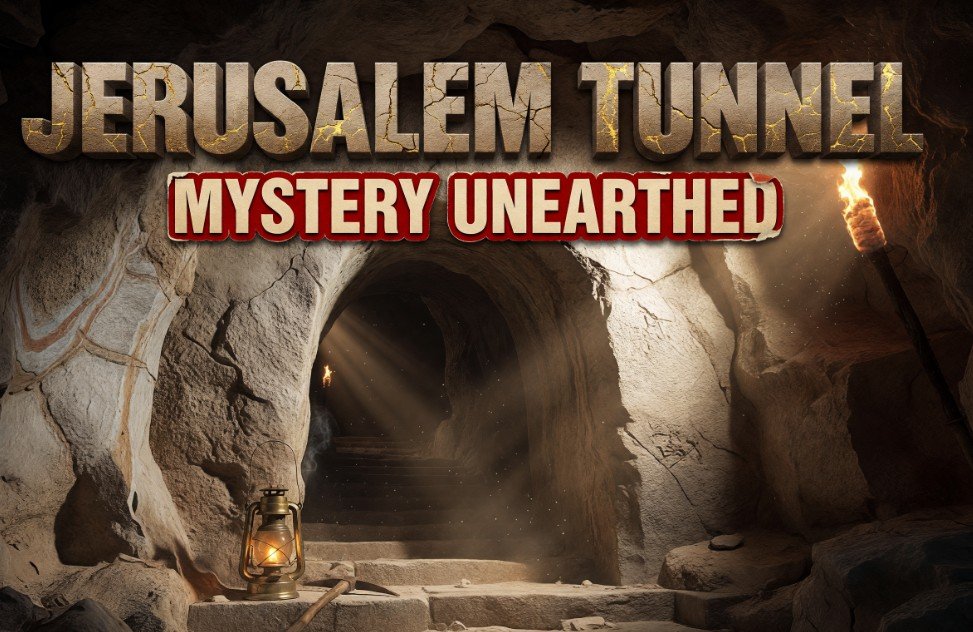
It stretches roughly 16 feet high and 10 feet wide, which is far larger than most underground features from the region’s ancient periods. A rock-cut staircase once led visitors down into its dark belly, hinting at deliberate, long-term use.
Yoli Schwartz, the IAA photographer who first documented the entrance, captured images now circulating widely on social media. Within hours of the announcement, the find began trending across archaeology forums and history pages on X and Facebook.
Why Experts Ruled Out a Water Tunnel
The first guess seemed obvious. Jerusalem is famous for hidden water systems, including Hezekiah’s Tunnel and the Gihon Spring channels. Researchers naturally assumed this new passage carried water too.
That theory collapsed quickly. The walls showed no plaster lining, which ancient engineers always applied to keep water from seeping into porous rock. Geologists then surveyed the surrounding area and found no underground springs, aquifers, or water flow that could have justified such a large channel.
That single quote has captured public imagination more than any other detail. It is rare for an IAA official to admit total mystery in writing.
A New Theory Points to Ancient Quarrying
With water ruled out, the team turned to geology for answers. The bedrock beneath Ramat Rachel contains soft chalk layers, which were prized in antiquity for two main uses.
- Building stones: Chalk and soft limestone were carved into blocks for homes, walls, and royal estates.
- Lime production: Burned chalk creates lime, a key ingredient for plaster, mortar, and whitewash.
This new theory fits the tunnel’s rough, unfinished walls. Quarry workers had no reason to smooth or seal a space they were stripping for raw material.
Still, no tool marks, pottery fragments, or worker inscriptions have surfaced yet. Without those clues, even the quarry idea remains a strong guess rather than a confirmed fact.
Possible Links to Iron Age Jerusalem
Ramat Rachel is no ordinary patch of land. Two nearby Iron Age sites, both dating to the first millennium B.C., have produced some of the richest royal-period finds in the region. One of them includes the remains of a grand palace believed to have served Judean kings or later Persian-era governors.
Archaeologists suspect the tunnel could be connected to those sites, possibly supplying stone for palace construction or lime for its famous decorated plaster. But the connection remains unproven.
| Feature | Detail |
|---|---|
| Location | Near Kibbutz Ramat Rachel, south of Jerusalem |
| Height | About 16 feet |
| Width | About 10 feet |
| Access | Rock-cut staircase |
| Likely Use | Quarrying chalk or lime production |
| Possible Era | Iron Age (first millennium B.C.), unconfirmed |
Dating ancient quarries is notoriously hard. Unlike tombs or homes, they rarely contain dateable objects. Researchers will now sift the tunnel floor for charcoal, pottery shards, or tool fragments that could pin down a century.
Why This Find Matters for Jerusalem’s Story
Jerusalem reveals new secrets almost weekly. In recent years alone, the IAA has announced everything from a 2,000-year-old gold ring to hidden Second Temple period streets. Yet most discoveries fit neatly into known timelines.
This tunnel breaks that pattern. It is large enough to feel important, plain enough to feel ordinary, and silent enough to feel haunting.
For locals, the find is also a reminder that modern life in Jerusalem rests on layers older than any living memory. A bulldozer working on a routine project can still pull back the curtain on a forgotten world.
Tourists are already asking whether the site will open to visitors. The IAA has not confirmed any public access plan, citing safety checks and the need for more excavation. Researchers are expected to spend the coming months mapping the tunnel’s full length, which may extend further than the entrance suggests.
What Readers Can Watch For Next
- Carbon dating results from any organic material found inside
- Tool mark analysis on the walls to identify the era of quarrying
- Possible links to the Ramat Rachel royal compound
- Updates on whether the site will open for guided tours
For now, the tunnel keeps its secrets. Sometimes the most powerful stories are the ones history refuses to finish telling, and this hidden passage beneath Jerusalem may be one of them. What do you think the tunnel was really used for? Share your theory in the comments and join the conversation with #JerusalemTunnel on X and Instagram.
