
Israel and Lebanon have agreed to extend their fragile ceasefire by another 45 days, the United States announced Friday, offering a sliver of hope to communities battered by months of cross-border violence. Yet even as diplomats shook hands in Washington, smoke rose over southern Lebanon, where fresh Israeli strikes hit Kfar Tibnit and areas near Tyre, exposing how brittle this peace really is.
What the New Truce Deal Actually Says
The agreement, brokered by US envoys in Washington, extends the existing ceasefire framework first signed in late 2024 between Israel and Lebanon. American mediators confirmed both sides committed to a 45-day rollover with a new “security track” attached.
The deal does not end the conflict. It only pauses the worst of it while negotiators work on a long-term arrangement.
Lebanon’s negotiating team, speaking through the office of President Joseph Aoun, called the outcome a step toward “lasting stability.” The delegation said the extension gives citizens “critical breathing space” and strengthens state institutions still recovering from years of war and economic collapse.
Israeli Ambassador to the US Yechiel Leiter struck a cautious note, describing the talks as “frank and constructive” while warning of “ups and downs” ahead.
| Key Element | Detail |
|---|---|
| Duration | 45 days |
| Mediator | United States |
| Location of Talks | Washington, D.C. |
| New Addition | US-facilitated security track |
| Status of Hezbollah Disarmament | Still under negotiation |
Strikes Continue Even as Ink Dries
Hours before the announcement, Israeli forces carried out airstrikes on the town of Kfar Tibnit in the Nabatieh Governorate. Lebanese state media reported plumes of smoke rising over residential areas, with civil defense teams scrambling to pull people from damaged buildings.
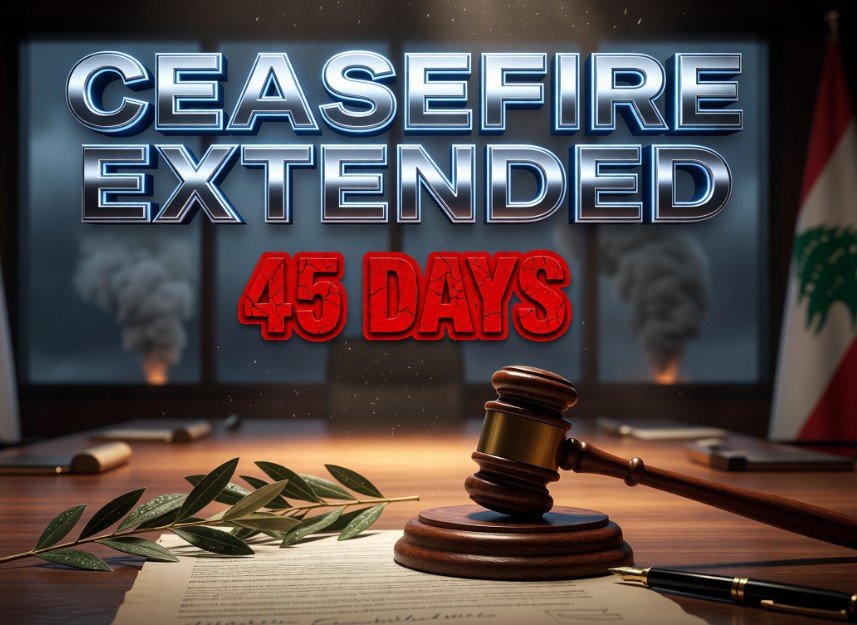
Additional strikes were reported near Tyre, a coastal city that has seen repeated bombardments since the original truce took effect. Lebanon’s health ministry says dozens of civilians have been killed in such attacks over the past year, despite the ceasefire technically being in force.
Israel maintains its operations target Hezbollah fighters and weapons depots, accusing the group of rebuilding infrastructure in violation of the original agreement. Hezbollah, severely weakened after the 2024 war that killed much of its senior leadership, has largely held its fire but warned it reserves the right to respond.
- Israeli military says strikes target “imminent threats” from armed groups
- Lebanese army has deployed roughly 10,000 troops south of the Litani River
- UN peacekeepers (UNIFIL) continue patrols but report obstruction from both sides
- Tens of thousands of displaced Lebanese are still unable to return home
Why This Truce Matters Right Now
The timing of the extension is no accident. Washington has been pushing hard to lock in stability across multiple fronts in the Middle East, with the Iran conflict still simmering and Gaza talks moving in fits and starts.
For ordinary Lebanese, the deal means a chance to plant crops, reopen schools, and maybe sleep through the night without the sound of drones overhead. For Israelis in the north, particularly in Kiryat Shmona and Metula, it offers a slim possibility that evacuees might finally return to homes they fled nearly two years ago.
“The extension of the ceasefire and the establishment of a US-facilitated security track provide critical breathing space for our citizens.” Statement from Lebanon’s negotiating delegation
Analysts in Beirut say the new “security track” is the most significant addition. It reportedly creates a structured forum where both militaries can flag violations directly to American monitors rather than letting incidents spiral into open combat.
Palestinians Mark Nakba as Region Reflects
The ceasefire news arrived on the same day Palestinians around the world marked the 78th anniversary of the Nakba, the Arabic word for “catastrophe.” It commemorates the displacement of more than 700,000 Palestinians during the 1948 war surrounding Israel’s creation.
Rallies were held in Ramallah, Beirut, Amman, and cities across Europe. In refugee camps in southern Lebanon, many of which are still hosting families displaced for three generations, residents waved keys to homes their grandparents lost in 1948.
The symbolic weight of the day was not lost on negotiators. Lebanon hosts roughly 250,000 registered Palestinian refugees, and any long-term security arrangement will eventually have to address their status.
The Road Ahead Looks Bumpy
Diplomats privately admit that 45 days is barely enough to draft a serious framework, let alone enforce one. Several thorny issues remain unresolved.
Hezbollah’s weapons stockpile north of the Litani River is the biggest sticking point. Israel wants full disarmament. The Lebanese government, led by President Aoun and Prime Minister Nawaf Salam, has publicly backed the principle of “weapons only in the hands of the state” but lacks the military muscle to force the issue quickly.
There is also the question of Israeli troops still positioned at five points inside southern Lebanon. Beirut wants them out. Israel says they stay until Hezbollah is verifiably gone.
If the next 45 days pass without a major flare-up, talks could move toward a permanent border demarcation, something that has eluded the two countries since 1948.
If they fail, the region could slide back into the kind of full-scale war that displaced more than 1.2 million people last year.
For now, families on both sides of the Blue Line are holding their breath, hoping that diplomats in Washington can buy them more than just another six weeks of uneasy quiet. Behind every statistic is a child who wants to go back to school, a farmer who wants to walk his field, a mother who just wants the sky to stay silent. What do you think about this extended truce? Can it hold this time, or are we watching the calm before another storm? Share your thoughts in the comments below and join the conversation.
