
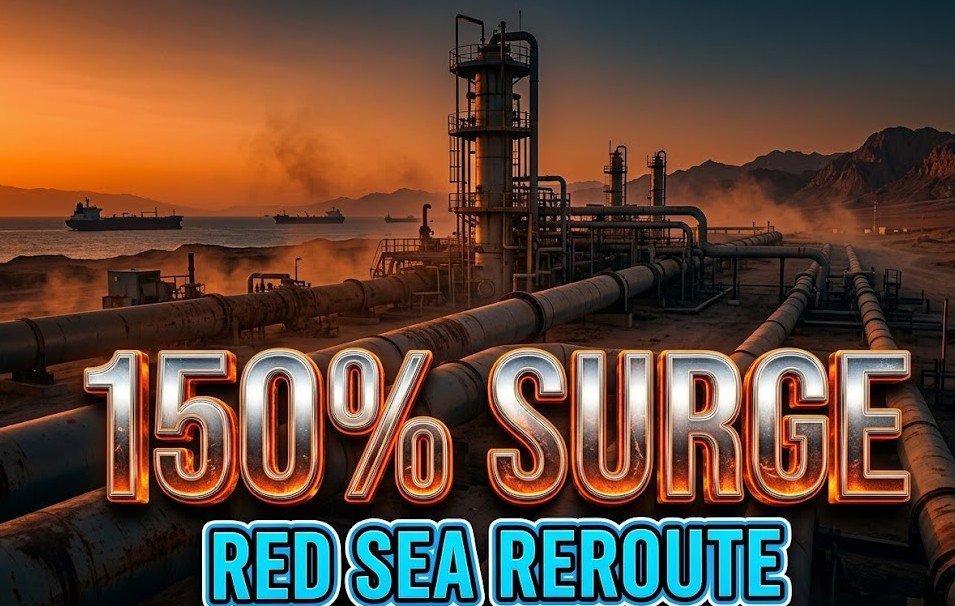
Global oil trade faces major disruption. Egypt’s SUMED pipeline now carries 150 percent more crude than before the recent conflict. This jump shows how shippers turn to safe paths when key waterways close.
Conflict Forces Oil Traders to Find New Paths
Tensions in the Middle East escalated sharply in late February 2026. Iranian actions led to severe restrictions in the Strait of Hormuz. This vital chokepoint normally handles about one fifth of the world’s daily oil supply.
Shippers quickly looked for alternatives. Saudi Arabia ramped up use of its East West pipeline to move crude to the Red Sea port of Yanbu. Tankers then carry the oil to Egypt’s Ain Sokhna terminal on the Gulf of Suez. From there the SUMED pipeline takes over.
The result is a dramatic 150 percent surge in flows through the Egyptian line. A government official told Asharq Business that volumes climbed from around one million barrels per day in February to the pipeline’s full capacity of 2.5 million barrels per day now.
This shift highlights growing reliance on secure land routes away from volatile sea passages. Egypt has offered full support to Gulf producers seeking to keep supplies moving to Europe and beyond.
Inside Egypt’s Vital SUMED Pipeline
The SUMED pipeline runs 320 kilometers across Egypt. It connects Ain Sokhna on the Red Sea side to Sidi Kerir on the Mediterranean coast near Alexandria. The system consists of two parallel lines operated by the Arab Petroleum Pipelines Company.
Egypt’s General Petroleum Corporation holds the largest stake at 50 percent. Saudi Aramco owns 15 percent while partners from the UAE, Kuwait and Qatar hold the rest. This Arab joint venture has served as a reliable link since the 1970s.
Very large crude carriers often arrive at Ain Sokhna. These ships can haul up to 2.2 million barrels but sit too deep to pass fully loaded through the Suez Canal. They offload at Ain Sokhna. The oil moves by pipeline to Sidi Kerir where it reloads onto other vessels for final delivery.
Here are key facts about the pipeline:
- Capacity reaches 2.5 million barrels per day at full operation
- Storage tanks at terminals hold around 38 to 40 million barrels
- Route saves time compared to sailing around Africa
- Main customers include European refiners seeking steady supply
The pipeline does not replace the Strait of Hormuz directly. Instead it forms a critical link in a longer chain that now includes Saudi overland transport to the Red Sea.
What This Surge Means for Egypt and the World
Egypt gains important economic benefits from the increased traffic. Transit fees bring extra revenue at a time when the country works to strengthen its finances. The activity also supports jobs at ports and along the pipeline route.
For global markets the extra flows help prevent worse shortages. European buyers receive continued supplies of Gulf crude without the long detour around the Cape of Good Hope. This route adds many days and raises costs sharply.
Oil prices have risen since the Hormuz restrictions began. Higher shipping expenses and uncertainty push costs up for consumers everywhere. Yet the SUMED corridor provides a buffer that keeps some barrels moving when many others remain stuck.
Analysts note that combined alternatives still fall short of normal Hormuz volumes. Saudi Arabia’s East West pipeline now runs near its seven million barrel capacity but cannot cover everything. Other Gulf producers face even tougher challenges finding outlets.
The situation also raises Egypt’s profile as an energy hub. Officials have signaled readiness to expand facilities and cooperate more closely with partners. This moment could lead to longer term investments in storage and pipeline infrastructure.
Limits of the SUMED Route in a Bigger Crisis
The pipeline operates at maximum capacity today. Any further surge would require upgrades or new parallel systems. Current limits mean it cannot fully offset a complete long term closure of major sea routes.
VLCCs still face risks in the Red Sea and Bab el Mandeb areas. Additional security measures add expense and complexity. Insurance rates for tankers have climbed in response to regional tensions.
Experts point out that true energy security needs multiple options. Discussions continue about new pipeline projects across the region. Some proposals aim to connect Iraq Jordan and Egypt while others focus on expanding existing Red Sea outlets.
For now the SUMED system delivers real value. It demonstrates how established infrastructure can adapt quickly during emergencies. Egypt’s central location gives it a natural advantage in this new routing pattern.
| Period | Daily Flow (million bpd) | Change |
|---|---|---|
| February 2026 | 1.0 | Baseline |
| April 2026 | 2.5 | +150 percent |
This table shows the rapid scale up in just weeks. Such speed reflects both urgent need and the pipeline’s proven reliability.
Future Outlook for Regional Energy Routes
The current crisis forces everyone to rethink old assumptions about oil transport. Countries and companies now weigh the costs of disruption against investments in safer corridors. Egypt stands to benefit if it can maintain and grow its role in these networks.
Longer term solutions may include more overland pipelines and larger storage hubs. Greater use of Red Sea ports could reduce dependence on single chokepoints. Yet building new infrastructure takes time and money.
In the immediate future the world watches closely as diplomats work to ease tensions. Any reopening of normal shipping lanes would ease pressure on alternative routes like SUMED. Until then this Egyptian pipeline remains a quiet hero keeping essential energy moving.
The surge through Egypt’s SUMED pipeline offers a clear lesson in resilience. When one path closes others must open wider. This moment brings both opportunity and risk for global energy flows. It reminds us how connected our world remains and how quickly stability can shift. What are your thoughts on these changing oil routes and their impact on daily life? Share your views in the comments below.
