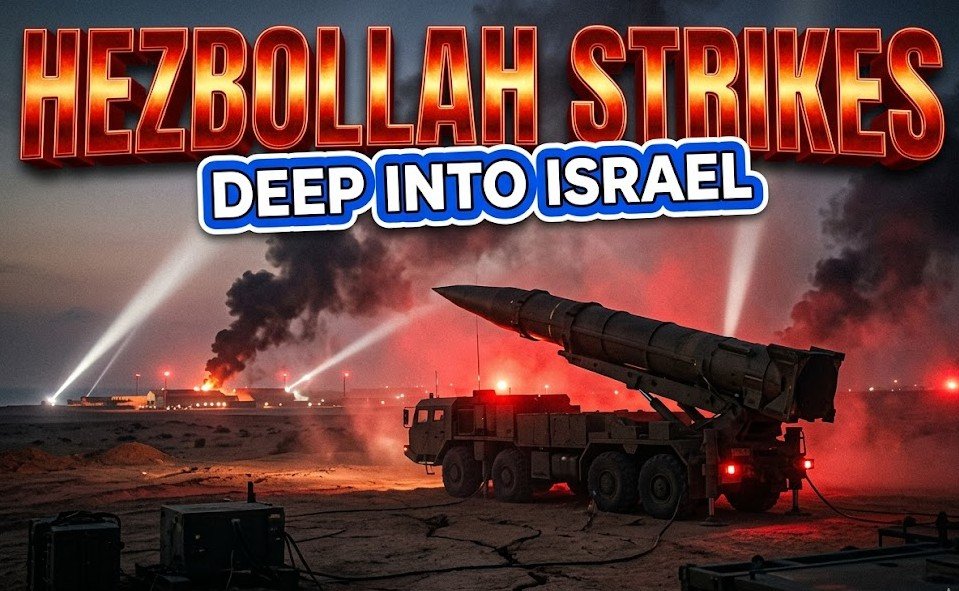
Hezbollah announced the Palmachim operation in a statement on Sunday morning. The group described the weapon as an advanced missile capable of traveling the long distance. Palmachim serves as a key Israeli Air Force site for drone operations, missile testing and satellite launches.
No immediate confirmation came from Israeli officials about damage or casualties at the base. Israeli media and military sources have stayed largely silent on this specific claim so far. The base lies along the Mediterranean coast near Yavne and plays an important role in Israel’s defense systems, including tests for ballistic missiles and air defense technology.
This reported strike stands out because it shows Hezbollah’s claimed ability to reach central Israel despite layers of Israeli air defenses. Analysts note that successfully targeting such a facility would signal the group’s remaining long-range capabilities even after months of Israeli pressure.
Wave of Attacks Targets Northern Military Sites
Hezbollah released several statements throughout the day outlining other operations. The group said it launched drones against Israeli armored vehicles and soldier gatherings near the border town of Adaisseh in southern Lebanon.
In northern Israel the group claimed additional hits. These included a barrage of missiles aimed at defense systems in the Maalot area. Another rocket attack reportedly targeted an arms manufacturing complex run by Rafael Advanced Defense Systems north of the Kiryat region. Rockets also fell on military positions in Nahariya.
Here is a quick list of Hezbollah’s main claimed operations on March 15:
- Advanced missile strike on Palmachim Air Base south of Tel Aviv
- Drone attacks on armored vehicles and troops near Adaisseh
- Missile barrage on defense systems in Maalot
- Rockets fired at Rafael military complex
- Attack on positions in Nahariya
Israeli forces reported intercepting many projectiles and said they continued striking Hezbollah launch sites and command centers inside Lebanon. The Israeli military described its actions as necessary to stop immediate threats.
Ceasefire Collapse Sparks Fresh Fighting
The current round of violence broke out after a fragile November 2024 ceasefire between Israel and Hezbollah fell apart. Hezbollah says it restarted operations this month because Israel kept striking southern and eastern Lebanon almost daily.
The wider conflict ties into a larger regional crisis that erupted in late February and early March 2026 involving Iran and Israel. Hezbollah positioned its actions as defense of Lebanon and support against what it calls ongoing aggression.
Israel maintains that its campaign targets only Hezbollah military infrastructure to prevent attacks on its citizens. The Israeli military has reported hitting hundreds of targets across Lebanon including command centers and weapons storage sites.
Tensions have forced hundreds of thousands of people from their homes on both sides of the border. Residents in northern Israel have spent long hours in shelters while Lebanese families in the south face daily danger from airstrikes.
Heavy Human Cost Fuels Growing Alarm
Lebanese health officials report more than 850 people killed since early March with many of them civilians including over 100 children. At least 26 paramedics have died while trying to help the wounded. More than 2,000 others have been injured and hundreds of thousands displaced.
On the Israeli side rocket alerts have sounded repeatedly across the north and center of the country. Some strikes have caused minor damage and injuries though exact figures remain limited in public reports.
The human suffering is mounting fast. Families on both sides live with constant fear. Lebanese villages lie in ruins while Israeli communities near the border have emptied out or stay locked down.
International voices including the United Nations have called for immediate de-escalation and a return to diplomacy. Yet each new exchange of fire makes a wider war feel closer.
This latest round of attacks shows how quickly a ceasefire can unravel and how far the fighting can reach. The strike on Palmachim if confirmed would represent a serious challenge to Israeli defenses and a bold statement from Hezbollah that it can still strike deep.
The coming days will prove critical. Both sides appear dug in but the heavy price paid by ordinary people may push leaders toward restraint before the conflict spirals further out of control.
What do you think about this dangerous escalation? Share your thoughts in the comments below. If you are following developments on social media feel free to discuss the situation with friends and family.