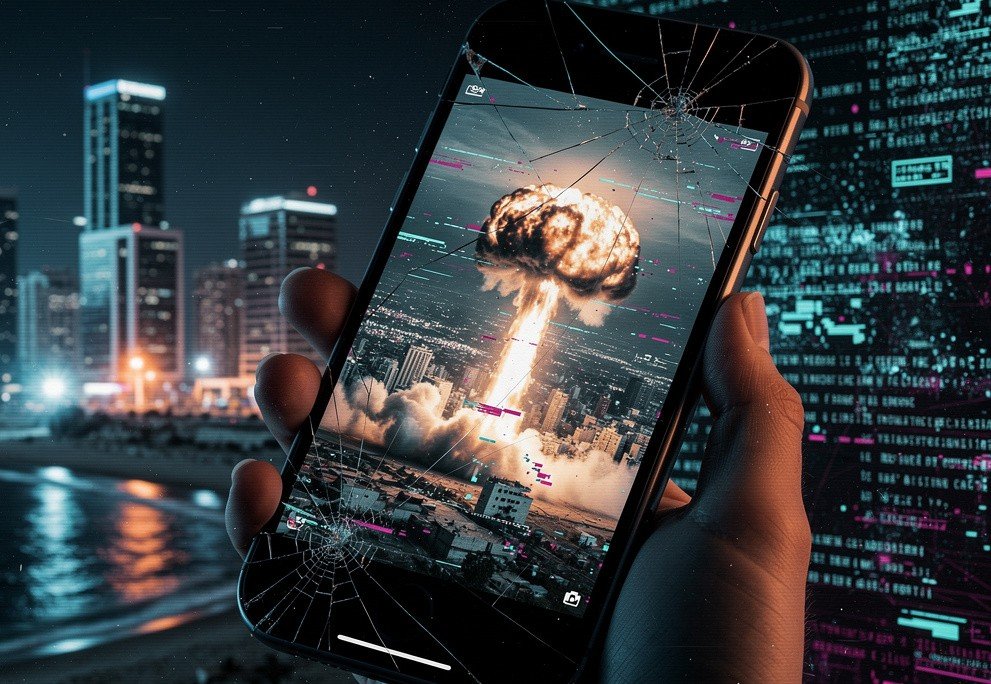
A fake video showing missiles hitting Tel Aviv has fooled millions online, including diplomats and journalists. The clip, entirely generated by artificial intelligence, reveals a dangerous new front in modern warfare where disinformation spreads faster than truth.
What the Fake Video Shows and Why It Went Viral
The video appears chilling at first glance. It shows the Tel Aviv skyline with Iranian missiles raining down, causing massive explosions across the city.
Posted on X with the caption “Tel Aviv, stripped of illusion, as you have never witnessed it,” the footage quickly racked up millions of views. People shared it believing they were witnessing real destruction.
The problem? None of it was real.
The entire video was created using AI image generation tools. Yet it fooled countless viewers, including a former French ambassador to Israel who shared it before realizing the mistake. British commentator Bushra Shaikh also posted the clip and later deleted it in embarrassment.
The incident highlights how easily AI can manipulate public perception during active military conflicts.
The Real Israel-Iran Military Exchange
While fake videos flood social media, actual military operations continue between Israel, the United States, and Iran.
Here is what is happening on the ground:
| Side | Actions | Targets |
|---|---|---|
| Israel and US | Airstrikes on Iranian military sites | Nuclear facilities, missile bases |
| Iran | Ballistic missile launches | Israeli cities, Gulf state bases |
| Both sides | Cyber operations | Infrastructure, communications |
Real strikes have caused damage and casualties. Emergency responders in Beit Shemesh worked at actual impact sites following Iranian missile barrages in early March 2026.
But distinguishing real footage from AI fakes has become nearly impossible for average social media users.
How AI Propaganda Works During Active Conflicts
OSINT analyst Tal Hagin has tracked the flood of fake content pouring onto social media platforms. His research shows a coordinated effort to spread AI-generated disinformation.
The types of fake content include:
- AI videos showing nonexistent missile strikes on cities
- Fabricated images of destroyed American military equipment
- Manipulated footage claiming to show fighter jet battles
- Video game clips passed off as real combat footage
These fakes serve multiple purposes. They aim to demoralize Israeli and American citizens. They create false narratives suggesting Iran is winning. They sway millions of uninformed viewers worldwide.
The speed of social media means fake content often reaches millions before fact-checkers can respond. By the time corrections appear, the damage is done.
Why Even Experts Fall for AI Fakes
Modern AI tools can create photorealistic videos in minutes. The technology has advanced so rapidly that trained analysts sometimes struggle to spot fakes immediately.
Several factors make detection difficult:
The emotional impact of war footage makes people share before thinking. During active conflicts, everyone wants the latest information. Social media algorithms reward shocking content with wider reach.
Former diplomats and journalists falling for these fakes shows that expertise offers no protection. The AI-generated Tel Aviv video used familiar landmarks and realistic explosion effects that passed casual inspection.
Only careful analysis revealed telltale signs of AI generation, including slightly unnatural smoke patterns and building proportions that did not match reality.
What Social Media Platforms Are Doing
X, Facebook, Instagram, and TikTok all face mounting pressure to combat AI disinformation during the conflict. Their current efforts have produced mixed results.
Platforms have added labels to some AI-generated content. But enforcement remains inconsistent. The Tel Aviv video circulated for days before receiving any warnings.
Some steps platforms have taken:
- Adding AI disclosure requirements for creators
- Partnering with fact-checking organizations
- Using automated detection for known fake clips
- Reducing algorithmic amplification of unverified content
Critics say these measures arrive too late and catch too little. By the time a video gets flagged, it has already shaped opinions and sparked outrage across the globe.
How Viewers Can Protect Themselves
Spotting AI fakes requires skepticism and patience. Experts recommend several practices for anyone consuming conflict footage online.
Wait before sharing. The first 24 hours after any major event produce the most fake content. Legitimate news outlets need time to verify footage.
Look for multiple sources. Real events get captured by many cameras from different angles. A single viral clip with no corroboration deserves doubt.
Check who posted it. Anonymous accounts with no history often spread disinformation. Established journalists and news organizations have reputations to protect.
Watch for visual glitches. AI videos sometimes show strange details in smoke, reflections, or background elements. Hands and text often render incorrectly.
The Israel-Iran conflict will likely produce more AI fakes as fighting continues. Each viewer who pauses before sharing helps slow the spread of dangerous lies.
As bombs fall and missiles fly, the battle for truth matters just as much as the battle on the ground. The fake Tel Aviv video fooled millions and damaged trust in all war footage. That may be exactly what its creators wanted. Share your thoughts in the comments below and stay vigilant about what you share online.