
Egypt’s new customs duties on imported phones are reshaping how millions stay connected. Since January 21, 2025, travelers can no longer bring even one phone duty-free into the country. The 37.5 percent tax now applies to every imported device, and the financial burden is falling hardest on those who can least afford it.
What Changed and Why Authorities Acted
The Egyptian government eliminated a long-standing exemption that once allowed travelers to bring one phone into the country without paying customs once every few years.
Officials say the decision reflects Egypt’s growing local manufacturing capacity. They also point to widespread smuggling that was draining tax revenue and undercutting domestic producers.
The National Telecommunications Regulatory Authority now tracks every phone entering the country through IMEI registration. Devices not registered within 90 days face network disconnection.
The government launched a mobile app called “Telephony” to help users check registration status and pay any customs fees owed. But for many Egyptians, the fees themselves have become the central problem.
Prices That Outpace Monthly Earnings
The math is brutal for average consumers.
Consider these price impacts after the 37.5 percent duty:
| Device | Price Before Customs | Price After Customs |
|---|---|---|
| iPhone 16 Pro | EGP 63,000 ($1,260) | EGP 86,625 ($1,733) |
| iPhone 14 | EGP 40,000 ($800) | EGP 55,000 ($1,100) |
| Samsung Galaxy S24 | EGP 45,000 ($900) | EGP 61,875 ($1,238) |
| Mid-range OPPO/Realme | EGP 15,000 ($300) | EGP 20,625 ($413) |
Egypt’s private sector minimum wage sits at EGP 7,000 per month, roughly $140. A mid-range smartphone now costs three months of minimum wage earnings. A flagship device represents nearly a full year of income for entry-level workers.
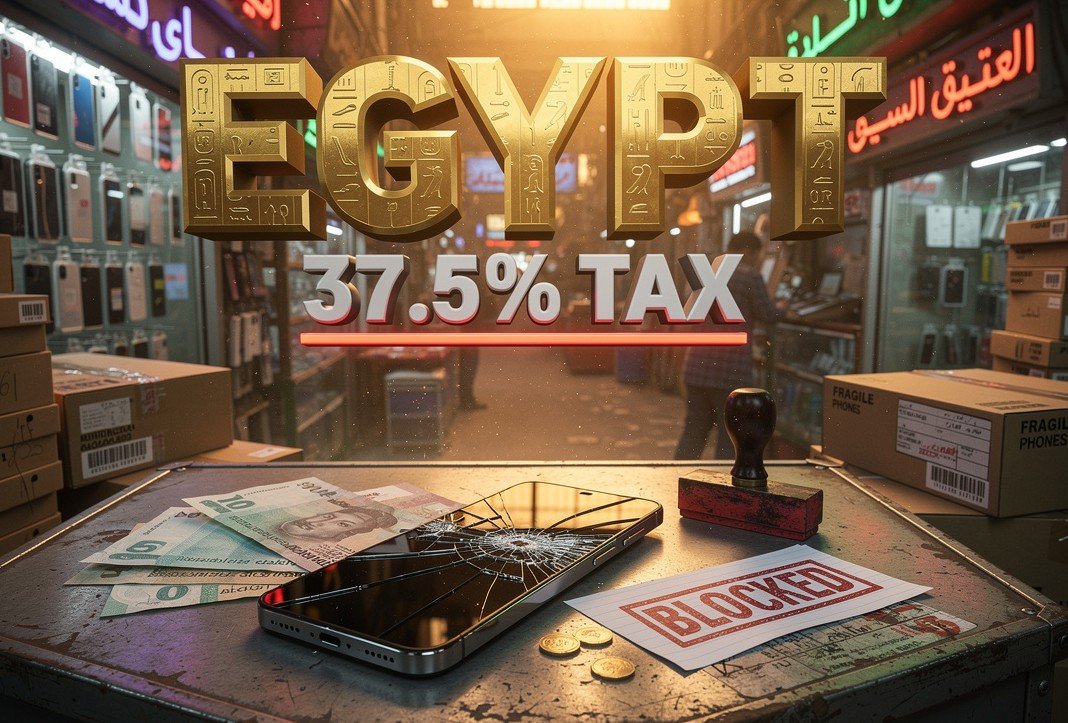
Global price indexes consistently rank Egypt among the world’s most expensive markets for smartphones. Currency devaluation, import restrictions, and stacked taxes have pushed prices 40 to 60 percent higher than neighboring Gulf countries.
Social Media Backlash Grows Louder
Online anger has been swift and sustained.
Egyptian users have flooded platforms with complaints about the new system. Many describe confusion over registration deadlines and unexpected fees. Others share stories of phones being blocked despite attempts to comply.
“I bought my phone in Dubai two years ago. Now they want me to pay customs on something I already own,” one user wrote on X, formerly Twitter.
The frustration reflects a deeper concern. Smartphones are no longer luxury items in Egypt. They are essential tools for work, banking, education, and accessing government services.
Digital payment apps like InstaPay and Vodafone Cash require smartphones. Ride-hailing services like Uber and Careem depend on them. Many government transactions now happen through mobile platforms.
“This policy treats phones like luxury goods when they have become basic necessities,” said one Cairo-based tech analyst speaking on condition of anonymity.
Who Bears the Real Burden
The policy’s weight falls unevenly across Egyptian society.
Wealthy travelers who once bought phones abroad during trips now face significant fees upon return. But they can absorb the cost.
Working-class Egyptians face a harder choice. They can pay inflated local prices, purchase used devices with uncertain histories, or simply go without upgrades for longer periods.
Young professionals entering the workforce feel the squeeze most acutely. A reliable smartphone is often required for job applications, remote work, and professional communication. The cost barrier has real employment implications.
Students depending on educational apps and online learning platforms also struggle. Many families now share devices because buying multiple phones has become financially impossible.
The secondhand market has responded predictably. Prices for used devices have climbed as buyers seek alternatives to expensive new imports.
Local Manufacturing Promise Versus Reality
Government officials have emphasized that these measures support domestic phone production.
Egypt has attracted investments from global manufacturers including Samsung, OPPO, and others who have established local assembly operations. The Ministry of Communications has promoted these facilities as job creators and a path toward self-sufficiency.
But local production currently covers only a portion of market demand. Many popular models remain unavailable from domestic factories.
Quality perceptions also persist. Some consumers believe locally assembled devices differ from imported versions, though manufacturers insist specifications remain identical.
The gap between policy ambition and consumer experience remains wide. Until local manufacturing scales up and prices drop accordingly, users bear the cost of a transition that benefits them only in theory.
Critics argue the policy prioritizes revenue collection over digital inclusion. Supporters counter that short-term pain will yield long-term benefits as Egypt builds its tech manufacturing sector.
The debate continues while prices keep climbing.
For millions of Egyptians, a smartphone has become the gateway to modern life. Work, education, banking, transportation, and government services all flow through these small screens. The new import rules have made that gateway significantly more expensive to enter, and the people struggling to afford connection are not the ones who made the policy.
Share your thoughts on how these changes have affected you or your family. If you are in Egypt and navigating these new rules, your experience matters to others facing the same challenges.
