A team of Egyptian archaeologists has made a remarkable discovery in the West Bank of the Nile that promises to deepen our understanding of ancient religious life and burial traditions. A cache of 22 painted wooden coffins belonging to women known as the “Singers of Amun” has been uncovered in Luxor’s Asasif necropolis, along with rare sealed papyri dating back over 3,000 years. This find sheds fresh light on a unique class of temple performers and the complex rituals surrounding death in ancient Egypt.
Hidden Chamber of Singers Reveals Unexpected Burial Practice
Archaeologists working in the Qurna area on Luxor’s West Bank discovered the cache contained within a rectangular funerary chamber carved into the bedrock. Unlike single tomb burials, this space served as a shared repository for multiple elite burials, indicating careful planning by ancient Egyptian embalmers to protect and preserve important individuals.
Inside the chamber, the coffins were stacked in ten horizontal rows, many with lids separated from their bases to maximize space. This deliberate layout suggests that tomb officials moved the coffins from original burial sites, placing them together in this protected chamber to keep them safe from tomb robbers or natural damage.
Archaeologists also recovered a group of ceramic vessels and eight sealed papyrus scrolls. These rare papyri still bear their original clay seals and are expected to yield valuable information on religious practices, administrative records, or funerary rites once they are carefully studied.
Who Were the “Singers of Amun” in Ancient Egyptian Culture?
The coffins are attributed to women identified by their professional titles rather than personal names. The most common designation found on the painting and inscriptions on the coffins was “Singer or Chantress of Amun.”
In ancient Thebes, the Temple of Amun was one of the most important religious centers, and music and chanting were integral to its rituals. Women serving as singers performed hymns and sacred vocal rituals to honor Amun, the chief deity whose cult was central to Egyptian theology, particularly during the Third Intermediate Period spanning the Twenty-first to Twenty-fifth Dynasties (c. 1070–712 BCE).
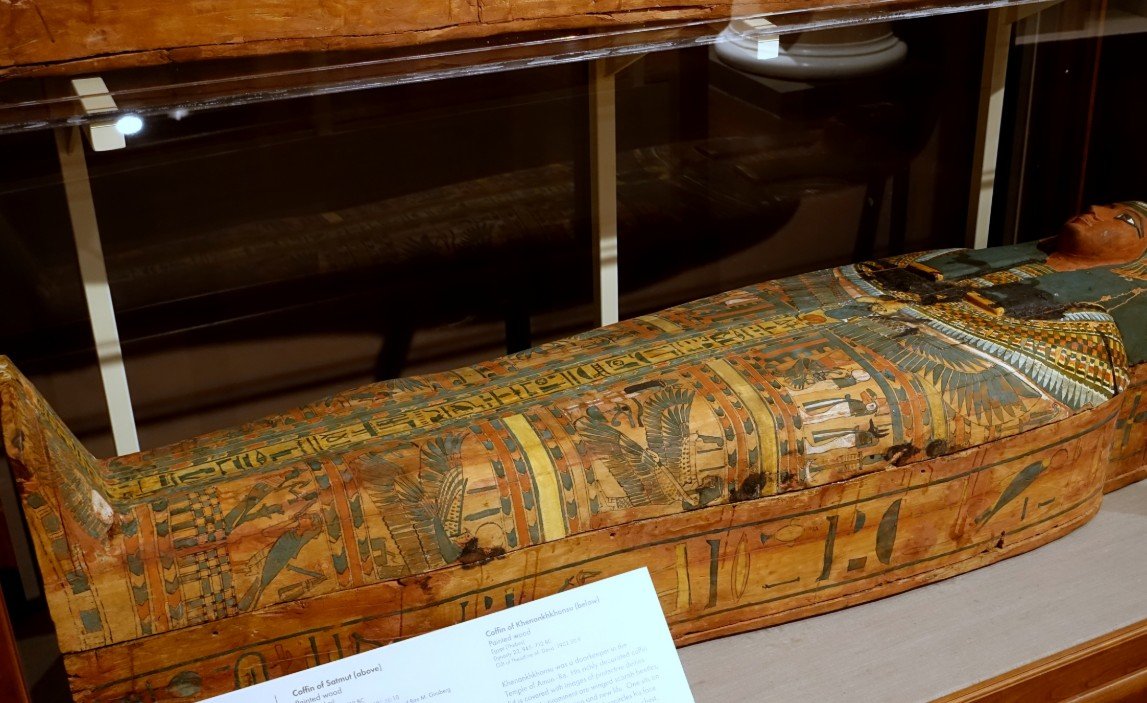
These women held a high social status within the temple hierarchy. Similar historical records and studies of other known singer burials show that temple musicians often came from elite segments of society and were closely tied to religious and ceremonial functions.
The presence of coffins bearing professional titles instead of names is particularly intriguing to researchers. It suggests that these singers were recognized primarily for their sacred roles rather than family lineage, emphasizing their spiritual importance within temple culture.
Artistry and Burial Practices from a Turbulent Era
The painted wooden coffins are not only historically valuable but also artistically significant. The vibrant colors and detailed decoration speak to the craftsmanship of ancient Egyptian artisans and their beliefs about the afterlife.
In addition to the coffins, archaeologists found pottery vessels likely used to store materials related to the mummification process. The discovery of these items highlights ritual practices surrounding death and embalming, offering a more complete picture of ancient mortuary customs.
Scholars have noted that similar roles for singers and musicians in temple life often involved ritual music intended to calm the gods and support sacred ceremonies, making these findings especially meaningful for understanding religious performance in ancient Egypt.
What the Sealed Papyri Could Reveal
One of the most exciting aspects of the Luxor discovery is the group of eight sealed papyrus documents found inside a ceramic vessel alongside the coffins. Because some seals remain intact, these scrolls may contain undisturbed text, possibly related to temple rituals, administrative records, or funerary formulas used during the Third Intermediate Period.
Experts describe the papyri as potential “information treasure troves,” capable of offering new insight into the social, religious, and perhaps economic structures of ancient Egyptian temple communities.
These rare sealed documents may help clarify how temple staff were organized, the types of rituals performed, and how religious duties were recorded and passed across generations.
A Site of Cultural and Historical Importance
The Asasif necropolis, where the cache was unearthed, is a sprawling burial ground used by high-ranking officials, priests, and temple personnel for centuries. The location of the find, in the southwestern sector of this necropolis, reinforces the high social status of the buried singers, suggesting they were respected members of ancient Theban society.
This discovery follows a series of significant archaeological finds in the Luxor area, underlining Egypt’s ongoing role as a vital epicenter for ancient history and cultural heritage.
Officials from the Egyptian Ministry of Tourism and Antiquities stressed that this find reflects a long-term national strategy to preserve cultural heritage and share discoveries with the world, both for academic research and to support tourism.
What This Means for Archaeology
The Luxor coffin cache is significant for several reasons:
-
It highlights the role of women in ancient religious life.
-
It reveals previously unknown burial practices for temple personnel.
-
It introduces rare sealed papyri that could expand historical understanding.
Most importantly, the discovery offers a window into lives of individuals who were once overlooked in traditional Egyptology, bringing attention to their role within the sacred rituals of ancient temples.
Calling All History Lovers
This find is already generating buzz among archaeologists, historians, and enthusiasts around the globe. It underscores how much ancient Egypt still has to teach us about ritual, ceremony, and the people who gave meaning to spirituality thousands of years ago.