
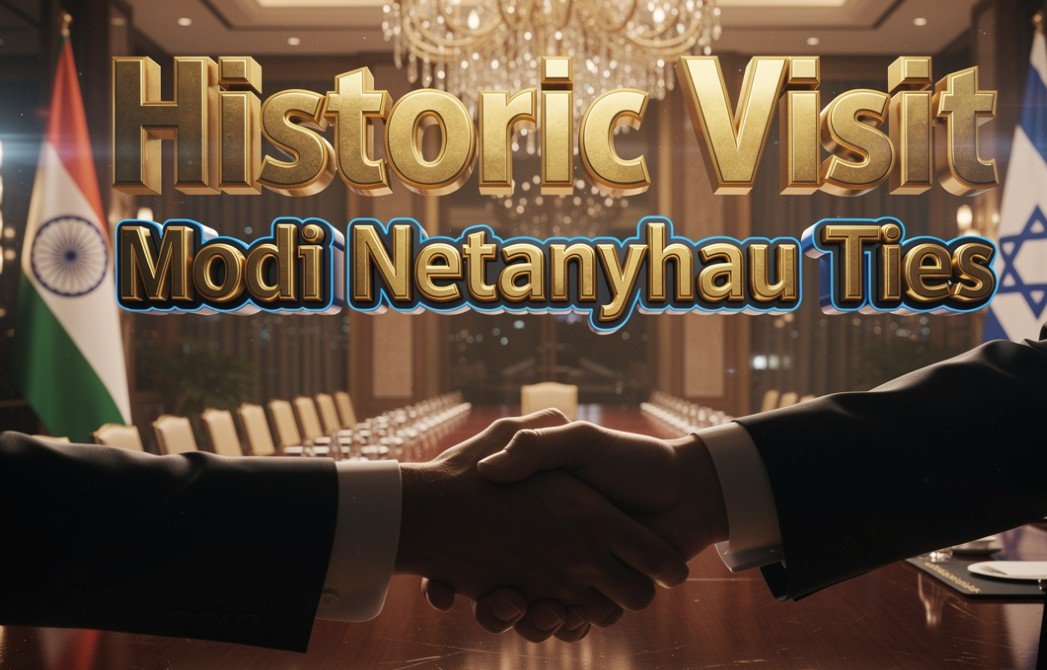
Israeli Prime Minister **Benjamin Netanyahu has described Indian Prime Minister **Narendra Modi’s upcoming trip to Israel as historic, a signal of the rapidly strengthening bond between the two nations as they prepare for high‑level talks and cooperation across strategic sectors. The two‑day visit, set to begin on February 25, 2026, is expected to further elevate partnerships in defence, technology, economy and regional diplomacy, and reaffirm India’s role on the global stage.
Historic Visit to Mark New Phase in India‑Israel Ties
Prime Minister Narendra Modi’s visit to Israel, scheduled from February 25 to February 26, represents only his second trip to the country as India’s leader. His first historic visit took place in 2017, when he made international headlines as the first Indian prime minister to travel to Israel.
At the opening of a weekly cabinet meeting on Sunday, Prime Minister Benjamin Netanyahu called Modi’s forthcoming trip “historic” and emphasized the personal friendship the two leaders share. Netanyahu noted that they “speak frequently on the phone and visit one another,” signaling a strong rapport at the highest level of government.
Netanyahu said the visit will reinforce cooperation “in economic, diplomatic, and security spheres” and highlight the broad spectrum of collaboration that has grown over recent years.
Strategic and Economic Cooperation on the Agenda
The scope of discussions planned during Modi’s visit reflects the breadth of India‑Israel ties, which have expanded far beyond diplomatic goodwill into substantial strategic cooperation. Economic ties between the two countries have grown significantly, covering sectors such as defence, agriculture technology, energy, and cyber security.
Insights from regional analysts and official statements indicate that defence collaboration and technology partnerships will take a central stage during the visit. Israel and India are expected to explore deepening collaboration on advanced defence systems, including drones, missile defence, and laser‑based technologies. A defence cooperation Memorandum of Understanding (MoU) is likely to be signed during this visit to formalize agreements in these areas.
Israel’s expertise in artificial intelligence, quantum technology, and cybersecurity also positions the two nations to launch joint initiatives that could influence innovation hubs in both countries. Netanyahu has touted technology cooperation as part of the visit’s agenda, stressing that fields like AI and quantum computing are not just future priorities but essential components of the present global economy.
Addressing Regional and Security Challenges
Beyond bilateral economic and technological ties, security cooperation and regional stability will be key topics of discussion. Netanyahu outlined plans for a broader framework of alliances — which he described as a “hexagon” of nations — that could include India, Arab countries, African states, and Mediterranean partners like Greece and Cyprus. This wider strategic vision aims to build a coalition of nations that share common perspectives on security and countering what Netanyahu described as “radical” regional threats.
Netanyahu’s remarks reflect Israel’s efforts to broaden its geopolitical partnerships and underscore India’s importance in that strategy. Analysts suggest that as a rising global power with a population of over a billion people, India’s engagement in this context signals a shift toward broader multilateral cooperation on security and diplomatic fronts.
Personal Diplomacy and Symbolism
The personal bond between Netanyahu and Modi has been widely noted as a unique element of India‑Israel relations. In recent statements, Netanyahu has referred to Modi as a “personal friend” and often publicly acknowledged their frequent communications and mutual respect. This personal dimension adds symbolic weight to the visit, reinforcing trust and mutual understanding between leadership circles.
In response to Netanyahu’s remarks, Prime Minister Modi echoed the sentiment of friendship and mutual respect, expressing that India “deeply values the enduring friendship with Israel, built on trust, innovation and a shared commitment to peace and progress.” His statement highlights a diplomatic posture that focuses on collaboration while balancing India’s broader role in global affairs.
A Broader Historical and Diplomatic Context
India and Israel formally established diplomatic relations in 1992, and since then, ties have expanded gradually across many areas. The historic 2017 visit by Prime Minister Modi marked a milestone in bilateral relations, opening doors to increased economic, scientific, and security cooperation. Since then, cooperation between the two nations has become a defining feature of both countries’ foreign policies.
This visit arrives at a time when global and regional dynamics are shifting, particularly in the Middle East with ongoing tensions and evolving security landscapes. India’s engagement with Israel underscores New Delhi’s interest in expanding its diplomatic and strategic footprint while maintaining a balanced approach to regional conflicts and partnerships.
What to Expect from the Visit
During his two‑day trip, Prime Minister Modi is scheduled to address the Knesset, Israel’s parliament, a notable symbol of diplomatic respect and cooperation. In addition to high‑level talks, Modi and Netanyahu are expected to participate in events focusing on innovation and technology in Jerusalem, and may visit sites such as the Yad Vashem Holocaust memorial together, emphasizing historical remembrance and strengthening cultural understanding between the two democratic nations.
Security, technology, defence collaboration, economic partnerships and regional diplomacy are all on the agenda. Leaders are expected to set the stage for future cooperation frameworks that could shape global partnerships in the years ahead.
This visit represents more than a diplomatic engagement; it showcases a narrative of shared global responsibility and evolving strategic cooperation that could have long‑lasting implications for both countries. Share your thoughts on this historic visit and what it could mean for the future of India‑Israel relations using the hashtag #ModiInIsrael on social media.
