
Cairo, Egypt: After more than two years of waiting and suffering in foreign exile, tens of thousands of Palestinians displaced from the Gaza Strip have finally begun returning home through the long-closed Rafah border crossing with Egypt. Their journeys capture deep emotion, fierce hope, and the harsh reality of a homeland left in ruins by relentless war.
For many who fled Gaza after the October 7, 2023 conflict began, the opening of the Rafah crossing on February 2, 2026 offered both relief and heartbreak. The crossing’s partial reopening allowed limited movement under sweeping security checks, and Gazans stranded in Egypt rushed to register for return after months of uncertainty.
The return conveys powerful emotion: some families reunite after long separations while others face the bleak ruins of their former homes. The resilience of those who waited captures both the struggle and hope of a displaced people.
Limited Border Opening Marks First Real Break in Years of Isolation
After almost 20 months of closure, the Rafah border crossing between Gaza and Egypt reopened this week, in a move tied to ceasefire agreements and diplomatic negotiations.
Only a narrow segment of people are moving through the crossing at first.
-
Security controls by Israeli forces still govern entry and exit procedures under EU monitoring.
-
Medical patients and their companions were among the first allowed movement, with as few as 50 people per day expected.
The initial operation remains symbolic but critical. Sick Palestinians have endured harsh conditions in Gaza’s crumbling healthcare system, and families separated for nearly three years finally see a chance to reunite.
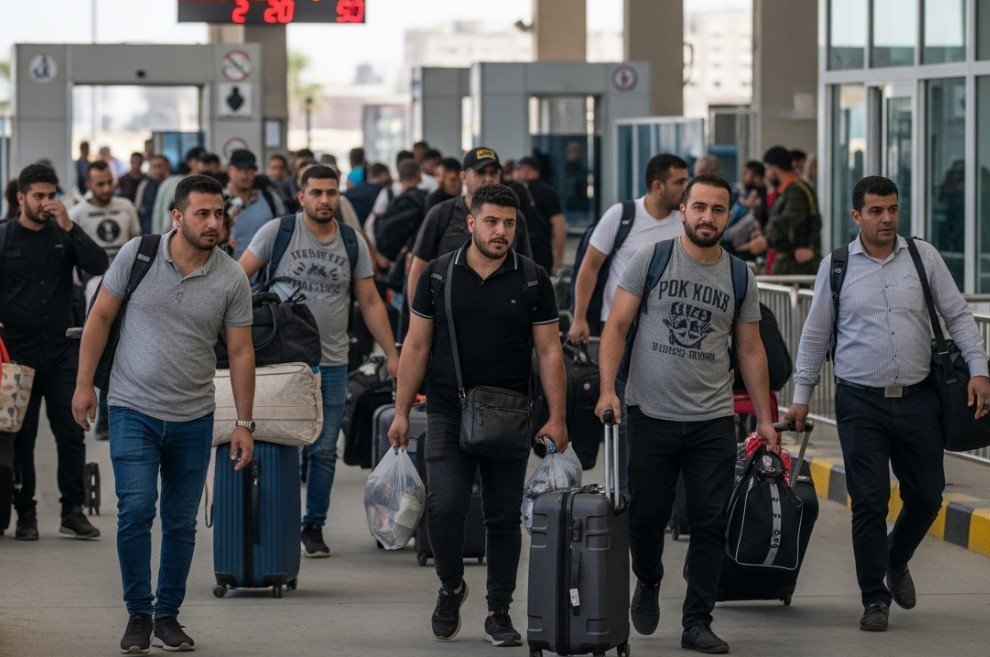
In one early test of movement, Monther Abu Al Atta and his son reached the Egyptian side of the crossing after two years apart from their relatives and under heavy restrictions. He told reporters that “reaching Gaza was a dream,” capturing the emotional cost of displacement and war.
Life in Egypt: Displaced But Unable to Settle
When Hamas militants’ attack on Israel sparked a major war in October 2023, an estimated 80,000 Palestinians fled to Egypt for safety, mainly seeking refuge in Cairo and other Egyptian cities.
Yet these refugees faced harsh realities in Egypt:
-
Most were not granted official refugee status.
-
Many lacked access to public services like healthcare, education, or stable residency permits.
-
Daily life became a struggle to survive in a foreign land with little legal protection.
This uncertain limbo bred deep frustration. While some displaced Palestinians tried to build new lives in Cairo or Madinaty, their emotional and cultural ties to Gaza remained strong. Many felt that Egypt was merely a waiting room rather than a final home.
For people like rights worker Mona Rostam, living in Egypt felt like “existing in two places at once,” caught between routine life there and emotional bonds to family and community back in Gaza.
Rebuilding Home in Gaza Means Facing Ruins and Loss
Returning to Gaza, however, is not the simple reunion that many hoped for. After nearly three years of relentless military campaigning, much of the enclave lies in tatters. Research and news reports describe widespread destruction of residential neighborhoods and vital infrastructure.
Even residents returning to rebuild face stark realities:
-
Homes reduced to rubble or unsafe living conditions
-
Lack of essential services like electricity, clean water, and medical facilities
-
Severe economic hardship as markets collapse and unemployment soars
For families like Faten Hamed Abu Watfa, who has not seen her children in nearly a year, the return means confronting the painful aftermath of war more than reunification. “I love Gaza,” she said, “but I fear for what remains there.”
Who Is Crossing and Who Is Still Waiting
Current reopening conditions prioritize certain categories of travelers:
-
Medical patients seeking treatment abroad.
-
Palestinians with family abroad or urgent humanitarian needs.
-
Gazans registered with local authorities for return under stringent security clearance.
Yet thousands more are still waiting on both sides of the border:
-
Around 20,000 Palestinians need urgent medical evacuation.
-
Many families remain separated, with relatives stranded due to security and paperwork holdups.
And there is a heartbreak that few changes can heal: some never made it. In at least one tragic case, a woman awaiting liver transplant approval died while still on the waiting list for return.
A Fragile Step Forward That Still Hangs in Balance
The reopening of Rafah is a fragile moment. It depends on continued diplomatic pressure, complex negotiations among Israel, Egypt, EU monitors and Palestinian authorities, and evolving security conditions on the ground.
Although it represents a breakthrough after long years of isolation, the scope of this reopening remains narrow and tightly regulated. The broader hope for a full humanitarian corridor that supports families, goods, trade, and full reunification remains distant.
As one Gazan man returning said, “I am going back to the place that feels like home, even if it has been destroyed.” His words reflect both the resilience of displaced families and the stark challenges that lie ahead.
The dare for Egypt, Israel, and world powers remains not just reopening a border, but ensuring dignity, safety, and a substantive future for the people whose lives were torn apart.
