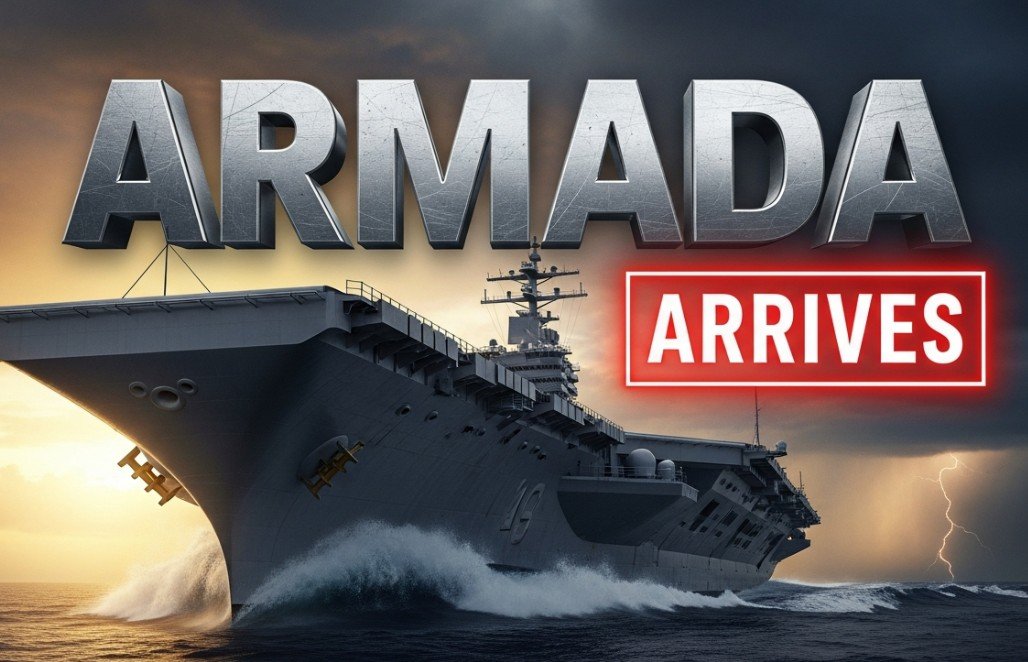
Tensions in the Middle East have hit a boiling point as a massive American naval force enters the region. The USS Abraham Lincoln Carrier Strike Group, equipped with advanced F-35C Lightning II fighters, has arrived in US Central Command waters. This high-stakes deployment sends a crystal-clear message to Tehran and its proxies.
Washington is not taking any chances. Pentagon officials have accelerated the movement of these assets to protect American troops and defend key allies like Israel. The arrival of this “armada” marks one of the most significant build-ups of US combat power in the region in recent history.
A Floating Fortress Enters the Fray
The sheer scale of this deployment is turning heads globally. The USS Abraham Lincoln is not just a ship. It is a floating airbase powered by nuclear reactors and capable of projecting massive force. It carries a potent air wing that now includes the F-35C, the Navy’s most advanced stealth fighter.
Key Assets in the Strike Group:
- USS Abraham Lincoln (CVN-72): The flagship nuclear-powered aircraft carrier.
- F-35C Lightning II: Stealth fighters designed to penetrate advanced air defenses.
- Guided-Missile Destroyers: Ships capable of intercepting enemy missiles.
- Carrier Air Wing 9: A mix of strike fighters, surveillance aircraft, and helicopters.
This combination gives the US military options. They can launch precision strikes or enforce a no-fly zone if the situation demands it. The presence of F-35s specifically changes the game. Their stealth capabilities mean they can operate in contested airspace that older jets might avoid.
Defense or Offense?
The Wall Street Journal and other major outlets have reported on these movements as a defensive measure. However, the line between defense and offense is thin in modern warfare. While the official stance focuses on protection, the capabilities on the ground tell a story of total readiness.
“We are postured to defend our forces and our partners. But make no mistake, we retain the capability to respond decisively to any aggression.”
American officials emphasize that airstrikes on Iran are not imminent. The goal remains deterrence. However, the military has prepared a menu of options for the President. These options range from limited electronic warfare attacks to broad strikes on missile facilities.
US Defensive Layering Strategy
| Asset Type | Primary Function | Location Strategy |
|---|---|---|
| THAAD Battery | High-altitude ballistic missile interception | Jordan, Saudi Arabia, UAE |
| Patriot Systems | Short-to-medium range threat defense | Kuwait, Bahrain, Qatar |
| F-22/F-35 Jets | Air superiority and stealth strikes | Forward Operating Bases |
| Naval Destroyers | Sea-based missile defense (Aegis) | Persian Gulf, Red Sea |
The Regional Powder Keg
Iran has watched these developments closely. Tehran has often threatened a “proportional response” to any American aggression. This creates a dangerous cycle of escalation. The US intelligence community assesses that Iran possesses a vast arsenal of drones and ballistic missiles capable of overwhelming standard air defenses.
This is why the US is not just relying on the carrier. Additional air defense batteries are being rushed to the desert. Bases in Jordan, Kuwait, and Saudi Arabia are receiving upgrades. The aim is to create a “missile shield” that can soak up an Iranian barrage.
Diplomats are working overtime behind the scenes. They hope the sight of the USS Abraham Lincoln will force a pause in hostilities. But military planners deal in capabilities, not hopes. They know that if deterrence fails, the conflict could spread across the entire Middle East in hours.
Preparing for the Worst
The deployment of the USS Abraham Lincoln is a logistical marvel. It involves thousands of sailors and pilots working in perfect sync. This movement was expedited by Defense Secretary Lloyd Austin, highlighting the urgency felt in Washington.
The risk of miscalculation is higher than ever. A single rogue drone attack or a missile intercept gone wrong could light the fuse. The US has made it clear that the safety of its personnel is the red line.
Destroyers attached to the strike group are already patrolling key waterways. They are hunting for threats and keeping shipping lanes open. This “armada” is now the biggest stick in the region, and the world is waiting to see if it will be used.
The US has deployed the USS Abraham Lincoln Carrier Strike Group and advanced F-35 fighters to the Middle East. This massive show of force aims to deter Iran and protect allies like Israel. While officials state the move is defensive, the strike group provides powerful offensive options if the conflict escalates.