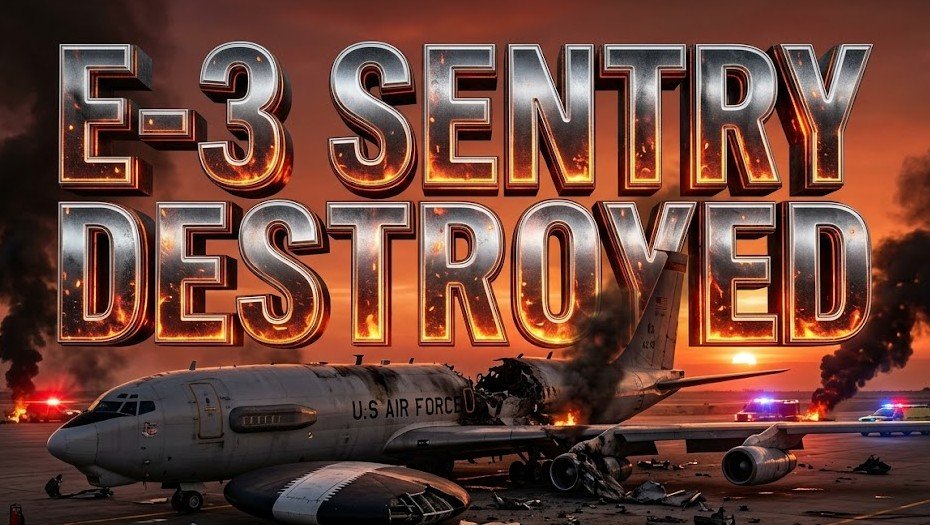
Photos verified by multiple outlets show a major US command aircraft ripped apart on the ground at Prince Sultan Air Base in Saudi Arabia following an Iranian attack. The E-3 Sentry, a key airborne radar and control plane, appears split in two with heavy fire damage. This loss comes as the US military faces ongoing strikes in a conflict that has already wounded hundreds of American troops.
Damage Confirmed at Prince Sultan Air Base
Verified images first shared on social media and confirmed by BBC Verify reveal the extent of the destruction. The large grey aircraft with US Air Force markings sits with its midsection missing and tail section at an odd angle. Features like nearby pylons and pavement markings match satellite views of Prince Sultan Air Base, located about 100 kilometers southeast of Riyadh.
A US official told Reuters that 12 American personnel were wounded in the Friday attack, with two hurt seriously. The Wall Street Journal reported damage to at least two refueling aircraft as well. US Central Command has declined to comment publicly on the incident so far.
Satellite images from before the strike showed an E-3 at the base. Flight tracking data linked the visible tail number to an aircraft active near the location in mid March. A later satellite view captured a fire on the apron area. Iranian state linked media claimed a Shahed drone delivered the hit on the Sentry.
The E-3 Sentry and Its Vital Mission
The E-3 Sentry serves as a flying command center. Its rotating radar dome provides 360 degree surveillance over hundreds of kilometers. Crews track aircraft, missiles and ships while directing fighters and coordinating strikes in real time.
This Boeing 707 based plane has supported major operations since the 1970s, from Desert Storm to recent missions against ISIS. Yet the fleet is small and aging. The US Air Force had roughly 16 E-3s before this event, with six deployed to the region. Reports indicate the specific aircraft came from Tinker Air Force Base in Oklahoma and carried the nickname Captain Planet.
Key facts about the E-3 Sentry
- Provides airborne early warning and battle management
- Crew of up to 17 airmen including operators and maintainers
- Radar can detect low flying threats that ground systems might miss
- Replacement by newer E-7 Wedgetail aircraft is years away
Losing even one hurts because these planes multiply the effectiveness of other assets. They help keep pilots safe and strikes precise in complex airspace.
Attack Details Emerge From Multiple Sources
The strike on March 27 involved Iranian ballistic missiles and drones. Sources familiar with the matter told Air & Space Forces Magazine that the E-3 suffered significant damage likely beyond repair. Photos show the radar dome area heavily impacted and debris scattered around the wreck.
Iran’s Fars news agency, linked to the IRGC, said a Shahed drone struck the aircraft directly. This fits a pattern of using cheaper drones and missiles to target high value assets on the ground. The base has faced repeated attacks in recent days, making this the third reported strike in a short period.
US officials have claimed success in degrading Iran’s missile and drone production through earlier strikes. CENTCOM noted launches dropped sharply since late February. Yet this hit shows Iran retains the ability to reach key bases despite those efforts.
Human Cost and Impact on US Operations
Twelve service members suffered injuries in the attack. Two were seriously wounded. This adds to the broader toll in the conflict, where over 300 US troops have been hurt overall and some have died.
The damage extends beyond one plane. Multiple KC-135 refueling tankers also took hits, reducing air refueling capacity in the theater. With the E-3 fleet already strained and mission capable rates below 60 percent in recent years, commanders must now stretch remaining aircraft further.
This incident highlights the vulnerability of forward deployed high value targets. Ground defenses can struggle against swarms of low cost drones mixed with ballistic missiles. The E-3 provides unmatched awareness when flying, but parked aircraft depend on base protection.
Analysts note the strategic message. Iran aims to raise the cost of US presence in the region and disrupt air operations supporting allies. The US has responded with strikes on Iranian facilities, but sustaining air superiority requires protecting these assets better.
The loss also accelerates pressure to field replacements faster. The E-7 Wedgetail program, based on the Boeing 737, promises modern capabilities on a more reliable platform. But full replacement will take time.
What This Means for Regional Security
This strike adds tension to an already volatile situation. Prince Sultan Air Base hosts critical US assets that support operations across the Middle East. Damage here affects not just immediate missions but also deterrence.
American forces continue operations despite the hit. Other E-3s remain available, and layered systems including satellites and ground radars provide backup. Still, the event serves as a reminder that modern conflicts involve both high tech weapons and persistent low cost threats.
Military leaders will review base defenses and aircraft dispersal practices. For troops on the ground, it means heightened alerts and continued risk in a dangerous environment.
The images of the wrecked Sentry have spread quickly online. They bring the conflict into sharp focus for people far from the desert base. One expensive aircraft now lies in pieces, a visible symbol of the human and material stakes involved.
This development comes amid a broader campaign that began in late February. Both sides continue to trade blows while the world watches for signs of wider escalation or possible de-escalation.
The destruction of this E-3 Sentry marks a notable moment in the current fighting. It shows the limits of even advanced militaries against determined adversaries using asymmetric tactics. As the US assesses the damage and plans next steps, the focus remains on protecting forces while maintaining operational edge in a high threat region.