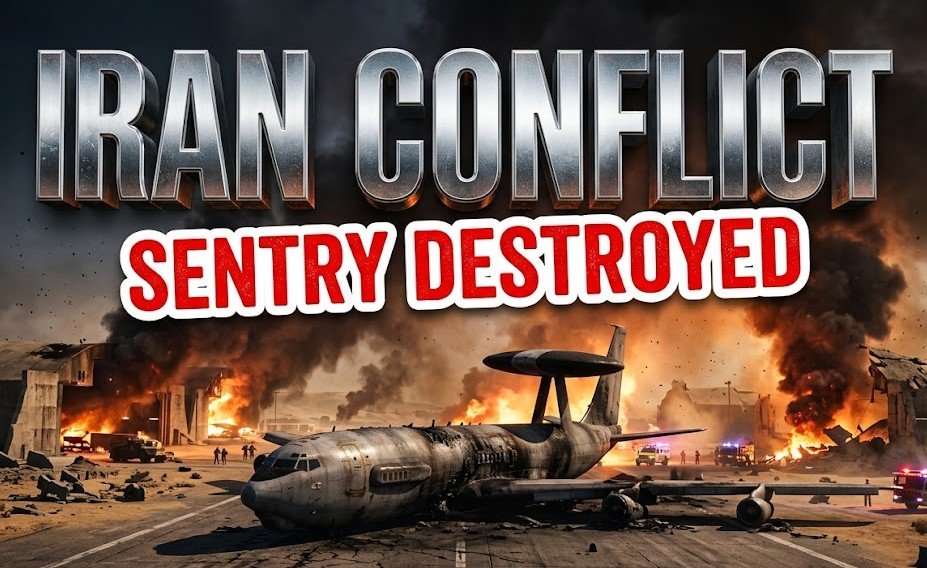
In a dramatic escalation of the monthlong Middle East conflict, Iran’s forces have destroyed a key U.S. E one hundred eighty three Sentry airborne warning and control system aircraft, amplifying fears of a wider regional war. At the same time, Tehran-fired missiles sparked a huge blaze at a major industrial and chemical facility in southern Israel, deepening humanitarian concerns and disrupting local communities across the region.
The destruction of the US Sentry aircraft, a high value surveillance asset in the region, has shaken military planners and underscored how rapidly the conflict has evolved from remote strikes to direct hits on sensitive strategic targets. Meanwhile, retaliatory attacks and counterstrikes continue across Iranian territory and Israeli infrastructure, revealing a war that shows no sign of abating.
Iranian Force Strikes US Sentry Aircraft at Saudi Base
In a significant turn of events over the weekend, Iranian missile and drone forces successfully struck a U.S. E three Sentry surveillance aircraft at Prince Sultan Air Base in Saudi Arabia. The aircraft, valued at roughly two hundred seventy million dollars and crucial to regional aerial monitoring, was destroyed in the attack. Images circulating on social platforms and international outlets depict the plane torn apart, with the radar dome and structural sections collapsed.
According to U.S. military officials, the assault also wounded a dozen American servicemembers, with two suffering serious injuries. Several additional aircraft, including a KC one thirty five tanker used for aerial refueling, sustained damage in the attack. The loss of an AWACS platform, of which only around sixteen are in global service, markedly reduces regional surveillance and command capabilities and signals a significant shift in the war’s dynamics.
Military analysts say this strike represents one of Iran’s most effective hits on U.S. military assets since the conflict began, illustrating Tehran’s expanding use of combined missile and drone tactics to penetrate heavily defended airspace. The damage to U.S. capabilities may force Washington and allied forces to reconsider access and defensive posture in the Gulf.
Tehran and Alborz Hit by US and Israeli Strikes
While Iran’s offensive operations target US assets and Israeli sites, joint U.S. and Israeli airstrikes have intensified within Iran’s borders, especially around the capital Tehran and nearby Alborz Province. Over the weekend, multiple zones in Tehran experienced explosions, triggering temporary power outages due to damage inflicted on high voltage transmission towers and electrical substations.
Residents reported blackouts in parts of the city before utility companies restored electricity to the affected districts. Authorities have not yet released casualty figures from these strikes, but infrastructure damage is evident across several residential and industrial areas.
The Israeli Defense Forces confirmed continued operations striking strategic targets deep within Iranian territory. The offensive is designed to degrade Iran’s ballistic missile and command capabilities after weeks of missile and drone barrages directed at Israeli cities and strategic installations.
Iranian Missile Hits Israel Industrial Zone
Tehran’s forces also fired a new barrage of missiles toward southern Israel, with at least one projectile hitting an industrial chemical facility in the Ramat Hovav region of the Negev desert. Local emergency services reported thick black smoke rising above the complex, which houses multiple chemical and hazardous waste processing plants.
Israeli military statements clarified that the impact might have been caused by missile debris or shrapnel, though the explosion ignited a substantial blaze that required specialized fire and rescue teams to investigate potential hazardous material leaks. No confirmed casualties have been reported.
The incident underscored the risk of adjacent civilian and environmental harm amid ongoing military exchanges and sparked alerts from the Home Front Command instructing residents to remain in protected areas until safety checks could be completed.
Regional Strategies Amid Escalation and Diplomatic Pressure
The widening conflict has spurred diplomatic engagements even as front line hostilities continue. Pakistani officials are reportedly preparing to host regional talks aimed at ending the violence, with foreign ministers from Saudi Arabia, Turkey, and Egypt in attendance. Talks focus on ceasefire frameworks and reducing tensions that now affect global oil supplies, fertiliser markets, and shipping lanes through critical waterways like the Strait of Hormuz.
Meanwhile, Iran’s parliament speaker Mohammad Bagher Qalibaf issued stark warnings that Tehran would respond forcefully to any attempt at a U.S. ground invasion. He reiterated that Iranian forces were prepared to engage any incoming American troops and punish regional partners supporting U.S. objectives.
President Donald Trump has publicly described Iran’s new leadership as “very reasonable” and confirmed ongoing, albeit tenuous, indirect negotiations. U.S. troop deployments to the region have increased, and strategic options including potential ground operations and seizing Iran’s oil export hub at Kharg Island remain under consideration.
Human Toll and Global Impact
The violent clashes have inflicted widespread hardship on civilians across the Middle East. Reported casualties continue to mount, with thousands killed and injured in both Iran and Israel since the war’s inception. Infrastructure damage, displacement of communities, and economic shockwaves are rippling beyond the conflict zone. International observers warn that the involvement of regional actors like Yemen’s Iran-aligned Houthi rebels further complicates efforts to stabilize the situation and secure safe maritime routes used for global trade.
Experts say the destruction of the AWACS plane and the strike on industrial facilities mark a new stage in the conflict characterized by attacks on high value strategic targets and the broadening of military fronts. Civilians continue to bear the brunt of the violence even as diplomatic efforts push toward de-escalation.
As the world watches this conflict unfold, communities across the Middle East and beyond face uncertainty and fear. The coming days could prove critical in either stalling further escalation or prompting renewed diplomatic breakthroughs that offer hope for peace.