
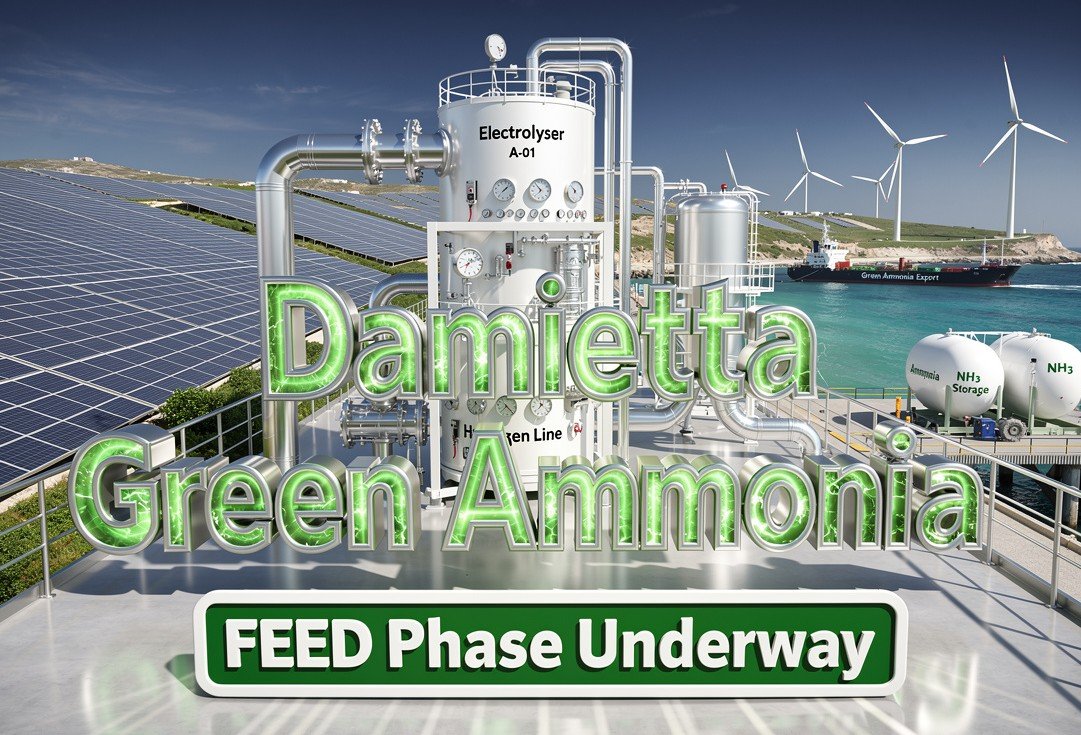
Egypt has taken a major step forward in its clean energy goals. The $873 million Damietta green ammonia project has now moved into the front end engineering design phase. Pre-FEED work on the hydrogen plant and marine jetty is complete, setting the stage for full construction and operations by the third quarter of 2028.
Damietta Green Ammonia Project Reaches Key Milestone
Development teams have completed important early studies for critical parts of the facility. This progress comes as the joint venture finalizes permits, locks in contracts, and advances financing talks. The project sits in the Public Free Zone in New Damietta along the Mediterranean coast.
Damietta Green Ammonia SAE leads the effort. The special purpose company brings together Norway’s Scatec, Egypt’s ECHEM, and MOPCO. Their combined expertise aims to create a reliable supply of green ammonia for export markets, marine fuel, and industrial uses.
Renewable Power Will Drive Green Hydrogen Production
Up to 480 megawatts of solar and wind energy will power the project. This clean electricity will feed an electrolyser facility with capacity reaching 240 megawatts. The setup will generate green hydrogen as the main feedstock for renewable ammonia production.
The project will deliver 150,000 tonnes per year of green ammonia once fully operational.
This scale positions it as a meaningful contributor to the global shift away from fossil based fuels. Green ammonia offers a practical way to store and transport renewable energy over long distances. It also serves as a zero carbon fuel option for shipping, helping the maritime industry meet tough emission targets.
Partners signed heads of terms for offtake with Yara Clean Ammonia back in July 2024. Yara stands as the world’s largest ammonia trader and distributor. Earlier agreements in 2023 established the joint development framework and shareholder structure. A letter of intent with the European Investment Bank also signals strong interest in long term financing support.
Integration With Existing Infrastructure Speeds Up Progress
The new green ammonia production will tap into MOPCO’s established ammonia infrastructure at the Damietta site. This brownfield approach reduces costs and shortens the timeline compared to building everything from scratch. It also allows for smoother integration with current operations.
In early 2025, MOPCO brought in thyssenkrupp Uhde to upgrade its three existing ammonia and urea plants. The work includes carbon capture and usage systems to handle up to 145,000 tonnes of CO2 per year from current production. That captured CO2 will feed into urea manufacturing.
New ammonia converter cartridges will boost output while cutting natural gas use by about 10 percent. Additional electrolysis units powered by renewables will supply green hydrogen to support renewable ammonia goals. These upgrades show how the project blends new clean technology with proven facilities.
Egypt Strengthens Position in Global Green Energy Transition
Egypt continues to build momentum in green hydrogen and ammonia. The country aims to become a major exporter of clean fuels, particularly to Europe. Projects like Damietta align with national targets for renewable energy growth and economic diversification.
Green ammonia production supports multiple needs. It helps decarbonize fertilizer manufacturing, which remains essential for global food security. It also provides a clean fuel pathway for shipping routes through the Suez Canal. Industrial users gain access to lower carbon raw materials.
The economic benefits stretch beyond direct operations. Construction will create jobs in engineering, construction, and related services. Long term roles in plant operations, maintenance, and renewable energy management will follow. Egypt gains valuable experience in advanced clean tech that can transfer to future projects.
Local communities near New Damietta stand to benefit from increased activity in the free zone. The marine jetty component will enhance export capabilities through the Mediterranean port. This infrastructure adds to Egypt’s broader logistics strengths.
Challenges and Opportunities Ahead
Teams still need to secure full permits and approvals. Main contracts require final signatures, and financing packages need closure. These steps remain standard for projects of this size and complexity in the energy sector.
Global demand for green ammonia keeps rising. Buyers seek reliable supplies to meet corporate sustainability pledges and regulatory requirements. Egypt’s strategic location offers advantages in shipping costs to key markets in Europe and beyond.
The project also demonstrates smart technology choices. By leveraging existing assets, developers avoid some risks tied to fully greenfield developments. The combination of carbon capture on current plants and new green hydrogen production creates a practical path to lower overall emissions.
This approach delivers real emission reductions while maintaining strong production levels.
Observers note that such hybrid strategies may serve as models for other regions with established fertilizer industries. They allow faster progress toward net zero goals without shutting down viable operations.
As the world seeks solutions to climate change, green ammonia stands out for its versatility. It works as both a fuel and a chemical building block. Storage and transport use familiar ammonia infrastructure already in place worldwide. These factors make it easier to scale adoption compared to some other clean energy carriers.
Egypt’s progress in Damietta adds to a growing portfolio of green fuel initiatives across the country. The government has attracted significant international interest through policy support and strategic partnerships. Success here could open doors for even larger projects in the years ahead.
The Damietta green ammonia project represents more than just another industrial development. It shows Egypt’s commitment to a cleaner energy future while building economic strength. Local expertise grows alongside global technology transfer. Jobs emerge in high tech sectors. And the world gains another source of truly green fuel.
This milestone in the FEED phase brings the vision closer to reality. With strong partners, smart integration, and clear market demand, the project sits on solid ground. Egypt moves steadily toward its goals of sustainable growth and global leadership in renewable fuels. The coming months of detailed engineering will determine exactly how this important facility takes shape, but the direction is clear and promising.
