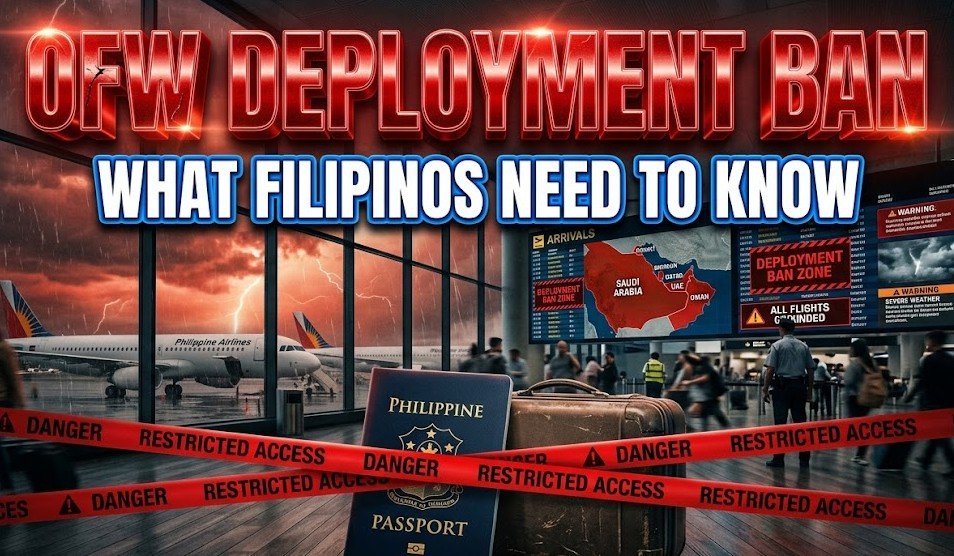
The Philippine government has suspended new deployments of overseas Filipino workers to key Middle East countries after war erupted between the US-Israel coalition and Iran in late February 2026. Airspace closures and flight shortages have left thousands of contracts on hold. This ban aims to protect Filipino lives amid the chaos, but it brings real worries for workers and their families back home.
What Triggered the Deployment Ban
Tensions exploded on February 28 when US and Israeli forces struck targets inside Iran. Iran hit back with missiles and drones across the region, including areas near US bases and Israeli cities. Airspace shut down quickly across the Gulf, making commercial flights almost impossible.
The Department of Migrant Workers issued Advisory No. 10, Series of 2026, to address the growing risks. This advisory strengthens monitoring and welfare measures for OFWs already in the region. It also suspends deployments where safety cannot be guaranteed. Regional tensions continue, with experts warning the situation could last for weeks or longer.
The safety of every Filipino worker remains the top priority. The government acted fast to prevent new workers from entering danger zones while supporting those already there.
Crisis Alert Levels Across Affected Countries
The Department of Foreign Affairs assigns crisis alert levels that determine what actions OFWs and agencies must take. These levels combine with DMW rules to shape the current bans.
Here is the latest breakdown as of early April 2026:
- Alert Level 4 (mandatory evacuation and total ban): Gaza, Syria, and Yemen. All workers must return home.
- Alert Level 3 (voluntary repatriation and total ban): Iraq and Lebanon. No new or returning deployments allowed.
- Alert Level 2 (restriction phase): UAE, Saudi Arabia, Bahrain, Kuwait, Qatar, Iran, Israel, Kurdistan Region, and West Bank. New hires are banned, though some returning workers with valid contracts may still proceed in limited cases. Practical suspensions remain in place due to flights.
- Alert Level 1 (precautionary): Jordan. Deployments continue with extra caution.
- No formal alert: Oman. Still included in the broader suspension because of airspace problems.
Even in lower alert areas, scarce flights have effectively halted most movements. The DMW continues to monitor the situation daily and updates advisories when conditions change.
How the Ban Affects OFWs Right Now
More than 40,000 OFWs are currently stranded in the Philippines, many waiting in agency centers or back in their provinces. These include new hires, re-hires on vacation, and others whose flights got canceled.
Workers already in the Middle East face different realities depending on their location. Some report normal daily life in places like the UAE and Saudi Arabia, but others deal with heightened security and flight delays. The government has assisted over 1,300 OFWs and their families with repatriation so far, with more flights planned.
One tragic case stands out. A 32-year-old caregiver from Pangasinan named Mary Ann V. de Vera died in a missile attack in Tel Aviv. Her loss reminds everyone of the real human cost behind these distant conflicts.
Remittances from the Middle East form a vital part of the Philippine economy. With around 2.4 million Filipinos in the region, any long disruption could affect family budgets back home for education, housing, and daily needs. Economists warn of possible short-term dips, though the full picture depends on how long the restrictions last.
Government Help and Repatriation Support
The DMW and OWWA have activated assistance programs for affected workers. Repatriates receive immediate help upon arrival, including food, cash aid, medical checks, and transportation to their home provinces. Temporary shelter is available for those who need it.
Philippine embassies in the region stay active, offering guidance on safety and helping with documentation. The government coordinates with recruitment agencies to handle contract issues and prevent financial losses for workers.
For seafarers, separate advisories designate certain waters as high-risk zones. Crew changes in affected ports are suspended, and Filipino sailors have the right to refuse assignments in dangerous areas with special compensation protections.
These measures show the government’s preparation. Officials say they have resources ready for larger-scale repatriation if alert levels rise further, including options for sea and air transport.
What Affected OFWs Should Do Next
If you have a contract in the Gulf or plan to deploy soon, take these practical steps right away:
- Contact your recruitment agency for the latest updates on your specific destination.
- Register with the DMW and nearest Philippine embassy for alerts and assistance.
- Review your employment contract and talk to your employer about possible extensions or alternatives.
- Prepare important documents like passports, visas, and certificates in case quick travel becomes possible.
- Reach out to family for emotional support and update them on your situation.
Workers already abroad should follow local embassy advice, avoid non-essential travel, and keep emergency funds ready. Those waiting in the Philippines can explore job opportunities in other open destinations while the situation stabilizes.
The ban highlights how connected the world is and how quickly global events can touch Filipino lives. Many OFWs left home to build better futures for their children and parents. Their hard work and sacrifices power the economy through remittances that support millions.
This challenging time calls for patience and resilience from everyone involved. The government continues to balance worker protection with economic needs, and the situation will evolve as regional tensions shift.
What are your thoughts on how this ban affects Filipino families and the economy? Share your experiences or opinions in the comments below. Your voice matters as we navigate these uncertain times together.