Al‑Kharj, once known as a quiet Saudi oasis where families walked beneath palm trees and city dwellers from nearby Riyadh escaped the heat, is now waking up to the sounds of war overhead. The tranquil life that defined this town for generations is changing fast as it finds itself in the path of regional conflict between Iran and its Gulf neighbours, with residents and soldiers alike adjusting to a new reality of danger and uncertainty.
The town’s peaceful image has faded amid repeated missile and drone assaults launched by Iranian forces, aimed at military targets but echoing into civilian spaces. People in Al‑Kharj now live with warning sirens, air defence interceptions, and the unsettling reminders that this part of Saudi Arabia is no longer far from the front lines of an escalating Middle East confrontation.
Life Near the Prince Sultan Air Base Changes Fast
Al‑Kharj’s identity has been shaped for decades by its oasis setting and its proximity to the sprawling Prince Sultan Air Base, an installation shared by Saudi and United States forces. The base has become a central target in the current Iran war that erupted after coordinated U.S. and Israeli strikes on Iran at the end of February.
At least dozens of American troops have been wounded in multiple Iranian air attacks on the base, with reports of damaged aircraft including refueling planes and critical early warning jets.
People living in Al‑Kharj speak of hearing loud detonations from interceptions and incoming threats, even when they do not see the aerial activity directly. One longtime resident said he can feel the impact of the conflict without seeing the weapons themselves, capturing the strange new normal of life so close to military operations.
This daily exposure to conflict is a sharp contrast to the town’s past, when visitors from Riyadh sought out its calm parks and orchards for weekend relaxation. Now, that calm gives way often to the pounding beats of air defences and the rumble of intercepted missiles.
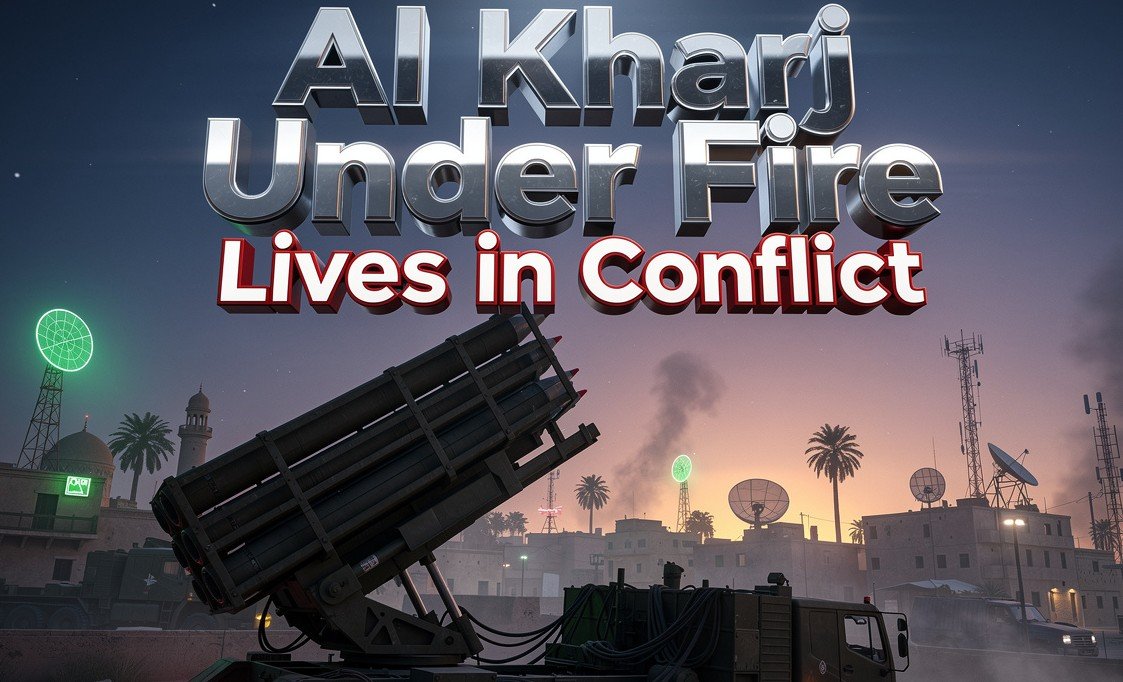
Rising Civilian Risks as Projectiles Fall in Town
Al‑Kharj also experienced one of the first civilian casualties in Saudi Arabia since the outbreak of this regional conflict. In early March, two migrant workers were killed when a projectile struck a residential area, showing that the dangers of war are no longer confined to military zones.
While Saudi air defence systems have been credited with intercepting the vast majority of incoming threats — with authorities announcing that nearly 800 drones and dozens of missiles have been neutralized since early March — the sheer volume of launches into Saudi airspace has increased the risk that debris and failed interceptions could harm neighbourhoods.
Residents now speak about regular alerts that send families scrambling for shelter, and the constant hum of defence radars that dominate the soundscape. Children growing up here know how to find streak shelters, and businesses post safety procedures at their entrances. The landscape of daily life has been refashioned by conflict pressure.
Saudi and U.S. Forces Brace for Ongoing Assaults
Analysts say the focus on Prince Sultan and other Gulf area targets reflects Iran’s strategic aim to hit critical U.S. military infrastructure that supports operations against Tehran. Airborne warning and refuelling aircraft — assets that enable broad air campaigns — have been repeatedly struck, highlighting the base’s central role in regional operations.
Despite these strikes, Saudi and U.S. officials have pressed that many attacks have been stopped in mid‑air, and Saudi defenders remain vigilant. Official statements portray a kingdom committed to both protecting its territory and supporting diplomatic efforts to end the broader conflict, even as tensions rise.
The U.S. military has reported significant damage to expensive military assets such as early warning aircraft, with questions now being raised about long‑term strategy and the vulnerability of overseas bases.
Emotional Toll on a Community in the Line of Fire
For the people of Al‑Kharj, the emotional impact of living under threat is as real as the physical danger. Families talk about the fear that flares up with every late‑night alert. Shopkeepers speak quietly about business slowing as fewer Saudis travel from Riyadh to this once‑peaceful town. Teachers and students share the strain of disrupted routines as security alerts shift focus from schoolwork to safety procedures.
Many residents now say life here is a lesson in patience, courage, and adaptation. Some wake before dawn to help reinforce homes against potential debris impact. Others volunteer to check on elderly neighbours after alerts. Even as people grow weary of conflict, they say they remain determined to protect their community and maintain normal rhythms where possible.
The story of Al‑Kharj is not only about missiles or geopolitical strategies. It is the story of ordinary lives reshaped overnight by war, where everyday activities are now conducted under an uninvited shadow, and where the community finds ways to support one another in a world that feels suddenly unpredictable.
In the coming weeks, the people of this oasis town will continue adjusting to alerts and evacuations, and they will watch closely how leaders in Riyadh and Washington navigate the path ahead. Their resilience in the face of uncertainty carries the hope that peace may return, and that one day Al‑Kharj’s palm‑lined streets will again be known for rest rather than reminders of war.