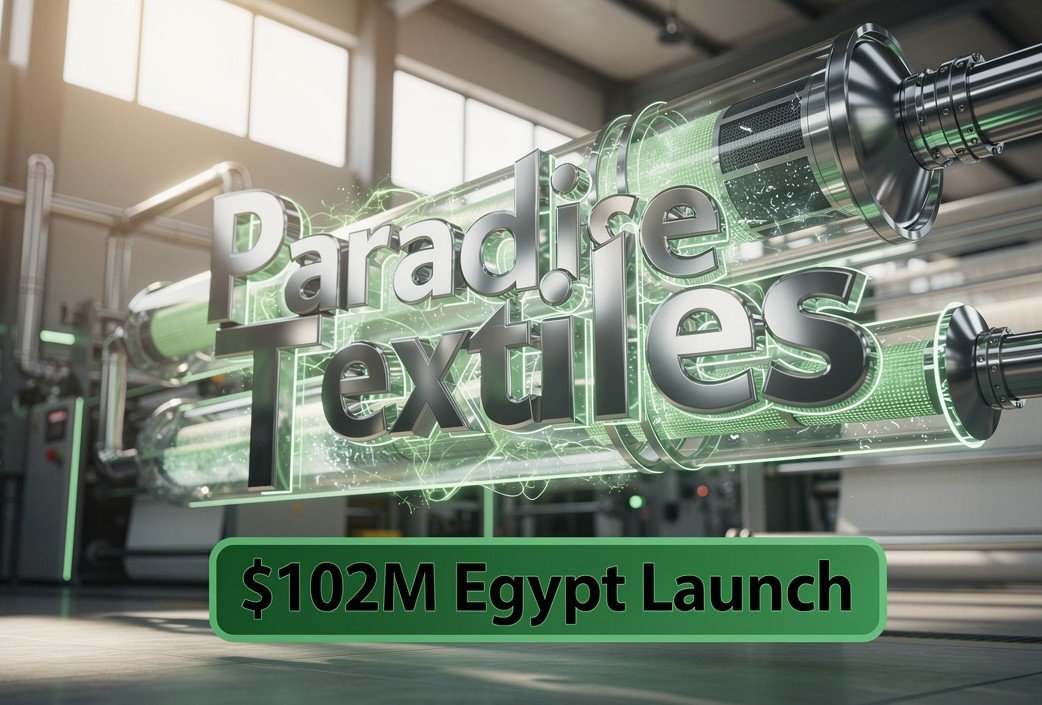
Paradise Textiles is set to build a major new fabric manufacturing facility in Egypt with a $102 million investment. The project promises 1,200 new jobs and advanced sustainable technology for activewear and sportswear fabrics. This move strengthens Egypt’s role in global textile supply chains while addressing key environmental challenges.
Major Investment Backed by Strong Financing
Paradise Textiles, the material science and innovation arm of the Alpine Group, announced the $102 million project on March 16, 2026. The integrated facility will rise in the Amreya Public Free Zone in Alexandria.
Commercial International Bank Egypt is providing $72 million in financing for the project. An initial $35.5 million tranche has already been released with further payments tied to development milestones over the next two years.
The plant will sit on a 47,345 square meter site right next to Alex Apparels, Alpine Group’s established garment manufacturing hub in Egypt. This location choice supports faster and more efficient production from fabric creation to finished garments.
Focus on High Performance Fabrics for Global Markets
The new facility will specialize in high performance polyester and synthetic fabrics. These materials primarily serve activewear and sportswear brands targeting customers in the United States and Europe.
Bold key fact: Once operational in the third quarter of 2026 the plant will enhance innovation capabilities and enable scalable export oriented production.
Proximity to Alex Apparels will deliver clear advantages. Brands can expect shorter lead times, better quality consistency, and closer technical collaboration throughout the development process. This vertical integration model reduces supply chain distances and improves overall transparency from raw materials to final products.
Egypt’s textile sector is growing steadily. Market estimates place its value around $10 billion in 2026 with continued expansion projected in coming years. The country offers strategic benefits including duty advantages for US exports through Qualifying Industrial Zones agreements.
Pioneering Sustainability Features and Innovation
Sustainability stands at the heart of this project. The facility will use lower impact production technologies and energy efficient machinery to cut water and energy consumption significantly. Integrated environmental management systems will allow real time monitoring and optimization of operations.
A major highlight is the first installation of the Regen Microfibre Filtration System. Developed through collaboration with British climate tech company Matter, this system captures microfibres during manufacturing wastewater processing. It addresses the global issue of microfibre pollution from textile production, estimated at 120,000 tonnes annually.
The self cleaning filtration technology uses far less energy than traditional methods while delivering high capture rates. This installation positions the Egyptian plant as a leader in responsible manufacturing practices.
Project Highlights
- Total investment: $102 million
- Bank financing: $72 million from CIB Egypt
- Expected jobs: 1,200 over two years
- Start of operations: Third quarter of 2026
- Key technology: Regen Microfibre Filtration System
- Location: Amreya Public Free Zone, Alexandria
Ashok Mahtani, co founder and chairman of Alpine Group and Paradise Textiles, described the project as part of the group’s long term strategy. He emphasized bringing fabric innovation closer to garment manufacturing while building manufacturing ecosystems fit for future demands. Mahtani noted that global brands face rising sustainability expectations and regulatory requirements, making this investment a step toward responsible growth and compliance.
Ehab Mohi, chairman of Alex Apparels, highlighted practical benefits for partners. He said the setup will improve speed, consistency, and technical collaboration. Closer fabric and garment operations will enhance quality control and support more agile production for performance driven brands.
Economic Boost for Egypt and Regional Impact
This investment arrives at an important time for Egypt’s economy. The textile and apparel sector provides significant employment and export earnings. New facilities like this one help modernize the industry and attract further foreign direct investment.
The Amreya Public Free Zone offers advantages for export focused operations. Companies benefit from streamlined processes and incentives designed to support industrial growth. Paradise Textiles’ project reinforces Egypt’s position as a responsible manufacturing center capable of meeting high standards for international markets.
Vertical integration also brings resilience to supply chains. By developing fabrics locally near garment production, the Alpine Group reduces risks from global disruptions and responds faster to changing market needs. This model supports brands seeking more transparent and sustainable sourcing options.
The focus on polyester and synthetic fabrics aligns with strong demand in activewear. Consumers worldwide continue to prioritize performance clothing for sports, fitness, and casual wear. High quality, sustainably produced materials give brands a competitive edge.
Looking Ahead to a More Sustainable Textile Future
Paradise Textiles’ $102 million commitment in Egypt marks a significant step for both the company and the country’s manufacturing landscape. The project combines job creation, technological innovation, and environmental responsibility in one integrated facility.
As the plant moves toward operations in late 2026, it will demonstrate how strategic investments can drive positive change in the textile industry. From capturing harmful microfibres to delivering faster service for global brands, the benefits extend across economic, environmental, and operational dimensions.
What do you think about this major investment in Egypt’s textile sector? Share your thoughts in the comments below on how projects like this shape sustainable manufacturing and job opportunities in emerging markets.