
Tel Aviv, Israel In a serious escalation of the ongoing war in the Middle East, Iran fired ballistic missiles equipped with cluster munitions toward central Israel, including Tel Aviv, causing widespread damage, fires and civilian injuries. This marks one of the most controversial uses of such weapons in the conflict, raising international concerns about civilian safety and accusations of war crimes.
Fires erupted and damage was reported in multiple neighborhoods around Tel Aviv late on March 5, as fragments from Iranian cluster warheads rained down over a wide area. Eyewitnesses and emergency crews described scenes of chaos, with shattered windows, scorched buildings and residential streets littered with unexploded submunitions.
This latest barrage follows several days of intermittent ballistic missile launches by Iran at Israel and Gulf targets since February 28, part of an intensifying regional conflict that has involved both civilian infrastructure and military assets.
Cluster Munitions in the Sky Changing the Nature of the Conflict
Cluster munitions are among the most contentious weapons in modern warfare because they disperse numerous smaller explosives over large areas. These “bomblets” can cause unpredictable harm long after the initial strike.
Israeli military officials say Iran has deployed cluster warheads multiple times since the outbreak of the current war, noting that the fragmenting submunitions pose grave risks to civilians and emergency responders. The use of such weapons may violate internationally recognized norms when civilian areas are targeted.
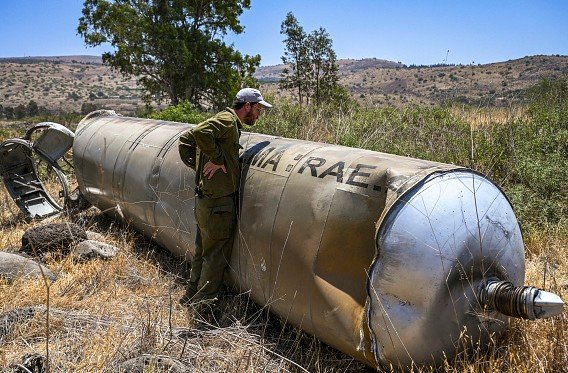
According to defence experts tracking the attacks, missiles like the Khorramshahr-4, one of Tehran’s largest long-range systems, can release up to around 20 submunitions at high altitude, spreading them across a radius of many kilometres. This has expanded the footprint of destruction in densely populated zones around Tel Aviv.
Key implications of cluster munitions include:
-
Wider damage zones: submunitions can impact a broad area, increasing the likelihood of civilian harm.
-
Unexploded ordinance hazard: many bomblets fail to detonate on impact, becoming long-term risks for civilians and first responders.
-
Disputed legality: global humanitarian groups classify use against civilian areas as contentious or unlawful.
These characteristics have made each reported use a focus of intense scrutiny by international observers.
Civilian Impact and Emergency Response in Israel
Emergency services in central Israel were stretched on March 5 and on subsequent days responding to the aftermath of the missile barrage. Firefighters battled blazes in at least three distinct locations in and around Tel Aviv and nearby towns.
Israeli rescue organizations reported multiple injuries from missile fragments and shock trauma. In one incident, a 10-year-old boy sustained minor injuries, and several adults were treated for acute trauma symptoms after exposure to falling debris.
Local authorities issued warnings to residents about unexploded submunitions, urging people to report suspicious objects and avoid touching them as specialists cleared impacted areas.
Sirens sounded across central and northern Israel, prompting tens of thousands of residents to shelter in safe rooms and reinforced structures as part of nationwide civil defence protocols. Though official casualty figures from this specific attack have not been fully released, the cumulative toll of Iranian missile strikes since late February includes dozens of fatalities and over a thousand injuries across Israel.
Strategic and International Fallout
The use of cluster weapons by Iranian forces comes amid a dramatic and rapidly evolving war involving the United States, Israel and other regional actors. Reports indicate increased joint military actions by U.S. and Israeli forces against Iranian targets in response to Tehran’s offensives.
Analysts say Iran’s shift to cluster-equipped missiles may reflect a tactical decision to maximize psychological and infrastructural impact amid what appears to be attrition in Iran’s overall missile capability due to sustained strikes on launchers by U.S. and Israeli aircraft.
These developments have triggered strong diplomatic reactions globally. Humanitarian organisations have condemned the use of weapons that are widely considered indiscriminate in dense urban settings. Some nations have called for emergency sessions at international forums to address potential violations of humanitarian law.
Regional leaders, meanwhile, have issued mixed statements. Tehran claims its strikes are in retaliation against what it describes as a hostile campaign led by U.S. and Israeli forces. Israel steadfastly states that it will defend its citizens and infrastructure against missile assaults, including those involving controversial payloads.
What Comes Next
As the conflict enters another critical phase, both sides seem committed to further military operations. The Israeli Defence Forces have continued to intercept incoming threats, but the introduction of cluster munitions has pushed civil defence to the forefront of national attention.
International humanitarian law experts warn that unexploded bomblets could remain dangerous for months or years, complicating reconstruction and recovery efforts once hostilities ease.
The global community faces growing pressure to pursue de-escalation through diplomatic channels, even as battlefield dynamics evolve unpredictably. Observers say that addressing the humanitarian impact of weapons like cluster munitions will be a key challenge in any negotiated settlement.
In the wake of the Tel Aviv attack and its ripple effects, many Israelis and international citizens alike are left to grapple with the immediate human toll and looming long-term dangers. Comment below to share your thoughts on this conflict and use the hashtag #IranIsraelWar when discussing it on social media.
