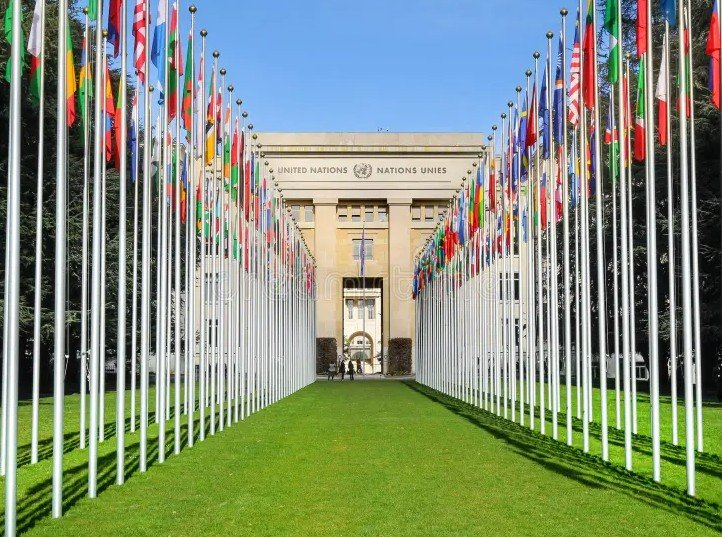
The United Nations is spending about $100 million a year on bodies and programs that single out Israel, according to a new assessment cited by Israel’s mission to the UN. The claim has reopened a long-running argument over bias, budgets, and how the world body allocates attention amid global crises.
The dispute lands just as the UN prepares to approve its next budget.
Israel’s mission puts a price tag on long-standing grievances
Israel’s Permanent Mission to the United Nations says the figure reflects a dense web of committees, reporting mandates, and communications work aimed almost entirely at Israel.
Danny Danon, Israel’s ambassador to the UN, said the spending is “well-established within the UN budget” and recurring year after year. In his view, the total is not tied to a single office or line item, but spread across multiple mechanisms that together amount to a substantial annual outlay.
“These are orchestrated campaigns,” Danon said in remarks shared with Israeli media, adding that the funds are used for activities directed against Israel and its military. He argued that some initiatives are overt, while others are embedded in broader-sounding programs that, in practice, focus on Israel.
The allegation is not new. What is new is the estimate, and the timing, as member states finalize funding for the coming year.
Where the money is said to go
According to Israel’s mission, the spending is distributed across UN bodies that deal with Palestinian issues, special rapporteurs, investigative mandates, and recurring debates that critics say apply standards to Israel not used elsewhere.
The argument hinges on accumulation.
No single office accounts for $100 million. Rather, the mission says, the sum emerges when costs for staff, reports, conferences, translations, media outreach, and administrative support are added up across the system.
Israel’s diplomats argue that this structure makes scrutiny difficult. Each component looks modest on its own. Together, they say, it forms a permanent focus.
The mission did not release a full public line-by-line audit, but said the estimate is based on internal UN budget documents and program mandates.
A familiar charge meets an entrenched institution
The UN has long rejected claims of institutional bias, countering that Israel receives attention because of the longevity and visibility of the Israeli-Palestinian conflict and the number of resolutions passed by member states.
Supporters of Israel’s position respond that longevity alone does not explain the scale.
They point to the existence of standing agenda items devoted to Israel, as well as repeated renewals of investigative mechanisms that critics say rarely sunset or shift focus even as conflicts elsewhere intensify.
For UN officials, this is a political issue more than a budgetary one. Member states propose mandates. The Secretariat implements them.
In that sense, the spending reflects votes in the General Assembly and Human Rights Council, not bureaucratic preference.
How the estimate breaks down, according to Israel
Israel’s mission says the $100 million figure captures several categories of activity. In broad terms, it points to:
-
Committees and divisions dedicated to Palestinian issues
-
Special mandates that produce recurring reports on Israel
-
Regular debates and sessions that require staffing, security, and translation
-
Communications and outreach linked to those mechanisms
To illustrate the claim, Israeli officials shared a simplified breakdown of how costs can accumulate across the system:
| Category | Estimated Annual Cost (USD) |
|---|---|
| Committees & special mandates | ~$35 million |
| Reporting & documentation | ~$25 million |
| Conferences & debates | ~$20 million |
| Communications & support | ~$20 million |
UN officials have not endorsed these figures, and some diplomats say estimates vary widely depending on what is counted.
Still, the table has circulated among delegations ahead of budget talks.
Peacekeeping often pulled into the argument
Israel’s critique also draws in the broader UN presence in the region, including peacekeeping missions such as United Nations Interim Force in Lebanon, known as UNIFIL.
While UNIFIL’s mandate is not Israel-specific in the same way as reporting bodies, Israeli officials say its activities are often cited in narratives critical of Israel’s military posture along the northern border.
Photos of peacekeepers along the Lebanese-Israeli frontier have become visual shorthand for UN involvement in the region, even when budgets and mandates are separate.
UN peacekeeping officials counter that conflating peacekeeping with political reporting muddies the picture.
Budget politics collide with geopolitics
The timing matters.
The UN’s regular budget, covering a two-year cycle, is approved by member states after months of negotiation. Every dollar is debated, but some mandates carry political weight that makes them hard to cut.
Israel’s mission says the upcoming vote will again lock in funding for Israel-focused mechanisms, regardless of objections from Jerusalem or its allies.
Behind closed doors, diplomats say budget debates often become proxy fights over legitimacy. Cutting funds can look like endorsing one side of a conflict. Maintaining them can look like bias to the other.
That dynamic keeps the status quo intact.
Critics say focus crowds out other crises
Israeli officials and some allied diplomats argue that the emphasis on Israel diverts attention from conflicts with higher death tolls or more urgent humanitarian needs.
They point to wars and crises in Africa, Asia, and elsewhere that receive fewer standing mechanisms, fewer special sessions, and less sustained reporting.
From that perspective, the issue is not criticism itself, but proportionality.
UN officials respond that attention levels are driven by member-state demand, media focus, and the structure of existing mandates. Changing that balance would require political shifts among the UN’s 193 members.
What comes next
The immediate question is whether the report and Danon’s remarks will alter the budget outcome.
Most diplomats say changes are unlikely this cycle. Mandates rarely disappear without a major political realignment, and Israel’s critics command significant numbers in UN forums.
Still, Israel’s mission says putting a dollar figure on the issue is meant to reframe the conversation.
Rather than arguing only about bias in abstract terms, officials want delegates to consider opportunity costs. What else could $100 million fund? Which crises go under-resourced?
Those questions may not change votes tomorrow. But they add pressure, especially among donor countries that already face domestic scrutiny over international spending.
A debate that refuses to fade
The clash reflects a deeper tension between Israel and the UN that has persisted for decades.
For Israel, the organization embodies structural imbalance. For many UN members, Israel embodies a conflict that remains unresolved and therefore permanently on the agenda.
Budget documents become battlegrounds because they turn principle into practice.
As the UN moves toward approving its next spending plan, the numbers will likely pass. The argument will not.