
Orange Money and Visa are scaling up their partnership to widen access to digital payments across Africa and the Middle East, betting that virtual cards and mobile wallets can pull millions more people into formal finance systems faster than banks ever did.
A partnership built on pilots that already worked
This tie-up isn’t a shiny announcement built on future promises. It’s already live, and in several places, it’s already proven itself.
The Orange Money–Visa virtual card has been rolled out in Botswana, Madagascar, and Jordan, where the agreement has now been renewed. More recently, Côte d’Ivoire joined the list, and the response there caught attention inside both companies.
One sentence tells the story.
Users actually showed up and used it.
For Orange Money, Côte d’Ivoire was a real test market, with high mobile money usage but limited access to international online payments. The launch showed that people wanted a simple way to pay beyond borders without opening a traditional bank account.
That early traction gave both partners enough confidence to move forward with wider deployment.
What the virtual Visa card actually does for users
At the heart of the deal is a virtual Visa card that lives inside Orange Money’s “Max it” app. The idea is straightforward, almost boring in its simplicity, which is probably why it works.
Users can generate a Visa card instantly. No paperwork. No waiting days. Funding comes directly from their Orange Money wallet.
A short pause here.
That alone removes several barriers at once.
The card can be used for online payments on local and international websites, giving users access to services that were previously out of reach. Streaming subscriptions, e-commerce platforms, app stores, airline tickets. Stuff people talk about but couldn’t always buy.
In the middle of this rollout, Orange Money and Visa are clear about a few core points:
-
The virtual card is created in seconds through the app
-
Funds can be added anytime from an Orange Money account
-
Payments work across Visa’s global acceptance network
Later on, a physical card will also be available through authorized Orange Money outlets. That’s meant to bridge the gap between online use and everyday retail payments.
One line matters here.
This is meant to feel normal, not fancy.
Expansion plans target underserved markets next
After Côte d’Ivoire, the roadmap shifts further into West and Central Africa. Guinea, Burkina Faso, and the Democratic Republic of Congo are next in line, according to the companies.
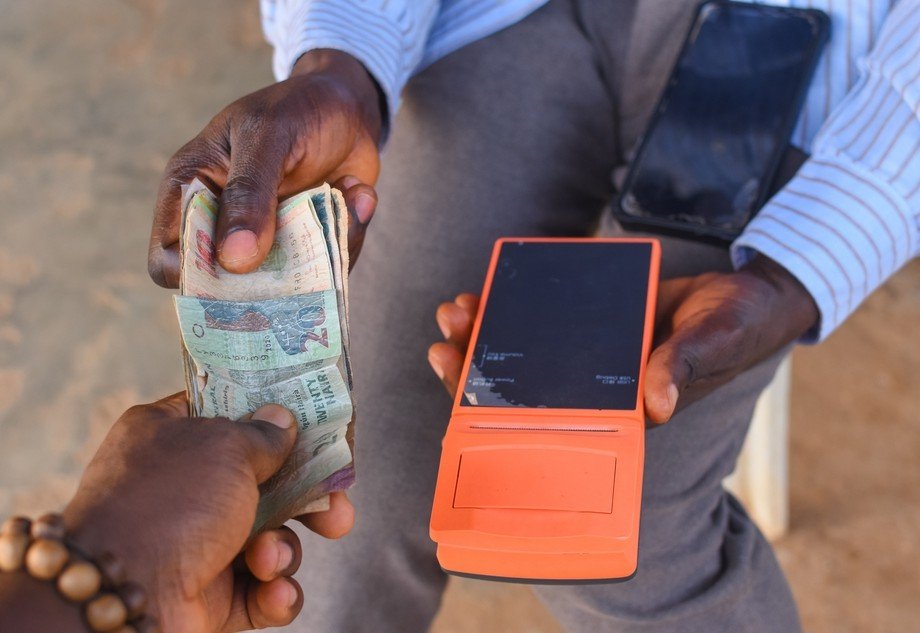
These are markets where mobile money already plays a daily role, but access to international payment rails remains limited. Cash still dominates. Cards, when available, are often tied to bank accounts many people don’t have.
By layering Visa’s acceptance network onto Orange Money’s existing footprint, the partners aim to turn mobile wallets into something closer to universal payment tools. Not perfect, but usable across borders.
There’s also a small-business angle. Entrepreneurs who sell online or source goods internationally often struggle with payments. A virtual card tied to mobile money could change that math, slowly but steadily.
Why this matters for financial inclusion goals
Orange Money has long framed its strategy around inclusion, and this partnership sits squarely inside that narrative. With operations in 17 African countries, Orange serves more than 173 million customers, with around 45 million active Orange Money accounts.
Those numbers aren’t abstract.
They represent people who already trust their phones more than bank branches.
Thierry Millet, CEO of Orange Money Group, framed the partnership as a way to let users participate more fully in the digital economy, regardless of country or device. That language reflects a practical view: phones are already in people’s hands, so payments should meet them there.
One sentence lands quietly.
Access matters more than elegance.
For Visa, the deal extends its network into spaces where plastic cards never really took hold. Ismahill Diaby, who oversees Western and Central Francophone and Lusophone Africa for Visa, described the virtual card as a first step, with bigger acceptance ahead, from global platforms down to neighborhood merchants.
Visa’s network meets Orange Money’s local trust
This partnership works because each side brings something the other can’t easily replicate.
Visa brings global acceptance, fraud controls, and a brand people recognize, even if they’ve never held a Visa card before. Orange Money brings distribution, local knowledge, and trust built through everyday transactions like bill payments and peer-to-peer transfers.
One small paragraph fits between.
Trust is the currency here.
For users, the combination reduces fear. Paying online, especially across borders, can feel risky. A familiar mobile wallet linked to a widely accepted card brand lowers that mental barrier.
The companies emphasize security, but they don’t overplay it. The pitch is simple: a secure way to pay online, backed by systems that already handle billions of transactions globally.
That restraint matters. Overpromising tends to backfire in financial services.
Competitive pressure and a changing payments landscape
The broader context is hard to ignore. Across Africa and the Middle East, mobile money providers, fintech startups, banks, and card networks are all pushing into the same space.
Orange Money isn’t alone. Neither is Visa.
But scale gives this partnership weight. Forty-five million active users is not a pilot group. It’s an ecosystem. Adding international payment capability to that base changes competitive dynamics.
Banks may accelerate digital offerings. Fintechs may seek similar alliances. Regulators will watch closely, especially as cross-border payments grow.
For now, Orange Money and Visa are moving market by market, avoiding a one-size-fits-all rollout. That slower pace may actually help adoption, allowing systems and support to settle before scaling further.
A long road, but a clear signal
This deal won’t fix financial exclusion overnight. Cash won’t disappear. Rural connectivity gaps remain real. Digital literacy still varies widely.
Still, progress often shows up in small, practical steps.
A virtual card created in seconds. An online purchase that finally goes through. A small business paying an overseas supplier without jumping through hoops.
As Orange Money and Visa extend their partnership into new countries, the real test will be usage, not headlines. For now, though, the signal is clear: digital payments in Africa and the Middle East are moving deeper into everyday life, one mobile wallet at a time.
