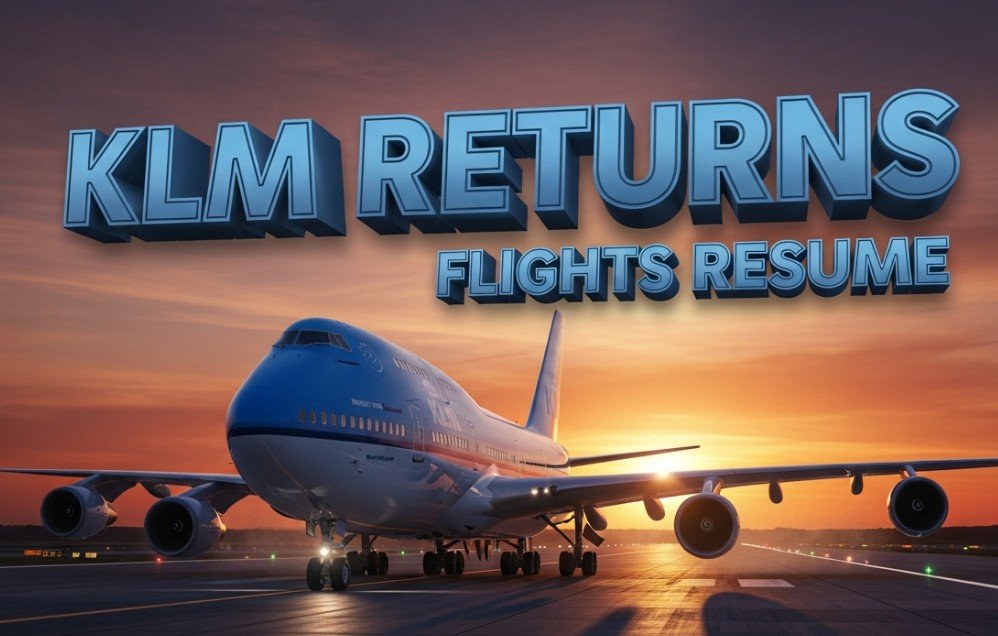
Dutch airline KLM has announced a cautious restart of flights to Tel Aviv and Dubai following a wave of cancellations triggered by rising regional tensions. This shift comes as carriers around the world adapt their schedules in response to airspace safety concerns and geopolitical uncertainty. Travelers and industry observers are watching closely as one of Europe’s major airlines signals renewed confidence in key Middle Eastern routes.
KLM’s Return to Tel Aviv and Dubai After Regional Pause
KLM Royal Dutch Airlines said it will resume service to Tel Aviv on February 2 and February 3, and to Dubai from February 1 through February 6 on revised timetables. The decision reflects “the current security situation and operational feasibility,” the airline said in an official statement.
The route restarts come after a temporary pause in late January, when KLM grounded flights to several Middle East destinations due to concerns over airspace safety amid heightened regional tensions. Flights to Dammam and Riyadh in Saudi Arabia had already returned to regular schedules starting January 27.
KLM’s hub at Amsterdam Schiphol is a key connection point for European travelers heading to the Middle East, and the resumption marks an important step toward restoring international travel links disrupted by months of insecurity.
Why KLM Paused Flights and What Changed
At the end of January, KLM surprised many passengers and industry watchers by cancelling flights to Tel Aviv, Dubai, Riyadh, and Dammam. The airline cited the “geopolitical situation” and opted to avoid flying through the airspace of Iran, Iraq, Israel, and several Gulf countries as a precaution.
This move was part of a broader trend among international carriers that adjusted schedules amid escalating tensions in the Middle East, especially after warnings from aviation regulators urging airlines to avoid airspace near potential conflict zones. European carriers including Lufthansa also rerouted flights or limited operations to reduce exposure to risk.
But in the days that followed, shifting assessments and a reassessment of risks allowed KLM to rethink its stance. After closely monitoring the situation, the airline concluded certain services could resume with necessary safeguards and schedule changes, reflecting a gradual return toward normal operations.
What Travelers Should Know About Adjusted Schedules
KLM has emphasized that the return of flights to Tel Aviv and Dubai will not be a simple resumption of pre-pause schedules. The airline has described the service as “adjusted,” meaning these flights may differ from previous timing and routing, and could be limited in frequency.
For passengers affected by earlier cancellations, KLM’s official statement noted that rebooking options or refunds remain available, underscoring the airline’s effort to manage the disruption responsibly.
Travelers heading toward Tel Aviv or Dubai in the coming week should check updated itineraries and remain flexible, as the airline continues to monitor security conditions and may revise schedules accordingly.
Broader Airline Industry Response to Regional Risks
KLM’s decision reflects a larger recalibration across the global airline industry in response to uncertainty in the Middle East. Many carriers briefly paused or rerouted flights to avoid airspace affected by the escalation between the United States and Iran, and to maintain safe operations.
While some airlines have resumed full schedules, others have maintained restrictions or continued to operate with caution. For example, Lufthansa has limited its Tel Aviv flights to daytime operations to avoid overnight layovers in higher-risk areas.
Industry analysts say these adjustments illustrate the complexities of operating in volatile regions, where geopolitical developments can shift rapidly and impact airline planning overnight. Balancing operational safety with commercial demand remains a top priority for carriers navigating these conditions.
What This Means for Global Aviation and Travel Confidence
For frequent flyers, tourism sectors, and business travelers, KLM’s move carries wider implications. The return of flights to Tel Aviv and Dubai helps restore critical connectivity between Europe and major Middle Eastern hubs, easing travel disruptions caused by the pause.
Dubai, in particular, is a significant global transit hub that connects Europe with Asia, Africa, and beyond. Resuming service there supports broader travel networks and indicates airlines’ willingness to operate across varied geopolitical landscapes.
Meanwhile, reinstating flights to Tel Aviv, even on a limited basis, may offer relief to travelers keen to maintain personal, cultural, and business connections. Whether this signals a longer-term stabilization in routes will depend on how regional dynamics evolve in the coming weeks.
For now, KLM’s cautious return serves as a barometer of confidence in global aviation, highlighting how airlines and passengers alike adapt to uncertainty while striving to keep air travel running.
As conditions continue to develop, passengers are advised to stay in close touch with their airlines for updates, prepare for schedule flexibility, and consider travel insurance for added peace of mind.
KLM’s decision to resume flights to Tel Aviv and Dubai after a temporary pause underlines how safety and flexibility shape aviation decisions in uncertain environments. Share your thoughts below about what this means for international travel confidence.