
Electronic Arts is set to leave public markets after shareholders overwhelmingly approved a $55 billion takeover led by Saudi Arabia’s Public Investment Fund, clearing one of the biggest hurdles in what is now the largest leveraged buyout the video game industry has ever seen.
The margin wasn’t close. Not even remotely.
A vote that left little room for doubt
Shareholders of Electronic Arts voted decisively in favor of the acquisition, according to filings disclosed after the meeting and first reported by Bloomberg.
More than 201 million shares were cast in support of the deal. Fewer than two million votes opposed it. Abstentions barely registered. In corporate terms, that’s about as clear as it gets.
A separate vote on executive compensation tied to the transaction was also approved by a wide margin, reinforcing that investor resistance, if any, was marginal.
For EA’s board and dealmakers, the result removes uncertainty that had lingered only on paper.
The price, the premium, and what shareholders get
Under the agreement, shareholders will receive $210 per share in cash, representing a roughly 25% premium to EA’s closing price on September 25, 2025, just before news of the negotiations surfaced.
The transaction values the publisher at approximately $55 billion, a scale that instantly places it among the most consequential buyouts in global tech and entertainment.
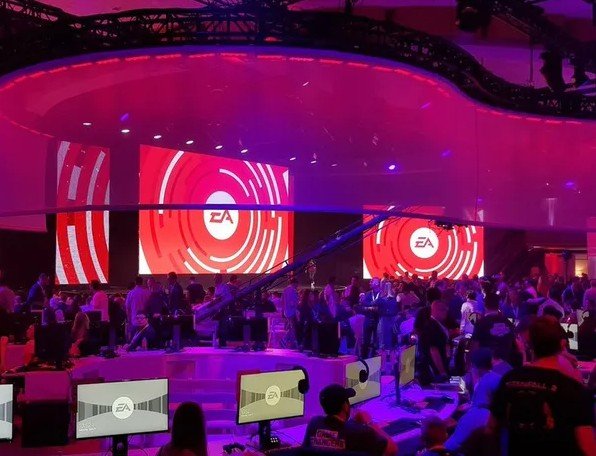
If completed, the deal would take EA private, ending its decades-long run as one of the most prominent publicly traded video game companies.
For investors, the math was straightforward. A sizable premium, immediate liquidity, and insulation from the risks tied to a heavily leveraged future.
Most took it.
Saudi Arabia’s stake becomes dominant
The buyer consortium is led by Saudi Arabia’s Public Investment Fund, which would emerge owning roughly 93.4% of EA if the deal clears regulatory review.
That level of ownership leaves little ambiguity about control.
The PIF has steadily expanded its footprint in gaming over the past several years, both through direct investments and via Savvy Games Group, acquiring stakes in publishers, esports platforms, and hardware-linked ecosystems.
EA now stands as the crown jewel of that strategy.
Saudi Arabia has framed these investments as part of a broader push to diversify its economy and build global entertainment influence. Critics, however, have repeatedly described the effort as sportswashing and culture-washing, tying the capital to the kingdom’s political image.
That debate is unlikely to fade now.
The debt that shadows the deal
Behind the headline number sits a structure that has rattled analysts.
Roughly $20 billion of the acquisition is expected to be financed through debt, leaving EA carrying a much heavier load than it has historically managed. That exposure, critics argue, introduces significant operational risk, especially in an industry known for hit-driven volatility.
EA’s portfolio includes reliable earners like FIFA’s successor EA Sports FC, Madden NFL, and Apex Legends. But game development cycles are long, unpredictable, and expensive.
Servicing that level of debt will require steady cash flow, disciplined spending, and very little margin for missteps.
Supporters of the deal say the Saudi backers offer an implicit safety net. Skeptics respond that reliance on sovereign patience is not a business strategy.
Management promises continuity
EA’s leadership has tried to calm nerves.
Chief executive Andrew Wilson has said the company’s creative direction, workplace culture, and publishing priorities will remain unchanged under new ownership.
In public statements, executives have emphasized that EA will continue to operate independently, with Saudi ownership positioned as a financial backer rather than a creative overseer.
Whether that promise holds over time is an open question. Ownership shapes incentives, even when it stays out of daily decisions.
Employees, developers, and players are watching closely.
Regulatory scrutiny still ahead
Despite the shareholder landslide, the deal is not yet final.
Regulatory approvals remain pending in multiple jurisdictions, including the United States and Europe. Given the scale of the acquisition and the buyer’s identity, antitrust and national security reviews are expected to be detailed.
Most analysts believe approval is likely, but not automatic.
Gaming is increasingly viewed as strategic cultural infrastructure, not just entertainment. Governments may take a closer look at how control over major IP franchises shifts under sovereign ownership.
Still, with shareholder approval secured, the most unpredictable variable has been removed.
Part of a much bigger Saudi push
EA’s buyout fits into a wider Saudi investment pattern.
Through the PIF and affiliated entities, the kingdom has taken positions in companies such as Capcom, Embracer Group, ESL, Nexon, Nintendo, and Take-Two Interactive. It also owns Newcastle United football club and backs the LIV Golf tour.
The common thread is global visibility.
Video games, like sports, offer reach, youth engagement, and cultural relevance. Owning publishers rather than just sponsoring events marks a deeper level of influence.
EA, with its annual sports franchises and blockbuster releases, offers exactly that scale.
Industry reaction mixes shock and resignation
Within the gaming industry, reaction has been divided.
Some developers see the buyout as inevitable, a reflection of how capital-intensive modern game development has become. Others worry about creative risk-taking under heavy debt and distant ownership.
Among players, responses range from indifference to concern. Many say they care less about who owns EA and more about whether games ship on time and in good shape.
That may be the ultimate test.
If EA continues delivering popular titles without visible disruption, the ownership change may fade into the background. If not, scrutiny will intensify fast.
What happens next
The coming months will focus on regulatory clearance and financing logistics. Once finalized, EA will delist from public exchanges and begin operating under private ownership.
For Saudi Arabia, it marks a defining moment in its global entertainment strategy. For EA, it’s the start of a new chapter with higher stakes and fewer public guardrails.
The shareholder vote made one thing clear. Investors were ready to cash out.
Whether the deal proves wise over the long term will be judged not by ballots, but by balance sheets, release schedules, and the games themselves.
