
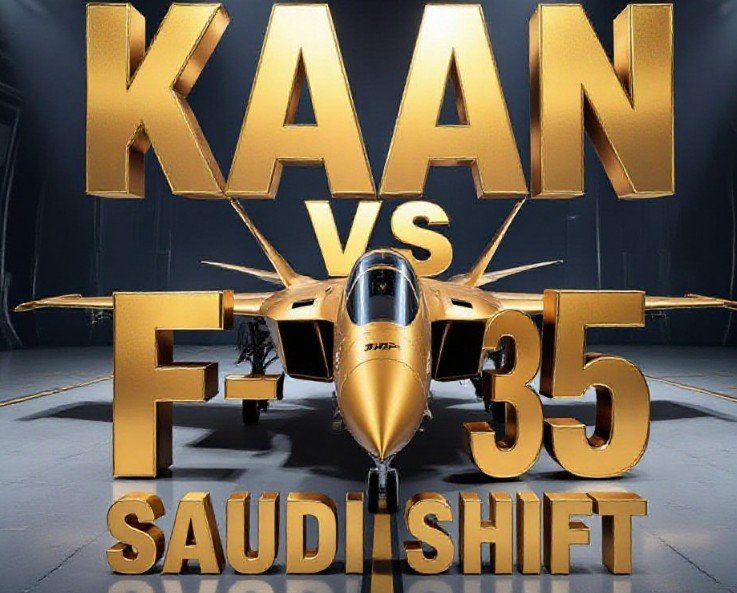
A quiet diplomatic storm is brewing between Riyadh and Washington over the future of air superiority in the Middle East. While the White House moves to cement a massive strategic defense agreement centered on the advanced F-35 Lightning II, Saudi Arabia is actively exploring a partnership with Turkey for its next-generation Kaan fighter jet. This strategic pivot challenges the long-standing American dominance over the kingdom’s defense market and has reportedly frustrated the Trump administration’s “America First” export agenda.
Crown Prince Mohammed bin Salman is signaling that Saudi Arabia will no longer be a passive consumer of western military hardware. By engaging with Ankara on the Kaan program, Riyadh is not just shopping for planes. The kingdom is seeking technology transfers and industrial partnerships that the United States has historically been reluctant to provide. This maneuver creates a complex hurdle for US officials who view the exclusive sale of F-35s as a cornerstone for maintaining leverage in the region.
Riyadh Eyes Ankara for Defense Diversity
The core of the friction lies in Saudi Arabia’s accelerating drive to diversify its weapons suppliers. Current and former US officials indicate that the Trump administration views deals with alternative partners like Turkey as a direct threat to the US share of the Saudi arms market. Washington has long enjoyed a position as the primary security guarantor for the Gulf nation, but that dynamic is shifting under the Crown Prince’s Vision 2030 agenda.
Saudi Arabia is prioritizing local defense manufacturing and is willing to look beyond traditional alliances to achieve it.
Diplomatic sources suggest that while the White House recently celebrated a framework for F-35 sales, they demand clarity on Riyadh’s discussions with other nations. Following specific pushback from Washington, Saudi Arabia reportedly provided assurances that it would not proceed with purchasing the JF-17 Thunder fighter jet from Pakistan. Reports had previously circulated regarding a potential loan-to-purchase conversion for the Pakistani aircraft.
However, no such guarantee has been offered regarding the Turkish Kaan fighter. This silence is significant. It suggests that Riyadh views the Turkish aerospace sector as a viable, long-term strategic partner rather than just a stopgap solution. The Kaan, which completed its maiden flight in early 2024, represents a tier of stealth technology that competes in the same conversation as American platforms.
American F-35s Face Unexpected Competition
The Trump administration does not necessarily view the Kaan as a direct replacement for the F-35 in terms of raw capability right now. The concern is economic and strategic. Every dollar spent on the Turkish program is a dollar not spent on American sustainment contracts, weapons packages, and future upgrades.
A US official familiar with the ongoing talks explained the administration’s frustration. The sentiment in Washington is that the F-35 offer should be sufficient to satisfy all of Saudi Arabia’s air defense needs.
“The message to the Saudis has been, ‘What need do you feel is not being met by the US, that you need to go to Turkey for the Kaan?'” the official stated.
There is a distinct contrast in what these two platforms offer:
| Feature | Lockheed Martin F-35 (USA) | TAI Kaan (Turkey) |
|---|---|---|
| Generation | 5th Generation Stealth | 5th Generation Stealth (In Development) |
| Operational Status | Combat Proven | Prototype / Testing Phase |
| Tech Transfer | Highly Restricted | Open to Partnership |
| Political Strings | High (Human Rights/Israel) | Low / Transactional |
The Kaan offers Riyadh something the F-35 cannot: the potential for industrial participation. Turkey is actively seeking partners to share the financial burden of the Kaan’s development. For Saudi Arabia, investing in the Kaan program could mean acquiring intellectual property and manufacturing capabilities that Washington strictly guards.
Pakistan Deal Scrapped After US Pressure
The recent diplomatic maneuvering highlights the limits of Saudi autonomy when Washington applies sufficient pressure. The decision to walk away from the Pakistani JF-17 deal demonstrates that the US still holds a powerful veto over certain Saudi procurement choices. The JF-17 is a fourth-generation fighter jointly developed by Pakistan and China.
Washington’s opposition to the JF-17 likely stemmed from the involvement of Chinese technology and the potential for interoperability issues with American-made systems already in the Saudi arsenal. By successfully blocking this deal, the Trump administration proved it could still steer Riyadh’s decisions on lower-tier platforms.
Bilal Saab, a former senior defense official, questioned the operational logic of adding yet another airframe to the Saudi Air Force.
“I don’t see where the Turkish fighter fits into the Saudis’ repertoire, which is extensive already. They have the best F-15s on the entire planet, better than the Americans. The Euro Typhoon is good, and they are about to get the F-35s,” Saab noted.
This skepticism from defense experts reinforces the view that the Kaan interest is political. It serves as a signal to the West that the kingdom has options.
Arms Deals Shape New Regional Alliances
The broader context of these negotiations involves a reshaping of Middle Eastern alliances. Saudi Arabia is forging a new path that seeks to check the influence of regional rivals while managing its complex relationship with Israel and the UAE. A defense partnership with Turkey would solidify the thaw in relations between Riyadh and Ankara that began in recent years.
The kingdom is using major defense contracts as leverage to ensure it remains the dominant power broker in the region.
Key strategic goals for Saudi Arabia in these talks include:
- Strategic Autonomy: Reducing reliance on any single supplier to avoid embargoes.
- Economic Growth: Forcing foreign defense companies to invest inside Saudi Arabia.
- Regional Balancing: keeping Turkey close to offset Iranian influence while maintaining independence from the UAE’s foreign policy.
The Trump administration’s “deal-making diplomacy” is now facing a crucial test. They must balance the desire to maximize American exports with the reality of a multipolar world where allies can shop elsewhere. If Washington pushes too hard against the Turkish deal, it risks alienating Riyadh at a critical moment for regional security pacts.
The coming months will determine if the F-35 and the Kaan will fly side-by-side in the Royal Saudi Air Force, or if American pressure will once again clip the wings of Saudi diversification efforts.
The pursuit of the Turkish Kaan fighter by Saudi Arabia marks a significant moment in the evolution of the US-Saudi alliance. It highlights a kingdom that is increasingly confident in asserting its own national interests, even when they conflict with the preferences of its oldest security partner. As the Trump administration seeks to lock down the Middle East’s most lucrative arms market, the outcome of these talks will likely set the tone for defense relations for the next decade.
