A routine trip to buy bread turned into a death sentence for 67-year-old Mubarak Qamar Eddin. His tragic passing inside the Shorouk Police Station has ignited a firestorm of fear among the refugee community in Cairo. It serves as a grim reminder of the escalating crackdown targeting displaced people in Egypt.
This incident is not an isolated tragedy but part of a systematic wave of detentions. Thousands of Sudanese nationals are currently living in terror as security forces intensify raids. The distinction between legal asylum seekers and undocumented migrants is vanishing rapidly on the streets of Cairo.
Tragedy strikes inside police station detention
Mubarak Qamar Eddin left his home to visit a nearby bakery and never returned. Police officers detained the elderly man despite his fragile health condition. He suffered from severe diabetes and kidney failure which required constant medical attention.
His family desperately tried to intervene. They managed to deliver essential medication to the police station while the Sudanese Embassy initiated diplomatic steps to secure his release. These efforts proved futile. Qamar Eddin died after nine days in detention.
The most shocking detail is that Qamar Eddin was a registered refugee.
He carried a valid card from the UN Refugee Agency (UNHCR) that had been renewed in October. However, he lacked a specific residency permit from the Egyptian Ministry of Interior. This bureaucratic gap cost him his life.
This death has sent shockwaves through the Sudanese community. It highlights the deadly consequences of the current security campaign. Vulnerable individuals with chronic illnesses are being held in conditions that can turn fatal in a matter of days.
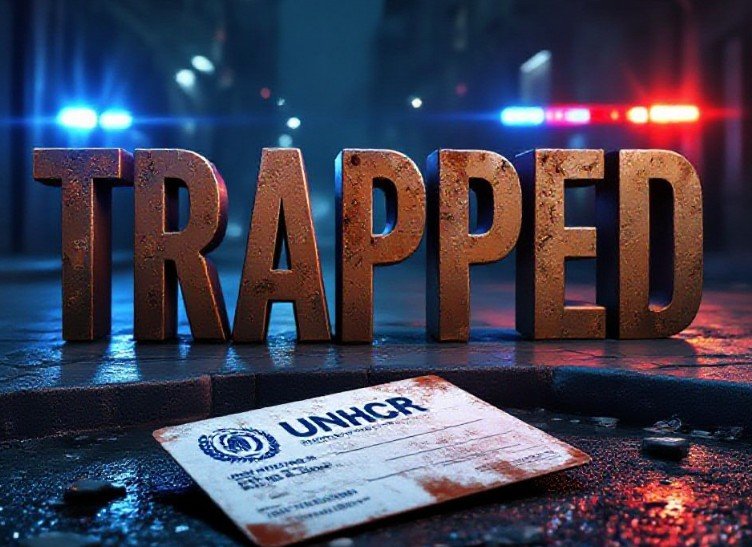
Valid UN cards fail to protect asylum seekers
The legal landscape for refugees in Egypt has become a nightmare of red tape. Possession of a UNHCR yellow card was previously respected as a protection against arrest. That unwritten rule appears to be gone.
Security forces are now demanding valid residency permits issued specifically by the Passports, Emigration and Nationality Administration. Obtaining this permit is nearly impossible for many.
The system is overwhelmed.
- Long Wait Times: Refugees report getting appointment dates for residency renewal as far out as late 2027 or 2028.
- The Receipt Trap: Many hold only a receipt proving they have an appointment. Police on the street often reject these receipts.
- Financial Burden: New regulations require many foreigners to pay fees equivalent to $1,000 in hard currency to regularize their status.
The gap between international protection laws and local enforcement is widening. The 1951 Refugee Convention prohibits sending refugees back to countries where they face danger. Yet, reports indicate that deportation buses are leaving regularly for the Sudanese border.
Rights groups confirm that carrying a UNHCR card no longer guarantees safety. This shift has left registered asylum seekers just as vulnerable as those who just arrived. The protective paper shield provided by the UN is crumbling under the weight of aggressive security policies.
Community paralyzed by fear of arbitrary arrest
A paralyzing state of terror has gripped neighborhoods like Faisal and Ard El-Lewa where many Sudanese reside. The streets are emptier than usual. Men, women and even children are avoiding public spaces to escape police profiling.
Nasr Eddin arrived in Egypt in 2016 and says he has never seen it this bad.
“We can not move,” Nasr explains with evident distress. “People are being arrested whether they have papers or not. Many people I know have been detained. There is a general state of terror.”
Daily life has ground to a halt for thousands.
Police microbuses patrol the streets constantly. Officers stop individuals based on skin color or accent. They demand documents that many cannot produce due to the bureaucratic backlog.
This creates a hostage situation in their own homes. Families are running out of food because they are too afraid to go to the market. Children are missing school to avoid being stopped during their commute. The psychological toll is mounting as the community feels besieged from all sides.
International funding and border control measures
This domestic crackdown coincides with significant geopolitical shifts. The European Union recently promised an aid package worth nearly $8 billion to Egypt. A major component of this funding is aimed at curbing irregular migration to Europe.
Critics argue this funding encourages harsh border control tactics.
Egypt hosts an estimated 9 million migrants and refugees according to government figures. The state argues that this places an immense burden on the struggling economy. Inflation is high and resources are scarce.
The government has taken a firmer stance on “guests” in the country. They demand that all foreigners legalize their status immediately. This rhetoric has fueled anti-refugee sentiment in some segments of the media.
The result is a dangerous environment for Sudanese fleeing war. They escaped a brutal conflict in their homeland only to face detention and potential deportation in their sanctuary. The crackdown shows no signs of slowing down despite international concern.
Human rights organizations have documented forced returns.
Amnesty International has reported that thousands of Sudanese have been deported. These deportations often happen without due process or the chance to claim asylum. The situation at the border is becoming a humanitarian catastrophe.
The death of Mubarak Qamar Eddin is a warning. It exposes the lethal reality of a system that prioritizes security sweeps over human rights. Unless policies change, more vulnerable lives are at risk in the detention cells of Cairo.
The Sudanese community in Egypt remains on edge. They are waiting for a solution that allows them to live without the constant threat of arrest. Until then, silence and isolation are their only defense mechanisms against a system that has turned against them.
We must ask ourselves what the cost of safety is. The death of a 67-year-old man seeking bread should be a wake-up call. It is time for the international community to look closely at how migration deals affect real human lives.