
Saudi Arabia’s cultural scene has taken a bold step forward with the opening of the Diriyah Contemporary Art Biennale 2026, a global artistic gathering that marries history, movement and creativity right in the heart of Diriyah’s JAX District, just outside Riyadh. More than 65 artists from over 37 countries are on display, inviting visitors from around the world to explore new ideas, perspectives and shared human stories through art.
This year’s edition, titled In Interludes and Transitions, stretches far beyond traditional gallery walls. It transforms an industrial heritage district into a dynamic stage for contemporary expression, where sound, performance, sculpture, architecture and visual art converge into a powerful experience.
A New Chapter for Saudi Art and Global Exchange
The third edition of the Diriyah Contemporary Art Biennale opened on January 30, 2026, and will continue through May 2, 2026, offering visitors nearly four months of free public access to cutting‑edge contemporary art and public programs.
This biennale is organized by the Diriyah Biennale Foundation, a nonprofit cultural institution championing Saudi Arabia’s transformation into a vibrant cultural hub. Its mission is to promote artistic dialogue and build bridges between local creativity and global communities.
The location itself is key to the Biennale’s identity. JAX District, a former industrial quarter in historic Diriyah near the UNESCO‑listed At‑Turaif, provides a raw and evocative backdrop that contrasts with and uplifts the contemporary works on display.
Co‑Artistic Directors Nora Razian and Sabih Ahmed bring rich international perspectives to this edition. Their curatorial vision focuses on ideas of movement, continuity, exchange and transformation, themes that resonate deeply across cultures and histories.
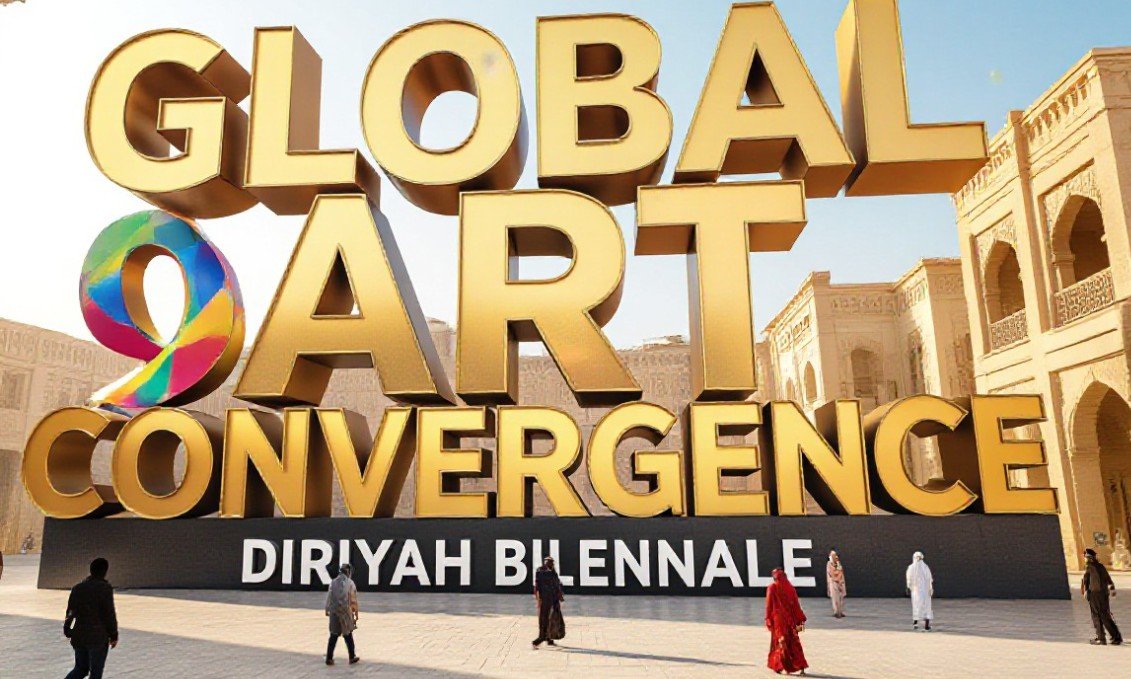
This kind of cultural diplomacy is part of a broader shift in Saudi Arabia’s arts strategy. Biennales, residencies and major museum initiatives now play a central role in showcasing the kingdom’s evolving cultural identity and fostering meaningful engagement between artists and audiences worldwide.
Walking Through Art That Moves With You
The theme In Interludes and Transitions draws on ancient and modern forms of movement, from nomadic journeys across desert landscapes to contemporary migrations across borders and ideas. It invites audiences to think about how human experience travels through time, space and memory.
More than 22 newly commissioned works appear alongside existing pieces, with practices ranging from sound and performance to film, architectural installation and immersive experiences. Artists use these forms to explore continuity, resilience and shared narratives.
The exhibition design by Formafantasma, an internationally acclaimed design studio, plays a central role in the visitor experience. Instead of conventional walls, the layout uses floating planes, drifting textiles and curved pathways that connect spaces and guide movement. The intention is to let art and architecture interact seamlessly, allowing the industrial bones of the JAX District to speak alongside the works.
Visitors to this Biennale don’t just see art; they experience it. Performative elements, sound pieces and interactive installations invite engagement, reflection and often emotional connection. Several performances blend traditional cultural expressions with contemporary art language, underlining the living nature of artistic practice.
A Global Stage With Local Roots
The international scope of the Biennale is one of its strongest assets. With artists from Africa, Asia, Europe, the Americas and the Middle East, this edition amplifies voices from multiple continents and cultures.
Several artists have used their work to narrate personal stories linked to migration, memory and identity. These narratives resonate not only in the context of Saudi Arabia’s rapid cultural evolution but also in global contexts where movement and transition shape modern life.
At the same time, the Biennale has given a strong platform to regional and Saudi artists, allowing them to present alongside international peers and launch their work to new global audiences.
Beyond the exhibitions, the Biennale includes public programs, performances, talks and workshops designed to bring art closer to the community and make creative practice more accessible. Cultural educators and facilitators work with young visitors, families and emerging artists, nurturing future generations of creatives.
Why This Biennale Matters
In a world where cultural exchange often happens online or in commercial settings, the Diriyah Biennale stands out as a place of deep human encounter. Here, the physical presence of art invites contemplation, conversation and connection.
For Saudi Arabia, the Biennale signals intent. It reflects the kingdom’s broader cultural ambitions, positioning Diriyah and Riyadh as destinations for international art and dialogue. Economic growth and cultural transformation go hand in hand with these kinds of initiatives, which expand tourism, create creative careers and build new audiences.
Art historian and critics have noted that the Biennale operates not just as a showcase but as a space for asking big questions: How do we understand movement and identity today? How can art help us rethink history and imagine new futures? These are not just philosophical questions; they are urgent conversations in an increasingly interconnected world.
The Biennale also challenges the perception that contemporary art is confined to traditional galleries. By using an industrial site reimagined for art and engagement, visitors are reminded that creative expression can thrive anywhere, even in spaces shaped by other kinds of human activity.
What Visitors and the Public Are Saying
Early reactions to the Biennale suggest a vibrant public response. People attending the opening weekend described it as a parade of ideas and experiences, where art, sound and movement merge in surprising ways. One report described an opening that began not in a gallery but with a procession through an industrial street, transforming the space into a lively, living artwork.
Audience members also appreciate the Biennale’s blend of international and local perspectives. Many expressed that seeing such a wide range of artistic voices in one place made them feel connected to a larger global conversation. Comments from visitors noted how the Biennale made contemporary art feel accessible and meaningful.
As more people attend through April and May, cultural conversations around Diriyah are likely to grow, creating ripple effects in Saudi Arabia’s art scenes and beyond.
This Biennale is more than an event; it is a living snapshot of how culture travels across borders, histories and communities. What it offers is not just art to see, but experiences to feel, stories to carry and conversations to continue long after the exhibition ends. Share your thoughts on this global art gathering and tag your posts with #DiriyahBiennale2026 to join the conversation online.
