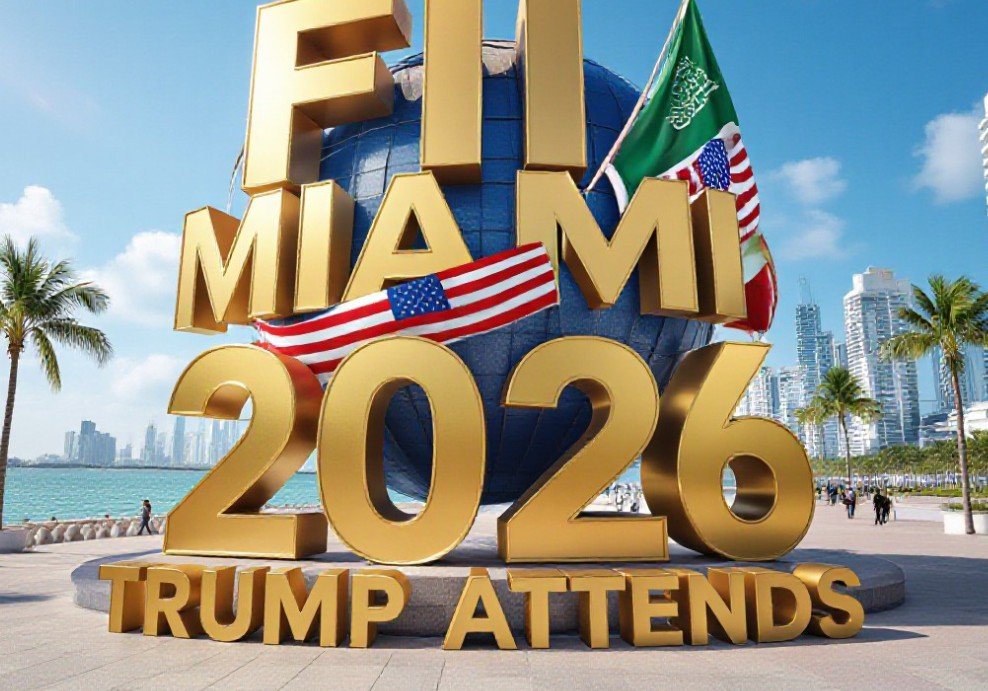
US President Donald Trump is expected to attend Saudi Arabia’s Future Investment Initiative conference in Miami from March 26 to March 29, in what many analysts call a high‑stakes moment in global economic diplomacy and Gulf‑US relations. This will be Trump’s second consecutive appearance at the Saudi‑backed event since returning to the White House, signalling a renewed focus on Gulf partnerships and international investment flows at a critical time for both nations.
This decision has drawn attention from political observers, business leaders and Wall Street investors as Saudi Arabia recalibrates its long‑term economic transformation plans and seeks deeper ties with North and South American business communities.
Trump’s Return to the FII Stage Highlights Gulf Economic Ties
President Trump’s attendance at the Future Investment Initiative (FII) conference in Miami Beach marks a notable moment in his diplomatic agenda. Scheduled for March 26 through March 29, the summit is hosted by the Public Investment Fund of Saudi Arabia (PIF), and Trump is expected to attend a high‑profile dinner hosted by Yasir Al‑Rumayyan, the governor of PIF, on the first day.
This appearance reflects the administration’s focus on strengthening economic links with Gulf states, particularly in trade, energy and investment. It also comes amid ongoing dialogue on regional security and economic cooperation between Washington and Riyadh.
Political analysts say this level of engagement helps solidify economic partnerships critical to global markets. Unlike traditional political summits, the FII platform emphasises business dialogue, investment flows and private sector collaboration, allowing world leaders to engage directly with investors and CEOs from multiple sectors.
What the FII Conference Means for Saudi Vision 2030
Saudi Arabia’s Vision 2030 initiative, first announced in 2016, aims to diversify the kingdom’s economy away from oil and create long‑term sustainable growth through investment in technology, tourism, infrastructure and energy sectors. The Miami FII conference serves as a key global platform to showcase this vision to potential investors.
In recent years, Saudi Arabia has faced challenges funding some of its large‑scale diversification projects. As a result, officials have shifted focus toward private sector participation and global partnerships to maintain momentum.
The FII event provides an opportunity for Saudi Arabia to court business leaders from North and South America, bridging markets and fostering investor confidence in emerging sectors. Many analysts believe this pivot is a direct response to global economic pressures and heightened competition from regional hubs such as the United Arab Emirates.
Behind the Scenes – What to Expect in Miami
The four‑day gathering at Miami Beach will include discussions on global investment trends, economic resilience, technological innovation and regional economic strategies. The agenda typically draws a mix of heads of state, global CEOs, sovereign wealth fund leaders and institutional investors.
While Trump’s participation has not been officially confirmed by either the White House or Saudi officials, multiple sources familiar with the matter have said he is expected to attend the event and the opening dinner on March 26.
Key themes expected at this year’s summit include:
-
Economic diversification and post‑oil growth strategies.
-
Private sector investment in emerging tech and infrastructure.
-
Strengthening transatlantic and Middle Eastern capital flows.
-
Enhancing global supply chain connections.
Business leaders widely see the FII conference as a chance to build bridges between markets that have historically been less integrated, and Trump’s attendance would underscore the strategic importance of that dialogue.
U.S.‑Saudi Economic Relations in Context
Donald Trump’s engagement in Miami comes on the heels of high‑level economic and defence agreements signed between the United States and Saudi Arabia in late 2025. During visits and meetings last year, Riyadh pledged expanded investment commitments in U.S. markets, reportedly rising from $600 billion to a potential $1 trillion in future deals.
These agreements cover sectors including energy, technology, infrastructure and defence, and are seen as central to U.S. economic interests as well as Saudi economic reforms. Trump’s administration has repeatedly highlighted the value of Gulf capital in supporting American job creation and development projects.
At the same time, regional dynamics are shifting, with both Saudi Arabia and the United Arab Emirates vying to be the premier financial hub for the Middle East. Each nation has made strategic investments in technology, finance and human capital to attract global investors.
Critics and Supporters Weigh In
Supporters of Trump’s participation argue that economic diplomacy is vital for U.S. interests. They say his presence can boost investor confidence at a critical juncture for global markets and underscore America’s continued role in shaping cross‑border economic cooperation.
Critics, however, caution that too close an alignment with Gulf investment forums raises questions about geopolitical priorities and balancing economic interests with human rights concerns. Some advocacy groups have previously criticised the FII Institute and PIF events, arguing that such gatherings can distract from serious issues involving governance and transparency in the region.
Nevertheless, the White House’s approach appears rooted in pragmatic diplomacy, seeking to unlock investment flows that benefit American businesses and workers while managing complex international relationships.
Looking Ahead Before Miami
In the weeks leading up to the FII conference, analysts expect both governments to intensify messaging around economic growth, innovation and bilateral cooperation. Trump’s attendance could set the tone for future global economic dialogues, especially as investors evaluate opportunities in energy transition, artificial intelligence, infrastructure and other forward‑looking sectors.
If this year’s conference mirrors the format of past FII events, it will offer opportunities for one‑on‑one meetings, side gatherings with tech and finance leaders, and high‑impact speeches aimed at drawing global capital to emerging markets.
As Miami prepares to host some of the world’s most influential investors and decision‑makers, all eyes will be on whether this event can solidify new partnerships that reshape global economic engagement.
This anticipated attendance by President Trump could become a defining chapter in U.S.‑Middle East economic ties, building on past cooperation and pushing forward into new areas of investment.
What do you think about this development and its impact on global investment trends? Share your views in the comments below and use the hashtag #FII2026Miami to join the conversation on social media.