
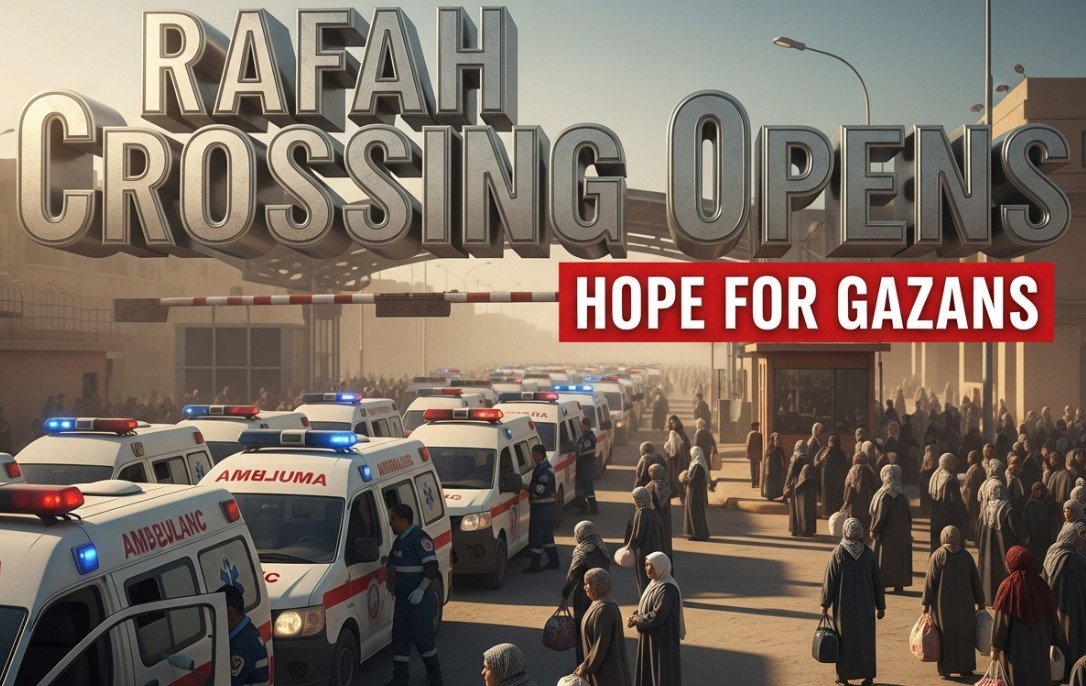
The Rafah border crossing between the Gaza Strip and Egypt has entered a test mode operation as of February 1, 2026, bringing a fragile but significant shift in the movement of people out of the besieged Palestinian territory. This marks the first step in reopening the crossing after nearly two years of closure and gives hope to thousands of Gazans desperate for medical care and safe passage abroad. The limited reopening is part of a broader ceasefire and peace plan effort involving Israel, Egypt, the United States, and the European Union.
Preparations Underway at Rafah for Limited Travel
Early reports from international agencies and news outlets show that ambulances and medical teams have been stationed on the Egyptian side of Rafah, ready to receive wounded and sick Gazans who may begin departing on February 2, 2026. All major hospitals in Egypt have been placed on high alert to respond swiftly to incoming patients. European Union mission representatives are present on the Palestinian side to oversee the process.
Israel and Egypt are coordinating the management of the crossing, with Israeli military authorities confirming that the crossing has entered a test phase before full limited pedestrian travel resumes. The crossing is expected to allow only a small number of people per day initially, prioritizing those with urgent medical needs.
What the Reopening Means for Gazans
The Rafah border crossing has been Gaza’s main gateway to the outside world and its limited reopening is a lifeline for a population long isolated by war and blockade. However, the scale of allowed passage remains low compared to the immense need:
-
An estimated about 20,000 Gazans require urgent medical evacuation to hospitals outside the enclave.
-
Initial plans suggest that around 150 people per day may be allowed to exit Gaza, with a smaller number returning each day, which would still take months to address the backlog.
-
Medical facilities inside Gaza have been overwhelmed or destroyed after years of conflict, leaving many with conditions that cannot be treated locally.
One Palestinian aid official noted that while the reopening is a hopeful sign, the numbers permitted to cross daily are not sufficient to meet the urgent health needs of thousands of wounded, chronically ill, and vulnerable individuals.
Political and Security Background
The crossing had been largely sealed since May 2024 when Israeli forces took control of the area during the prolonged conflict with Hamas. Israel justified its control by citing security concerns, including efforts to prevent weapons smuggling into Gaza.
The current reopening is tied to a ceasefire and peace framework brokered with involvement from the United States, Egypt, and the European Union. Much of the plan hinges on meeting various conditions, including delayed troop withdrawals, administrative changes within Gaza, and possible governance transitions. While the ceasefire has reduced major hostilities, tensions and sporadic strikes have continued, resulting in casualties even as the crossing prepares to open.
Human Impact Behind Numbers
For many families in Gaza, the reopening of Rafah signifies a chance to seek treatment or reunite with loved ones outside the crowded, under-resourced strip. Before this opening, patients in need of specialist care often faced prolonged waiting times or were forced to undergo makeshift treatment in local facilities running low on supplies.
Personal stories illustrate the toll of this prolonged isolation. Young patients with vision loss, war injuries, and chronic diseases have been waiting for months or even years for permission to seek help abroad. These accounts reflect the deep human cost of the conflict’s shadow on daily life and health infrastructure in Gaza.
Challenges Ahead for Rafah’s Operation
While the test mode signals progress, serious hurdles remain:
-
Security vetting and coordination between Israeli, Egyptian, and European authorities may slow down crossings initially.
-
Critics argue that the limited number of daily crossings will not significantly relieve the backlog of tens of thousands in need of medical help.
-
The fragile ceasefire arrangement could be jeopardized if hostilities flare again, affecting consistency in border operations.
Experts say that expanded movement and eventual full reopening of Rafah will require coordination beyond the initial testing phase, including simplifying procedures and increasing capacity to meet humanitarian demands.
The reopening of Rafah offers a cautious hope, but it also underscores the immense difficulties faced by Gaza’s population after years of war and blockade. Only sustained international cooperation and commitment to humanitarian needs will determine whether this step can truly change lives on the ground.
