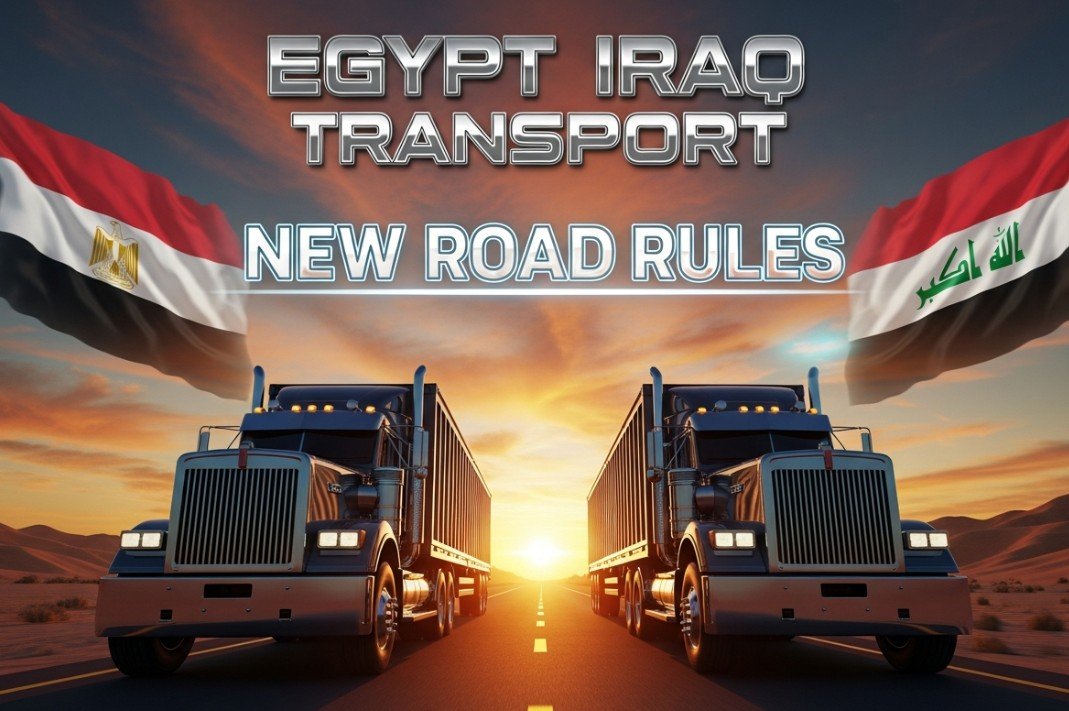
Iraq and Egypt have agreed on a new set of measures to make road transport between the two nations easier for trucks carrying goods and buses with passengers. The changes aim to cut red tape, boost trade, and give businesses and drivers clearer and fairer rules. Officials from both countries met in Cairo in January and agreed on steps that could reshape transport and logistics links across the Middle East.
Sweeping Changes to Cross Border Truck Entry Rules
Officials agreed that loaded trucks and refrigerated vehicles can now enter from Iraq to Egypt and from Egypt to Iraq without any numerical limits, subject to review in six months. This is a major shift from earlier arrangements that often restricted the number of trucks that could cross on any given day.
Under the new system, empty trucks will still need a permit for each trip, but the cost has been reduced to USD 150 per trip until the end of July 2026, down from USD 300. This cut in technical study fees is expected to make cross border trips more affordable for transport companies.
Transport officials said these changes are designed to simplify logistics and cut unnecessary delays at border points that have long frustrated supply chains between Baghdad and Cairo.
New Rules on Truck Stays and Fuel That Could Ease Journeys
One of the key pain points for drivers has been strict time limits on how long a vehicle can stay in another country before returning. Under the updated guidelines, discussions are ongoing to allow trucks to stay up to 14 days in the partner country. Authorities are preparing procedures to handle cases where this stay is exceeded.
Another notable update concerns fuel rules. Truck drivers will now be allowed to cross borders with up to 500 litres of diesel in their tanks. This change removes a common headache for drivers who previously had to pay for fuel multiple times or handle complicated customs procedures to refuel.
Egypt and Iraq are both heavily reliant on diesel for freight transport. Allowing trucks to enter with a larger fuel load not only cuts down stops and costs, but also helps ensure smoother travel, especially over long distances.
Easier Visas and Accepted Documents for Drivers
A practical boost for drivers is the new visa process. Instead of handling visas individually, drivers must apply for Egyptian entry visas through Iraq’s state land transport companies such as the General Company for Land Transport. This centralisation is expected to cut processing time and simplify driver management for transport firms.
Iraqi transport officials also confirmed that the Iraqi professional operating licence will now be accepted as an official document in Egypt. This removes the need for duplicate paperwork and speeds up border clearance.
Officials stressed that drivers should always obtain official receipts for any fees paid at ports and must never pay charges without proper documentation. This measure was introduced to improve transparency and reduce unofficial payments that have been a longstanding complaint among drivers.
Cargo Handling and Compliance Standards
To improve loading and unloading efficiency and reduce damage to goods, the authorities agreed that all carriers must use pallets when handling cargo. Pallet use is widely accepted in global logistics as a safer and more efficient method of handling freight, especially for fragile or high-value items.
Weight rules were also clarified. Trucks now must carry official weight documentation both when empty and when loaded, and they must comply with the maximum permitted weights and dimensions in both countries. This ensures safer road travel and better enforcement of vehicle regulations at borders.
For oversized cargo that cannot be split into smaller loads, a special permit is now required under a mechanism agreed between Iraqi and Egyptian authorities. This gives businesses a clear framework to move large equipment without running afoul of normal transport rules.
Driving Trade Growth and Regional Connectivity
Trade between Iraq and Egypt has been expanding in recent years. Egypt has been exporting goods to Iraq and other Middle Eastern partners at rising volumes, while Baghdad has sought new routes and mechanisms to connect with markets across Africa and Asia.
Simplifying truck access, reducing paperwork and cutting fees are all designed to not just help drivers but also enhance trade flows and strengthen economic ties between the countries. By making road transport smoother, officials hope to attract more freight traffic and improve the efficiency of moving goods across borders.
Experts in logistics say that such agreements are critical in a region where rail infrastructure can be limited and where road transport remains the backbone for moving agricultural goods, consumer products and industrial supplies. Dependable cross-border trucking is key for businesses that operate on thin margins and tight schedules.
What Drivers and Businesses Should Know Now
Transport companies and drivers are being urged by the Iraqi Ministry of Transport to fully comply with the new rules and documentation requirements to avoid fines or delays at checkpoints. Officials said compliance is essential for the success of the agreement and for building trust with Egyptian counterparts.
Some key points for drivers and logistics firms to keep in mind include:
• Apply visas centrally through recognised Iraqi companies.
• Ensure official weight and operating documents are carried at all times.
• Use pallets for all freight to comply with cargo handling rules.
• Keep fuel levels within the new 500 litre limit.
These procedural improvements, if implemented well, could cut waiting times at borders and reduce costs for transporters, helping both countries extend their markets deeper into Africa and Asia.
The new rules are effective immediately and will be reviewed after six months. Many in the logistics sector are watching closely to see whether these changes lead to measurable improvements in trade flows and transport efficiency.