
Jordan has quietly crossed an important energy threshold. A new solar power plant in the southern governorate of Ma’an has entered commercial service, adding fresh capacity to the national grid and signaling growing confidence in locally developed renewable projects.
The start of operations at the Al-Haq Solar Power Plant comes at a moment when Jordan is under pressure to secure reliable electricity supplies while keeping costs and emissions in check.
A ceremony that reflected more than a single project
The commercial operation of the Al-Haq Solar Power Plant was formally marked during a high-level ceremony in Amman in early December, bringing together senior officials, diplomats, and energy-sector leaders.
The event was hosted by Alternative Energy Project Company (AEPC) at the Four Seasons Hotel Amman, underscoring the project’s national significance.
Among those attending was Amani Al-Azzam, Secretary General of the Ministry of Energy and Mineral Resources, representing Saleh Al-Kharabsheh. Current and former ministers were present, alongside the Embassy of Kuwait in Jordan and a broad cross-section of Jordan’s renewable energy industry.
One sentence captured the mood. This was about confidence.
Speakers repeatedly highlighted that Al-Haq was fully developed, financed, and operated using Jordanian expertise, a point that resonated in a country long dependent on imported energy.
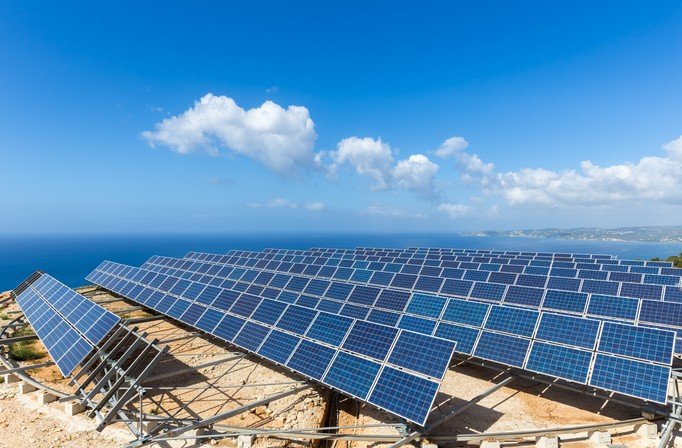
Why Ma’an matters in Jordan’s energy map
The Al-Haq Solar Power Plant is located in Ma’an, a region that has steadily become a focal point for renewable energy development.
Southern Jordan offers high solar irradiation, available land, and proximity to transmission infrastructure, making it a natural hub for large-scale solar projects.
For years, Ma’an was better known for economic challenges than energy innovation.
That perception is changing.
With Al-Haq now online, the governorate adds another major facility feeding clean electricity into the national grid, reinforcing its role in Jordan’s energy transition.
From approval to power on the grid
The Al-Haq plant has a generation capacity of 50 megawatts, enough to supply electricity to tens of thousands of households under typical demand conditions.
Commercial operations began in early December, following final approval by National Electric Power Company (NEPCO), effective November 30, 2025.
That approval marked the end of a long development cycle and the start of steady power delivery to Jordan’s grid.
In practical terms, it means the plant is now producing electricity under contractual terms, not just testing equipment or feeding trial power.
That distinction matters for investors, planners, and grid operators alike.
Technology built for Jordan’s conditions
The facility uses modern photovoltaic systems selected to perform under Jordan’s harsh climate, where heat, dust, and seasonal variability can challenge equipment.
While AEPC has not released granular technical specifications, company officials said the plant incorporates advanced solar modules, grid connection systems, and monitoring tools to ensure stable output.
One short paragraph makes the point. Reliability is the priority.
Jordan’s grid depends on predictability, especially as renewable penetration rises and balancing supply becomes more complex.
A step aligned with national strategy
The Al-Haq project fits squarely within Jordan’s broader energy policy framework.
The kingdom has spent the past decade working to reduce reliance on imported fuels, which once accounted for the vast majority of its electricity generation. Price shocks and regional supply disruptions made that dependence painfully clear.
Jordan’s National Energy Strategy aims to increase the share of renewables in the power mix, strengthen energy security, and lower environmental impact.
Officials at the ceremony framed Al-Haq as a concrete example of that policy translating into infrastructure.
Not a plan. A power plant.
Economic signals beyond megawatts
Beyond its generation capacity, Al-Haq carries economic weight.
Developed and financed locally, the project sends a signal to domestic investors that large-scale energy infrastructure is no longer the exclusive domain of foreign developers or state-owned entities.
That shift could shape future projects.
Local financing and expertise help keep more value inside the economy, from engineering services to long-term operations and maintenance jobs.
In Ma’an, that matters.
Renewable energy projects have become one of the few large investment streams reaching the governorate, offering employment and secondary business opportunities.
Regional attention and quiet diplomacy
The presence of Kuwait’s ambassador at the ceremony hinted at broader regional interest.
Gulf countries have increasingly engaged with Jordan on energy cooperation, whether through investment, fuel supply arrangements, or technical partnerships.
While Al-Haq is a Jordanian project, its success adds to the country’s profile as a stable environment for energy investment in a volatile region.
Challenges that remain
Jordan’s energy transition is far from finished.
Integrating more solar capacity raises technical questions about grid flexibility, storage, and demand management. Peak solar production does not always align with peak electricity use.
There is also the issue of tariffs.
As more renewable plants come online, balancing affordability for consumers with fair returns for developers will remain a sensitive topic.
Still, projects like Al-Haq help move those debates from theory into practice.
A marker, not an endpoint
At 50 megawatts, Al-Haq is not Jordan’s largest solar facility.
But its importance lies elsewhere.
It represents growing confidence in Jordanian-led development, regulatory clarity that allows projects to reach commercial operation, and a steady expansion of clean power feeding the grid.
As the sun sets over Ma’an each day, panels at Al-Haq continue producing electricity, quietly contributing to a system under constant strain.
