While much of the world drifted through a late-December lull, something quietly decisive happened along the southern edge of the Mediterranean. Morocco activated an Israeli-built air defense system, marking a sharp military turn that is already reshaping North Africa’s balance of force.
The signal didn’t come with fanfare. It came through radar signatures, satellites, and a sudden shift in regional math.
A tale of two capitals moving in opposite directions
In Algeria, lawmakers spent the week locked in a charged parliamentary session. Their focus was backward-facing: passing legislation criminalizing aspects of French colonial history, a move heavy with symbolism and grievance.
Across a sealed border, Morocco was doing something very different.
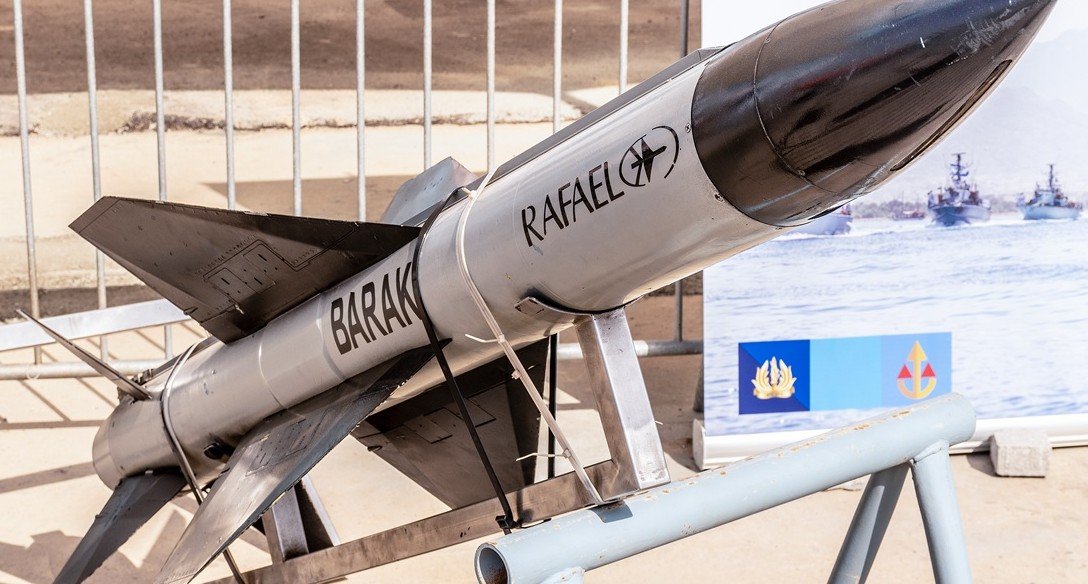
Electronic sensors picked up the unmistakable footprint of the Barak MX air defense system coming online. Quietly. Clinically. With intent.
Two neighboring states, two philosophies on display.
One is legislating memory. The other is locking its skies.
The contrast was hard to miss, even if most of the world did.
What Morocco just activated, and why it matters
The Barak MX system is developed by Israel and built to counter a wide range of aerial threats. That includes aircraft, drones, cruise missiles, and ballistic missiles at varying ranges.
This isn’t a symbolic purchase.
Once operational, the system creates a layered shield that ties together radar, command control, and interceptor missiles. It’s modular, meaning it can expand or tighten coverage depending on threat levels. In practical terms, Morocco now has eyes and reach far beyond what it fielded before.
A single sentence sums it up.
Morocco can now see, track, and respond faster than any other state in the western Maghreb.
And it doesn’t need to fire a shot for that fact to change calculations in Algiers, Madrid, or beyond.
The Maghreb arms race, quietly settled
For years, North Africa has lived with an unspoken military rivalry. Algeria poured resources into ground forces, armor, and Russian-made air defense. Morocco answered with Western partnerships, intelligence sharing, and precision upgrades.
This latest step feels different.
By activating the Barak MX, Rabat didn’t just add another system. It integrated itself into a security architecture proven under real combat conditions in the Middle East. That experience matters. Systems tested under stress behave differently than those that only appear in parades.
Military analysts point to three immediate consequences:
-
Moroccan airspace is now significantly harder to penetrate
-
Deterrence shifts from quantity to quality
-
Regional escalation thresholds rise, not fall
One retired European defense official described it bluntly: “This closes the window for surprise.”
That’s not something money alone can buy.
Algeria’s dilemma grows sharper
Algeria has long framed itself as the Maghreb’s military heavyweight. Defense spending remains high. Hardware stockpiles are deep. But doctrine matters as much as inventory.
As Morocco moves deeper into networked air defense and real-time threat management, Algeria faces a strategic puzzle. Matching the system isn’t easy. Countering it is harder. Ignoring it isn’t an option.
At the same time, Algiers’ political leadership appears absorbed in internal narratives and historical battles. Critics inside Algeria say that focus risks leaving the country outpaced in areas that decide modern conflicts long before troops move.
One regional observer put it quietly: “Wars don’t start where politicians argue. They start where radars blink.”
That line is spreading in diplomatic circles.
Israel and Morocco, a relationship deepening fast
The activation of the system also highlights how far ties between Rabat and Jerusalem have moved since normalization. This is no longer limited to trade delegations or symbolic visits.
Defense cooperation sits at the center.
For Israel, Morocco offers strategic depth, access to Atlantic-facing geography, and a stable partner in a volatile region. For Morocco, Israeli systems bring battlefield credibility and a deterrent effect that resonates well beyond North Africa.
Neither side talks loudly about it.
They don’t need to.
The data speaks for itself.
A message sent without words
No press conference announced the system’s activation. No ribbon was cut. There was no dramatic footage released to television.
Yet the message landed anyway.
Satellites noticed. Analysts noticed. Neighboring militaries noticed.
Morocco didn’t say it was building an “Iron Dome of the Desert.” Others did that for them.
By switching the system on during a global slowdown, Rabat avoided noise while maximizing impact. That choice alone says something about intent.
This wasn’t about headlines.
It was about permanence.
What changes now, and what doesn’t
The borders remain closed. Diplomatic tensions remain frozen. Public rhetoric remains sharp. None of that shifts overnight.
What does change is the ceiling on escalation.
Any future crisis now unfolds under a new reality: Moroccan airspace is protected by a system designed for layered response, not blunt reaction. That pushes decision-making further up the chain, slowing rash moves and raising the cost of miscalculation.
A Moroccan official, speaking anonymously, summed it up with a shrug: “It’s better when people think twice.”
That’s the quiet logic of air defense.
You hope it never fires. You still need it ready.
A region choosing its future
The Maghreb today shows two paths.
One path circles memory, grievance, and symbolic fights over the past. The other invests in sensors, integration, and control of the skies ahead.
Neither path makes headlines every day.