Sir Keir Starmer’s decision to publicly welcome British-Egyptian activist Alaa Abd El-Fattah back to the UK has triggered a fierce political row. Critics say the move ignores past statements calling for violence, reopening a raw debate about free speech, security, and who Britain chooses to stand beside.
A return that reignited an old fire
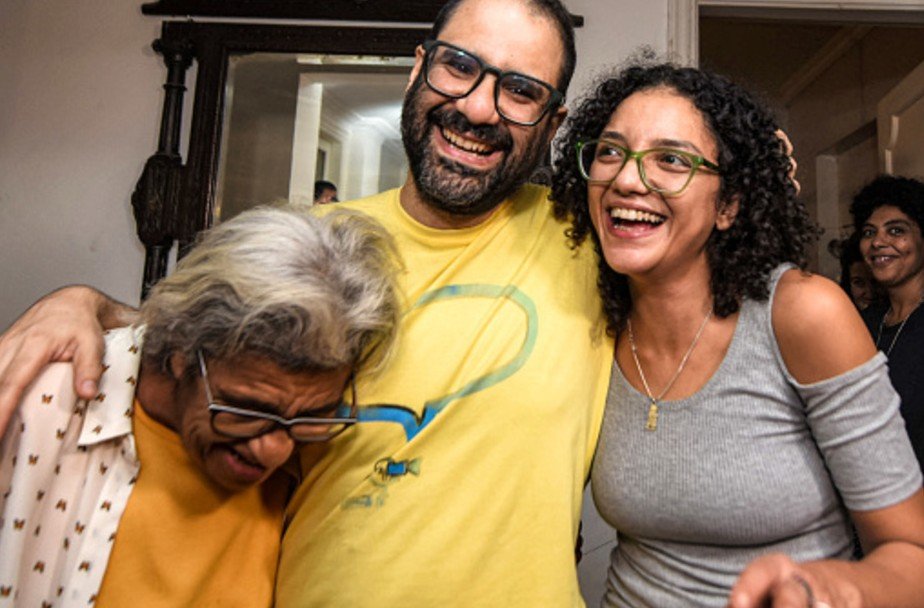
Alaa Abd El-Fattah, 44, landed in Britain on Boxing Day after spending much of the last decade in Egyptian prisons. His release and return were greeted warmly by Prime Minister Keir Starmer, who said the case had been a government priority and described himself as “delighted” to see El-Fattah back on British soil.
That single word, delighted, set off alarms in parts of Westminster.
El-Fattah, a British-Egyptian democracy activist and writer, has long been a cause célèbre for human-rights groups. His hunger strikes and repeated imprisonments in Egypt drew international attention, including pressure campaigns from MPs and NGOs. For many supporters, his return marked the end of a grim chapter.
But his online record quickly resurfaced, and with it, a much darker conversation.
Several posts attributed to El-Fattah from past years include explicit calls for violence, including remarks about killing “colonialists” and “Zionists,” along with statements referencing hatred of white people and advocacy of killing police. Those words, critics argue, cannot be brushed aside as rhetorical anger or historical context.
For some, the homecoming felt less like a human-rights win and more like a test Britain didn’t need.
Political reaction hardens fast
The sharpest criticism came from Robert Jenrick, the Shadow Justice Secretary, who accused Starmer of endorsing extremism by association. In a series of comments, Jenrick said the prime minister should be “ashamed” of praising a man whose past statements, he argued, amounted to incitement.
Jenrick’s language was blunt, even by Westminster standards.
He said celebrating El-Fattah’s return was “sickening” and claimed the activist should never have been allowed back into the UK. In his view, the episode revealed a government more focused on political signalling than public safety.
One senior Conservative source privately described the reaction as “entirely predictable,” noting that El-Fattah’s social media history had been widely documented for years.
The row also exposed familiar fault lines.
On one side sit politicians and campaigners who see El-Fattah primarily as a victim of authoritarian repression. On the other are those who argue that past calls for violence, regardless of context, must carry real consequences in Britain.
Neither camp shows much interest in backing down.
The man at the center of the storm
El-Fattah is no ordinary activist. Born in Egypt and raised partly in the UK, he became a prominent voice during and after the 2011 Arab Spring. His writing and activism made him a repeated target of Egyptian authorities, leading to arrests, long sentences, and international outcry.
Supporters say he paid a heavy price for speaking against military rule.
They point out that his imprisonment spanned nearly ten years, often under harsh conditions, and argue that his case symbolized broader repression in Egypt. Amnesty International and other groups regularly cited him as a prisoner of conscience.
Yet his critics insist that biography does not erase accountability.
They highlight specific statements from his online posts, saying they cross a clear line from protest into endorsement of violence. For Jewish groups in particular, the language about killing Zionists has sparked deep concern and anger.
A community leader in London described the episode as “painful and unsettling,” adding that words like these “don’t exist in a vacuum.”
That tension now sits squarely in the government’s lap.
Security, speech, and the state’s dilemma
Behind the political noise lies a harder question: how should Britain respond when a citizen returns with a history that includes both persecution and provocation?
The government has not suggested El-Fattah faces any criminal charges in the UK related to his statements. Free speech protections are broad, and past remarks made abroad or years earlier are difficult to prosecute unless they meet strict thresholds.
Still, critics argue that welcoming language from the prime minister carries symbolic weight.
Security analysts note that Britain has previously barred or restricted individuals over extremist rhetoric, even when no prosecution followed. In this case, El-Fattah had been subject to travel restrictions before his return, making Starmer’s public embrace feel, to some, like a sharp reversal.
One former counter-terror official said the issue isn’t legality alone, but judgment.
In practical terms, officials are likely weighing several factors quietly, including:
-
Whether El-Fattah poses any current security risk
-
The age and context of the statements attributed to him
-
Diplomatic implications with Egypt and regional partners
-
Domestic community tensions, especially amid global unrest
Those calculations rarely make headlines, but they shape them all the same.
The prime minister’s office has so far emphasized El-Fattah’s British citizenship and the humanitarian case for his release, avoiding direct engagement with the substance of his past remarks.
That silence is doing little to cool tempers.
A wider pattern in British politics
This controversy lands at a moment when Britain is already wrestling with questions of protest, extremism, and public trust. From street demonstrations to online radicalization, politicians face constant pressure to draw lines that satisfy no one fully.
Starmer’s critics see the El-Fattah episode as part of a broader pattern, accusing Labour of being soft on extremist language. Labour figures counter that defending citizens imprisoned abroad does not equal endorsing every word they have ever said.
Both arguments play well to their respective audiences.
Polling experts say rows like this often harden existing views rather than shift them. For voters already skeptical of Labour on security, the images and quotes reinforce doubt. For human-rights-minded supporters, the backlash feels like opportunism dressed as outrage.
One thing is clear: the story refuses to stay narrow.
It touches Israel-Palestine, policing, race, free expression, and Britain’s role as a refuge. That’s a lot for any single decision to carry.
As Parliament returns from the holiday break, the questions around El-Fattah’s return are likely to resurface, again and again, in sharper tones.