
Quiet talks, loud concerns in Jerusalem
Reports emerging from Israeli media on Monday suggest that the United States and Qatar have resumed discussions on a potential sale of F-35 stealth fighter jets.
This is not a brand-new idea. Doha made a similar request roughly five years ago, only to see it turned aside after firm objections from Israel. What has changed now is timing and context.
According to Channel 12, contacts between Qatari and US officials are already underway. That detail alone has set off alarm bells in Israel’s defense and political circles.
The concern is not limited to Qatar.
Israeli officials are also tracking parallel moves across the region, from a developing US-Saudi defense framework to renewed speculation about future sales to the United Arab Emirates and even Turkey. Taken together, the trend feels unsettling.
For Israel, the worry is simple and deeply ingrained. If too many neighboring states gain access to top-tier American aircraft, Israel’s qualitative military edge could slip.
That edge has been a cornerstone of US-Israel defense ties for decades.
Why the F-35 matters so much
The F-35 is more than just another fighter jet.
It combines stealth, advanced sensors, data fusion, and long-range strike ability in a single platform. Israel was the first country outside the US to operate the aircraft and has integrated it deeply into its air force doctrine.
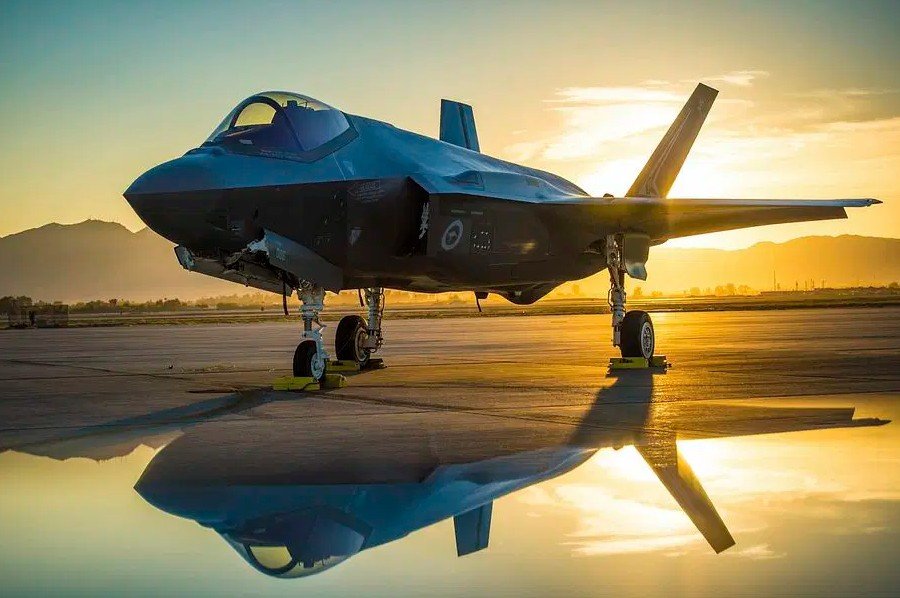
That early access was not accidental.
Washington has long committed to ensuring Israel maintains a qualitative military edge, often referred to simply as QME, over any regional adversary. The policy does not block arms sales to Arab states, but it does require that Israel retain superior capabilities.
Here is where anxiety creeps in.
If Qatar, Saudi Arabia, and possibly others all field F-35s, the technological gap narrows. Even if Israel keeps its own fleet, exclusivity disappears.
One senior Israeli analyst described it as “death by inches,” not a single dramatic shift, but a steady erosion.
A region seeing more US hardware, not less
The Middle East is entering another phase of heavy arms diplomacy.
Washington has already approved or discussed major defense packages across the region in recent years. Some of these deals were frozen, revised, or delayed due to political shifts, human rights concerns, or regional tensions.
Now, momentum appears to be building again.
Israel’s defense planners are reportedly looking at the broader picture rather than one sale in isolation. Their fear centers on cumulative impact.
-
Qatar potentially receiving F-35 jets
-
Saudi Arabia advancing talks on a wide defense agreement
-
The UAE possibly revisiting earlier fighter jet deals
-
Turkey re-entering conversations after years of strained ties
Each case is different. Each comes with conditions. Still, the direction feels clear.
More advanced American systems are finding their way into more Middle Eastern air forces.
Israel’s response: compensate, don’t confront
Publicly, Israel has avoided open confrontation with Washington over the reported Qatar talks.
Privately, the tone appears sharper.
According to the report, Israel’s defense establishment is preparing a detailed list of requests to present to the US administration. The idea is not to block sales outright, but to secure compensatory capabilities that preserve Israel’s advantage.
Those requests reportedly include additional aircraft and expanded access to weapons systems.
At the center of the package are two new squadrons:
| Requested Capability | Purpose |
|---|---|
| Additional F-35 squadron | Maintain stealth and strike dominance |
| F-15I squadron | Long-range missions, heavy payloads |
| Advanced munitions | Precision, flexibility across scenarios |
| Support systems | Intelligence, refueling, electronic warfare |
The F-15I, a version customized for Israeli needs, remains a workhorse for long-range operations. Paired with the F-35, it gives the Israeli Air Force flexibility that few others can match.
Israeli officials believe that bolstering these assets could offset any regional dilution of exclusivity.
Qatar’s position and Washington’s calculus
From Qatar’s perspective, the request is not surprising.
The Gulf state hosts the largest US military base in the Middle East and has invested heavily in modernizing its armed forces. Acquiring the F-35 would place it in a small club of elite air forces.
US officials, for their part, face a familiar balancing act.
On one hand, arms sales strengthen alliances, support American industry, and deepen security cooperation. On the other, every deal in the region is scrutinized through the lens of Israel’s security.
That tension is not new.
What feels different now is scale. Multiple potential sales, discussed in overlapping timeframes, create pressure on long-standing assurances.
A former US defense official once joked that Middle East arms diplomacy is like spinning plates. Keep too many in the air, and one is bound to wobble.
The shadow of Saudi Arabia and Turkey
Qatar is only part of the story.
Israel is also watching Saudi Arabia closely, especially as broader talks between Riyadh and Washington touch on defense guarantees, normalization questions, and advanced weapons.
Any Saudi acquisition of F-35s would represent a major shift, even if tied to strict conditions.
Turkey adds another layer of uncertainty.
Once a partner in the F-35 program, Ankara was removed after purchasing Russian S-400 systems. Recent signs of warming ties with Washington have revived speculation about renewed defense cooperation down the line.
For Israel, the idea of Turkish F-35s returning to the skies is not comforting.
Each scenario alone might be manageable. Together, they form a pattern Israel cannot ignore.
Politics, perception, and real capabilities
There is also a psychological dimension.
Israel’s military edge is as much about perception as raw numbers. Deterrence relies on adversaries believing Israel can act faster, hit harder, and see further.
Once peers begin flying similar aircraft, even if under different doctrines, that perception shifts.
That does not mean Israel becomes weaker overnight.
Its pilots, training, intelligence integration, and operational experience remain among the best. Still, airframes matter, and so does who else has them.
One retired Israeli Air Force officer put it plainly: “We don’t panic. But we don’t sleep either.”
A familiar test for US-Israel ties
This episode fits into a long pattern.
Whenever the US considers selling advanced weapons in the Middle East, Israel raises concerns, Washington reassures, and a compromise is usually found. Often that compromise involves extra aid, faster deliveries, or access to systems others do not get.
The coming months may follow the same script.
What makes this moment tense is the sheer number of moving pieces. Qatar today. Saudi Arabia tomorrow. Others waiting quietly in line.
For Israel, the goal is to ensure that when the dust settles, its air force still stands apart.
For Washington, the challenge is to manage alliances without tipping a delicate balance.
