The International Criminal Court has refused to pause its investigation into Israel’s conduct during the Gaza war, rejecting an appeal from Jerusalem and keeping arrest warrants in place for Prime Minister Benjamin Netanyahu and former defence minister Yoav Gallant. The decision sharpens an already tense legal and diplomatic standoff.
Appeals judges draw a clear legal line
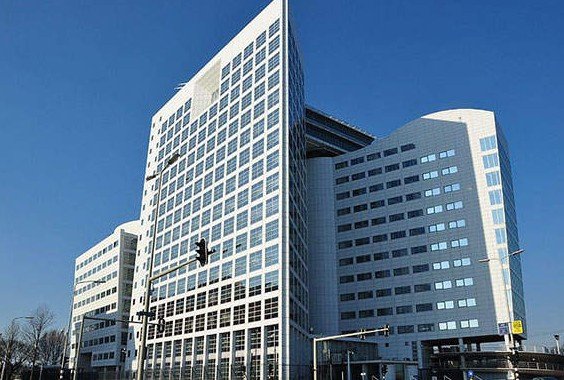
The ruling came late Monday from the ICC’s appeals chamber in The Hague.
Judges declined to overturn an earlier decision that allows prosecutors to examine alleged crimes committed after Hamas’s October 7, 2023 attack, the event that ignited the Gaza war. Israel had argued that the court should limit or halt the probe, saying it falls outside the ICC’s authority.
That argument did not persuade the bench.
In a brief but firm finding, the judges said the prosecution can continue examining events that followed the Hamas assault, as long as they fall within crimes listed under the court’s statute. The ruling keeps the investigation intact and removes one procedural roadblock Israel had hoped would slow the case.
The warrants issued last year for Netanyahu and Gallant remain active as a result.
What the warrants allege, and what Israel denies
At the center of the case are allegations of war crimes during Israel’s military campaign in Gaza.
ICC judges have said there are grounds to believe Netanyahu and Gallant may be responsible for restricting humanitarian aid and for actions that intentionally targeted civilians. These claims strike at the heart of how wars are fought and judged under international law.
Israel’s response has been blunt.
Netanyahu’s office dismissed the accusations as “antisemitic” and said they were rejected “with disgust.” Officials insist that Israel’s military operations have followed legal standards, emphasizing that the campaign aims to defeat Hamas, secure the release of hostages, and prevent future attacks.
One line from Israeli officials has been repeated often: the country is defending itself against a terror group, not waging an unlawful war.
The court, for its part, stresses that the current stage is about jurisdiction and investigation, not verdicts.
Why the ICC says it has authority here
Israel is not a party to the Rome Statute, the treaty that created the ICC. That fact sits at the core of Jerusalem’s objections.
The court’s reasoning rests on geography rather than nationality. Judges have previously ruled that the ICC has authority over alleged crimes committed on the territory of Palestine, which the court recognizes as a member state. That interpretation remains controversial, but Monday’s decision reinforces it once again.
To the judges, the question is straightforward.
If alleged acts occurred in an area under the court’s remit, then prosecutors can examine them, regardless of whether the accused come from a non-member state.
This legal stance has wider consequences, far beyond the Israel–Hamas conflict.
Political fallout and Israel’s sharp reaction
Israel’s Foreign Ministry reacted with anger, accusing the ICC of bias and political motivation.
In a statement, the ministry said the ruling showed “blatant disregard” for the sovereign rights of non-party states and mocked the decision as politics dressed up as law. Officials argue that the court is ignoring its own limits while singling Israel out.
That criticism echoes a long-running complaint shared by some of Israel’s allies.
They warn that ICC actions of this kind risk turning the court into a political actor, rather than a neutral legal body. Supporters of the ICC counter that applying the law evenly, even to powerful leaders, is exactly the point.
This split has hardened since the Gaza war began.
What happens next inside the investigation
With the appeal rejected, the legal process moves forward.
ICC investigations are slow by design. They involve gathering battlefield evidence, reviewing humanitarian access data, and collecting testimony from a wide range of sources. That work continues quietly, far from headlines.
Key steps ahead are likely to include:
-
Ongoing evidence collection related to military operations and aid flows
-
Requests for cooperation from states, some of which may refuse
-
Further judicial review as prosecutors refine allegations
Whether the warrants ever lead to arrests remains uncertain.
The ICC has no enforcement arm. It relies on member states to execute warrants. Israeli leaders are expected to avoid travel to countries that might act on them, limiting the practical impact for now.
Still, the legal shadow is real.
A snapshot of the case so far
The core elements of the ICC’s Gaza case can be summed up simply:
| Issue | Status |
|---|---|
| Jurisdiction challenge | Rejected on appeal |
| Gaza investigation | Continues |
| Warrants for Netanyahu, Gallant | Remain in place |
| Israel’s cooperation | Rejected |
| Timeline | Open-ended |
The table shows a process that is legally alive, even if politically contested.
International reaction and wider implications
Reactions beyond Israel have been mixed.
Human rights groups welcomed the ruling, saying it reinforces the idea that leaders are accountable for wartime decisions. Some governments in the Global South echoed that view, framing the case as a test of fairness in international justice.
Several Western states, while avoiding direct criticism of Israel, expressed concern about the court’s reach. Privately, diplomats worry the case could complicate mediation efforts or deepen diplomatic rifts.
There is also concern about precedent.
If the ICC can pursue leaders from non-member states based on territory alone, other conflicts could follow a similar path. That possibility unsettles capitals far beyond the Middle East.
A legal battle running alongside a real war
The Gaza war itself continues to cast a long shadow over the proceedings.
Israel maintains that its actions are lawful and necessary. The ICC insists it has a duty to examine allegations wherever they arise. Between those positions sits a deeply polarized international audience.
The court’s decision does not judge guilt. It does not end the conflict. It simply confirms that the legal questions will be asked, again and again, until the process runs its course.
For Israel, the ruling adds pressure and fuels claims of bias.
For the ICC, it is a statement of resolve.
And for the wider world, it is another reminder that modern wars are fought on two fronts: the battlefield, and the courtroom.